

2026 Chevy Traverse vs Ford Explorer | Denver SUV Comparison | Emich Chevrolet
Last updated: July 22, 2026
2026 Chevy Traverse vs Ford Explorer: Which 3-Row SUV Wins for Denver Families?
If you are shopping for a midsize 3-row SUV in Denver, the 2026 Chevrolet Traverse and 2026 Ford Explorer are probably on your shortlist. Both seat families comfortably, tow 5,000 pounds at base, and handle I-70 mountain trips with available all-wheel drive. But side by side, the differences matter—especially when you factor in Colorado driving conditions, cargo needs, and long-term value.
At Emich Chevrolet, located just minutes from Lakewood and downtown Denver on South Broadway, we help buyers compare these two SUVs every week. Below is a spec-by-spec breakdown so you can decide which 3-row SUV belongs in your garage.
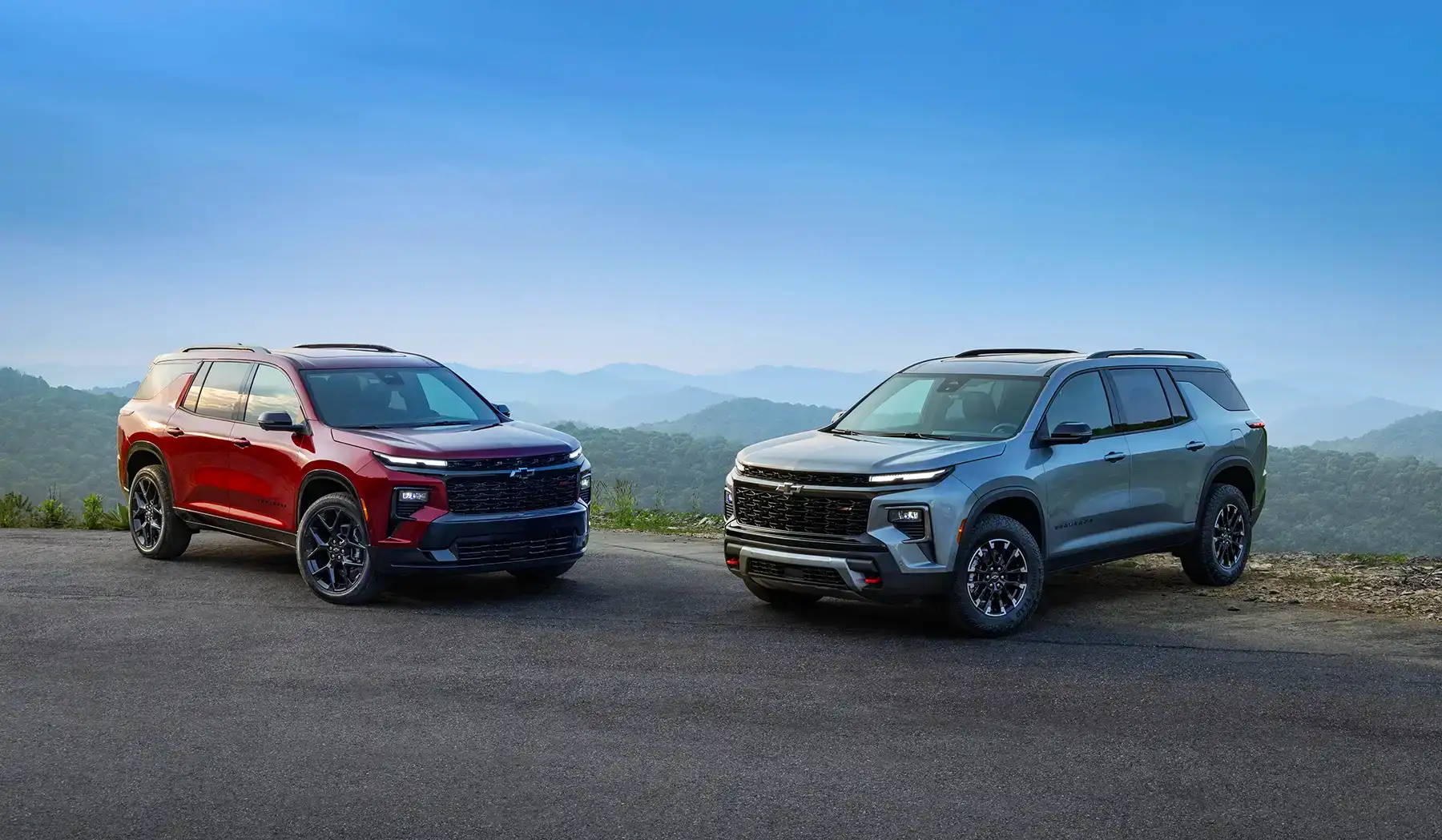
Quick Answer
The 2026 Traverse delivers more cargo space (98 vs 85.8 cu ft), seats eight instead of seven, produces 328 hp from its standard turbo engine, and includes a 17.7-inch diagonal touchscreen on every trim. The Explorer counters with slightly better fuel economy (25 vs 22 mpg combined). For Denver-area families who prioritize interior room and technology, the Traverse is the stronger pick.
Ready to see the Traverse in person?
Visit Emich Chevrolet on South Broadway—serving Denver, Lakewood, Littleton, and the entire Front Range.
Head-to-Head Comparison: Traverse vs Explorer
Performance and Powertrain
The 2026 Traverse comes standard with a 2.5-liter turbocharged four-cylinder that produces 328 horsepower and 326 lb-ft of torque, paired with an 8-speed automatic. That power advantage over the Explorer’s base 2.3-liter EcoBoost (300 hp / 310 lb-ft) is noticeable when merging onto I-25 or climbing toward the Eisenhower Tunnel fully loaded.
Ford does offer the Explorer ST with a 3.0-liter twin-turbo V6 making 400 hp, but that trim starts at $56,465—significantly more than the Traverse RS at $55,400, which still delivers strong performance for most Denver-area driving scenarios.
On the fuel-economy side, the Explorer holds a modest edge: roughly 25 mpg combined for the 2.3-liter versus the Traverse’s 22 mpg combined with FWD (21 with AWD). Over 15,000 miles per year at current Denver gas prices, that difference works out to roughly $200–$300 annually—a gap many buyers are happy to trade for the Traverse’s extra power and interior space.
Interior and Technology
The Traverse’s cabin is anchored by a 17.7-inch diagonal touchscreen that comes standard across every trim. It runs Google Built-In with Google Maps, Google Assistant, and the Google Play Store for apps, plus wireless Apple CarPlay and Android Auto. The Explorer counters with a 13.2-inch screen on most trims—capable, but notably smaller.
Third-row legroom is another differentiator. The Traverse seats up to eight passengers with a second-row bench, while the Explorer maxes out at seven. For Denver families juggling carpools, sports teams, and weekend ski trips, that extra seat can make a real difference. The Traverse’s third row is also more adult-friendly, with easier entry and exit thanks to wider door openings.
Safety Features
Both the Traverse and Explorer come well-equipped with standard driver-assistance technology. The Traverse includes Chevy Safety Assist with automatic emergency braking, front pedestrian braking, lane-keep assist, forward collision alert, and IntelliBeam auto high beams. Higher trims add HD Surround Vision, rear pedestrian alert, and an enhanced adaptive cruise control system—features that are especially valuable on congested stretches of I-70 and I-25 around the Denver metro.
Ford’s Co-Pilot360 suite offers a similar set of standard features. Both SUVs earn strong crash-test ratings, giving Denver-area families confidence regardless of which they choose.
Cargo Space: Traverse Wins Big
Cargo Advantage: +12.2 Cu Ft
With all seats folded, the Traverse offers 98 cubic feet of cargo space versus the Explorer’s 85.8 cu ft. That is more than 12 extra cubic feet—enough for an additional large suitcase, a stroller, or a weekend’s worth of ski gear for a family trip from Denver to Breckenridge.
Even with the third row up, the Traverse provides generous cargo room behind the rear seats. For families in Lakewood, Littleton, and surrounding communities who regularly haul sports equipment, groceries, and gear for weekend adventures, the Traverse’s cargo advantage is one of its strongest selling points over the Explorer.
Towing Capability
Both SUVs tow up to 5,000 pounds with their standard engines—enough for a small camper, a pair of jet skis, or a utility trailer. The Explorer ST edges ahead with a 5,600-pound rating from its twin-turbo V6, but that upgrade pushes the sticker to $56,465. The Traverse’s 5,000-pound capacity handles the vast majority of recreational towing needs for Colorado families without requiring a top-tier trim.
Pricing and Value
The Explorer’s cheapest entry point—the Active 100A at $38,465—undercuts the Traverse LT by roughly $2,300. However, the true like-for-like comparison starts at the Explorer Active ($40,025) versus the Traverse LT ($40,800), where the price gap narrows to under $800. At that price, the Traverse gives you a larger engine (328 hp vs 300 hp), a bigger screen (17.7″ vs 13.2″), more cargo room, and an extra seat.
Top Reasons to Choose the 2026 Traverse Over the Explorer
- More cargo space: 98 cu ft vs 85.8 cu ft gives you over 12 extra cubic feet for gear, groceries, and luggage—a tangible advantage for active Denver families.
- Seats eight, not seven: That additional seat means fewer trips and less logistical juggling for carpools and family outings.
- More standard horsepower: 328 hp standard versus 300 hp, with no need to jump to a premium trim for confident highway merging and mountain passes.
- Larger touchscreen on every trim: The 17.7-inch diagonal screen dwarfs the Explorer’s 13.2-inch display, with Google Built-In for seamless navigation to trailheads and ski resorts.
- Competitive towing at base price: Both tow 5,000 lbs with their standard engines, so you do not need to spend more to pull a camper or boat.
- Strong value at entry level: For under $800 more than a comparably equipped Explorer Active, you get meaningful upgrades in power, screen size, and passenger capacity.
Common Cross-Shopping Mistakes
- Comparing the Explorer’s stripped-down Active 100A ($38,465) to the well-equipped Traverse LT ($40,800)—the feature sets are not equivalent.
- Overlooking total cargo volume. A 12-cubic-foot difference matters when you are packing for a week at a Colorado cabin.
- Focusing on MPG alone without calculating the actual annual cost difference, which is often only $200–$300.
Why Buy from Emich Chevrolet in Denver?
Emich Chevrolet has served Denver, Lakewood, Littleton, and the broader Front Range community for decades. Our team knows Colorado driving conditions and can help you pick the right Traverse trim and AWD configuration for your needs—whether that means daily I-25 commuting, weekend trips to the mountains, or both. We offer competitive financing, transparent pricing, and a full-service experience from the showroom to our service department.
Frequently Asked Questions
Is the 2026 Chevy Traverse bigger than the Ford Explorer?
Yes. The Traverse offers 98 cubic feet of maximum cargo space compared to the Explorer’s 85.8 cu ft. The Traverse also seats up to eight passengers versus the Explorer’s seven, making it the larger vehicle in the categories that matter most to families.
Which has better gas mileage, the Traverse or the Explorer?
The 2026 Explorer has a slight fuel-economy advantage at roughly 25 mpg combined versus the Traverse’s 22 mpg combined (FWD). At average Denver gas prices, that difference translates to approximately $200–$300 per year.
Can both the Traverse and Explorer tow 5,000 pounds?
Yes. Both SUVs tow up to 5,000 pounds with their standard engines when properly equipped. The Explorer ST increases that to 5,600 pounds, but it starts at $56,465.
How much does the 2026 Chevy Traverse cost?
The 2026 Traverse starts at $40,800 for the LT trim. Other trims include the Z71 at $48,900, High Country at $55,100, and RS at $55,400. Visit Emich Chevrolet in Denver for current pricing and available incentives.
Does the Traverse have a bigger screen than the Explorer?
Yes. The 2026 Traverse features a 17.7-inch diagonal touchscreen as standard equipment on every trim. The Explorer offers a 13.2-inch screen on most trims—over four inches smaller diagonally.
Is the Traverse good for Colorado mountain driving?
Absolutely. The Traverse’s 328-horsepower turbocharged engine provides strong acceleration for mountain passes, and available AWD handles snow and variable road conditions on I-70 and other Colorado highways. The Z71 trim adds off-road-oriented suspension tuning for rougher terrain.
Where can I test drive the 2026 Traverse near Denver?
Emich Chevrolet is located on South Broadway, serving Denver, Lakewood, Littleton, and the entire Front Range. Visit us to test drive the Traverse and compare trims in person.
Key Takeaways
- The 2026 Traverse offers 98 cu ft of cargo, 8-passenger seating, 328 hp, and a 17.7-inch screen starting at $40,800.
- The 2026 Explorer starts slightly lower but delivers less cargo (85.8 cu ft), fewer seats (7), and a smaller screen (13.2″).
- Both tow 5,000 lbs at base. The Explorer gets better MPG (~25 vs 22), but the annual cost difference is modest.
- For Denver families who value space, power, and technology, the Traverse is the stronger value.
- Emich Chevrolet in Denver is your local source for Traverse inventory, competitive pricing, and expert advice on Colorado driving needs.
Find Your 2026 Traverse at Emich Chevrolet
Browse our inventory, schedule a test drive, or get a personalized quote—all from Denver’s trusted Chevy dealer.
Last updated: July 22, 2026