

2026 Chevy Trax vs Honda HR-V: Denver SUV Comparison
Last updated: May 15, 2026 | Service area: Denver, Lakewood, and the Front Range
If you are shopping subcompact SUVs in Denver, the Chevy Trax vs Honda HR-V question shows up on our lot almost every weekend. Both seat five, both make sense for city commuters and Lakewood families, and both park anywhere. But once you put a 2026 Chevy Trax ($20,500 starting MSRP) next to a 2026 Honda HR-V ($26,500 starting MSRP) the math gets very interesting — and it tends to favor the Trax for buyers who care most about value.
Quick Answer
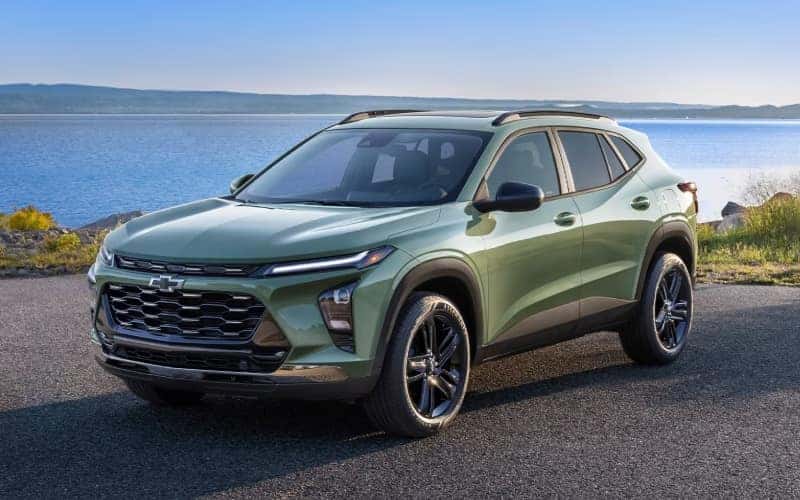
The 2026 Chevy Trax starts at $20,500 with a 1.2L turbocharged engine producing 137 hp, an available 11-inch infotainment touchscreen, an 8-inch digital instrument cluster, and standard Chevy Safety Assist. The 2026 Honda HR-V starts at $26,500 with a 2.0L 158-hp four-cylinder, a 9-inch touchscreen, and available Real Time AWD. For Denver and Lakewood drivers who want a stylish, well-equipped small SUV at a meaningfully lower price, the Chevy Trax is the smarter value pick by about $6,000 at the base trim.
See the Chevy Trax in Person at Emich Chevrolet
Top-rated Chevrolet dealer in Denver. Best selection, best pricing, and the area’s most trusted Chevy sales and service team.
Chevy Trax vs Honda HR-V at a Glance
The Trax and HR-V sit in the same subcompact SUV slot, but they target slightly different buyers. The 2026 Chevy Trax leans into value, modern styling, and a generous tech package at a sub-$21,000 starting price. The 2026 Honda HR-V leans into a larger engine, available all-wheel drive, and Honda’s resale reputation, but it asks roughly $6,000 more to start. For Denver shoppers cross-shopping these two on a budget, the Trax delivers a lot of car for the money.
Below is a quick reference comparing the 2026 Chevy Trax and the 2026 Honda HR-V in the trims most Denver and Lakewood shoppers actually cross-shop. Specs are pulled from each manufacturer’s official 2026 model pages and press materials.
| Specification | 2026 Chevy Trax | 2026 Honda HR-V |
|---|---|---|
| Starting MSRP | $20,500 (LS) | $26,500 (LX) |
| Engine | 1.2L ECOTEC Turbo I3, 137 hp / 162 lb-ft | 2.0L I4, 158 hp / 138 lb-ft |
| Transmission | 6-speed automatic | Continuously variable (CVT) |
| Available AWD | FWD only | Real Time AWD available |
| EPA Combined MPG | 30 mpg (GM-estimated) | 28 mpg FWD / 27 mpg AWD |
| Seating | 5 passengers | 5 passengers |
| Max Cargo (seats folded) | 54.1 cu ft | 55.1 cu ft |
| Standard Touchscreen | 8-inch (LS, 1RS); 11-inch on LT, 2RS, ACTIV | 9-inch on all trims |
| Digital Gauge Cluster | 8-inch on LT and above | Analog with central info display |
| Bumper-to-Bumper Warranty | 3 years / 36,000 miles | 3 years / 36,000 miles |
| Powertrain Warranty | 5 years / 60,000 miles | 5 years / 60,000 miles |
Performance and Powertrain
The 2026 Chevy Trax uses a 1.2L ECOTEC turbocharged three-cylinder making 137 horsepower and 162 lb-ft of torque, paired with a six-speed automatic transmission. The headline number is the torque: 162 lb-ft is more than the Honda HR-V’s 138 lb-ft and shows up where most subcompact SUV drivers actually need it — pulling away from a light, merging onto I-25, climbing the grade out of Lakewood toward C-470. Turbocharging also helps the Trax keep its rated output more consistently as you climb elevation, which matters on Denver’s mile-high streets and the Front Range foothills.
The 2026 Honda HR-V counters with a naturally aspirated 2.0L four-cylinder rated at 158 horsepower and 138 lb-ft of torque, mated to a continuously variable transmission. Peak horsepower is higher on paper, but the HR-V’s torque arrives at higher engine speeds, so the Trax feels more eager off the line in everyday city driving. Honda’s CVT is well-tuned, and the HR-V is quiet on the highway, but it can sound strained under hard acceleration — a characteristic of CVTs that some drivers notice and some don’t.
AWD and winter driving
This is the clearest functional difference between the two SUVs. The 2026 Chevy Trax is a front-wheel-drive-only vehicle — there is no AWD option for the current Trax. The 2026 Honda HR-V offers Real Time AWD with Intelligent Control System on every trim. For Denver buyers who specifically want all-wheel drive in a Chevy SUV, the Trailblazer (which is mechanically related but a step up in size and price) is the right cross-shop. For buyers who plan to handle Colorado winters with a good set of winter tires on a FWD vehicle — the same way most Denver commuters already do — the Trax is fully workable for daily driving year-round.
Interior, Tech, and Daily Comfort
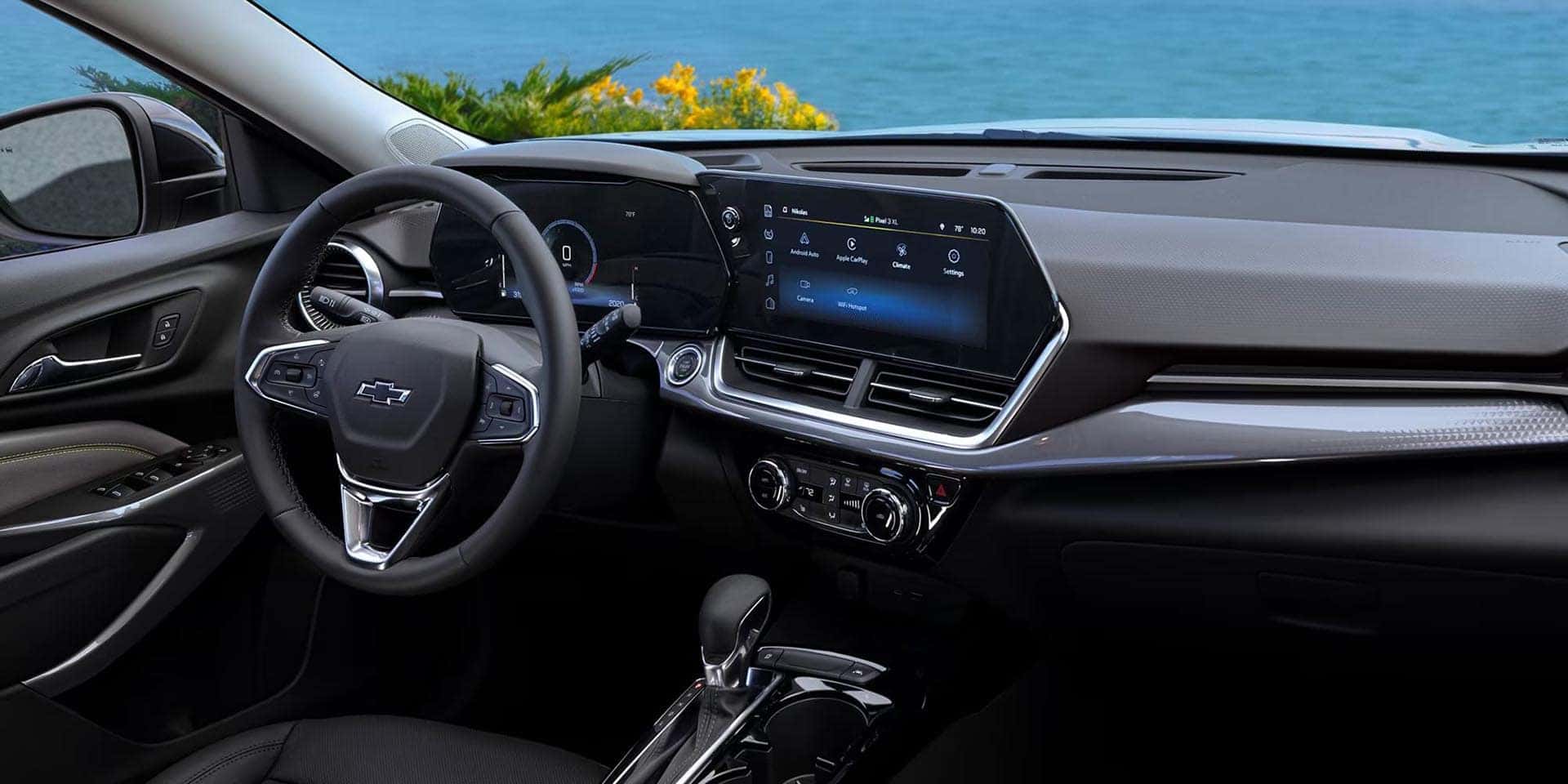
Step inside both back-to-back and the Chevy Trax’s dashboard punches above its price. LS and 1RS trims include an 8-inch infotainment touchscreen as standard. Step up to the LT, 2RS, or ACTIV and the Trax adds an 11-inch infotainment touchscreen paired with an 8-inch digital instrument cluster — a genuinely modern two-screen setup at a sub-$25,000 price. Wireless Apple CarPlay and wireless Android Auto are standard, and the cabin uses available ambient lighting and contrast stitching on higher trims that read more upscale than the sticker suggests.
The 2026 Honda HR-V counters with a 9-inch touchscreen standard across the lineup. Honda Sensing safety tech is standard, materials are typical Honda — solid, conservative, durable — and the rear seat is genuinely roomy for the segment. The HR-V’s interior feels mature, but the Trax’s standard 11-inch screen on mid trims plus 8-inch digital cluster simply delivers more visible tech for less money.
Safety and Driver Assistance
Both subcompact SUVs ship with strong standard driver-assistance packages. The 2026 Chevy Trax comes standard with Chevy Safety Assist, which bundles Automatic Emergency Braking, Front Pedestrian Braking, Lane Keep Assist with Lane Departure Warning, Forward Collision Alert, Following Distance Indicator, and IntelliBeam auto high beams. Adaptive cruise control with stop-and-go is available on higher trims.
The 2026 Honda HR-V counters with the Honda Sensing suite, which includes collision mitigation braking, road departure mitigation, lane keeping assist, adaptive cruise control, and traffic sign recognition. Both packages cover the essentials Denver drivers expect on a daily highway commute, and both vehicles routinely earn solid crash scores. For day-to-day commuting between Lakewood, Denver, and Aurora, both safety stacks are comparable in real-world use.
Cargo, Space, and Everyday Practicality
Cargo numbers are close. The 2026 Chevy Trax offers up to 54.1 cubic feet of max cargo space with the 60/40 split-folding rear seats down, and 25.6 cubic feet behind the second row. The 2026 Honda HR-V offers 24.4 cubic feet behind the second row and up to 55.1 cubic feet with the rear seats folded. Both swallow a Costco run, a stroller and a bike, or a few full-size suitcases without complaint. Both seat five.
Where the Trax has a small functional edge is interior layout — the dashboard is lower, the front sightlines are open, and the 11-inch screen on LT and ACTIV models keeps controls within easy reach for the driver. The HR-V trades a bit of dashboard tech for slightly more rear-seat headroom in the second row, which can matter if you regularly carry adult passengers in the back.
Pricing, Value, and Warranty
The 2026 Chevy Trax starts at $20,500 for the LS trim. The 2026 Honda HR-V starts at $26,500 for the LX trim. That’s a $6,000 difference at the base trim in the Trax’s favor — and the gap is not bridged with options. Even the top Trax ACTIV trim lands well below the price of a mid-grade HR-V Sport or EX-L. Both SUVs carry the same factory coverage: a 3-year / 36,000-mile bumper-to-bumper warranty and a 5-year / 60,000-mile powertrain warranty. So the value math is straightforward: similar warranty, very different sticker.
For Denver and Lakewood shoppers who would rather put the difference toward a down payment, lower monthly payments, or a higher-trim Trax with the 11-inch screen and digital cluster, the Trax delivers the same daily-driver utility as the HR-V at meaningfully lower cost of entry. Honda commands a price premium, but it does not deliver $6,000 of additional standard equipment to justify it.
Common mistakes Denver shoppers make
- Comparing the Trax to higher HR-V trims and missing that even a fully loaded Trax ACTIV undercuts the HR-V Sport.
- Assuming the Trax is the entry-level Chevy SUV by default and skipping the spec sheet — the available 11-inch screen and 8-inch cluster surprise most cross-shoppers.
- Cross-shopping the Trax for AWD without realizing it is FWD-only. If AWD is non-negotiable, the Chevy Trailblazer is the correct alternative.
- Ignoring the powertrain warranty — both vehicles carry the same 5-year / 60,000-mile coverage, so service confidence is not a tiebreaker here.
Top Reasons to Choose the Chevy Trax
The case for the Trax over the HR-V is not about beating the Honda on every spec — it is about delivering more usable value at a much lower price. For Denver and Lakewood buyers, that adds up fast.
1. Lower starting MSRP — by about $6,000
$20,500 vs $26,500. That single number is the headline of this comparison and reshapes monthly payments, financing options, and trade-up timing.
2. Modern tech, including an available 11-inch screen and 8-inch digital cluster
The Trax LT, 2RS, and ACTIV add a real two-screen tech setup with an 11-inch infotainment display and an 8-inch digital instrument cluster — features that look at home on vehicles two segments up.
3. Strong off-the-line torque
The Trax’s 1.2L turbo I3 makes 162 lb-ft of torque — more than the HR-V’s 138 lb-ft — and that torque arrives lower in the rev range. The result is a more responsive feel in stop-and-go traffic on Federal or Broadway.
4. Better combined fuel economy
The Trax’s GM-estimated 30 mpg combined edges the HR-V FWD (28 mpg combined) and HR-V AWD (27 mpg combined). On a daily Lakewood-to-downtown commute, the gap shows up at the pump.
5. Bold styling on RS and ACTIV trims
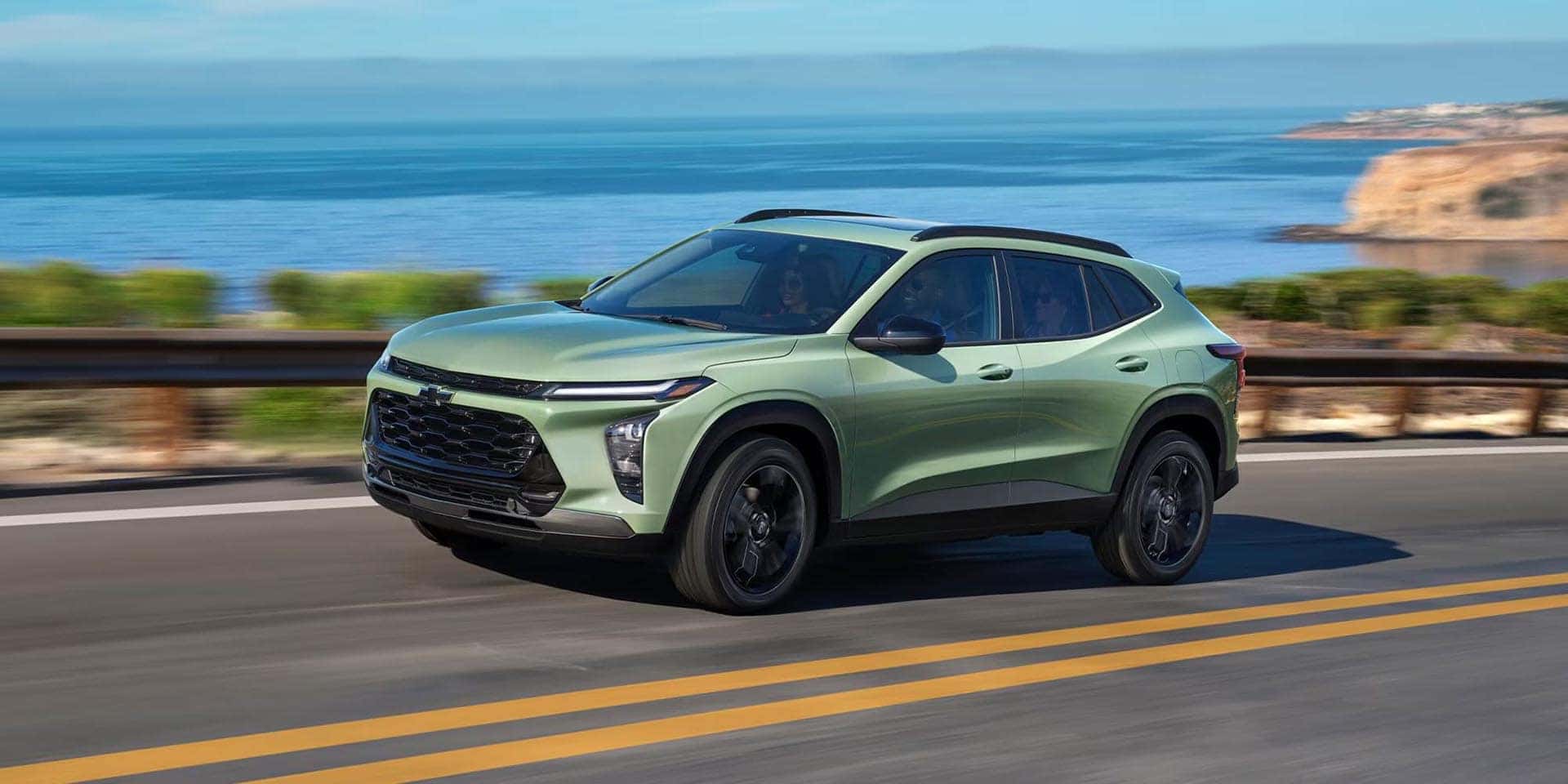
The 2RS adds a flat-bottom steering wheel and red interior accents, while the ACTIV adds Titanium chrome accents and yellow interior touches. The Trax looks more distinctive on the road than its price suggests.
6. Same warranty coverage at lower cost
Chevrolet’s 3-year / 36,000-mile bumper-to-bumper and 5-year / 60,000-mile powertrain warranty matches Honda’s — so you are not trading ownership protection for the price savings.
Why Shop the Chevy Trax in Denver With Emich Chevrolet
Buying a Chevy Trax near Denver should be the easy part of your week. As a top-rated Chevrolet dealer in the Denver metro, Emich Chevrolet built our process around transparency and speed. You get clear pricing up front, a no-pressure test drive, and a finance team that explains every line on the page — no surprises, no rushed signatures.
Our service department is staffed by Chevrolet-certified technicians who know the Trax platform inside and out. That matters in Colorado, where cold-weather starts, altitude tuning, and brake wear on Front Range descents all require specific expertise. Every Trax we sell gets a multi-point inspection. We are confident Emich offers the best selection, best pricing, and best sales and service in Denver and Lakewood — and we work to prove it on every visit.
Frequently Asked Questions
Is the Chevy Trax better than the Honda HR-V?
For most Denver and Lakewood drivers shopping on value, yes. The 2026 Chevy Trax vs Honda HR-V comparison favors the Trax on starting price ($20,500 vs $26,500), available 11-inch infotainment touchscreen, 8-inch digital gauge cluster, off-the-line torque (162 lb-ft vs 138 lb-ft), and combined fuel economy. The 2026 HR-V counters with more peak horsepower and available all-wheel drive, but it asks roughly $6,000 more to start.
Does the 2026 Chevy Trax come with all-wheel drive?
No. The 2026 Chevy Trax is front-wheel drive only across every trim — LS, 1RS, LT, 2RS, and ACTIV. If all-wheel drive is required for your driving needs in Denver, the Chevy Trailblazer is the next-step-up Chevy SUV with available AWD. Many Front Range commuters drive FWD vehicles year-round with a quality set of winter tires.
How much horsepower does the 2026 Chevy Trax have?
The 2026 Chevrolet Trax produces 137 horsepower and 162 lb-ft of torque from its 1.2L ECOTEC turbocharged three-cylinder engine, paired with a six-speed automatic transmission. While total horsepower is below the Honda HR-V’s 158 hp, the Trax’s higher torque output and turbocharging make it feel responsive in everyday driving.
What is the MPG of the 2026 Chevy Trax?
The 2026 Chevy Trax delivers a GM-estimated 30 mpg combined. That edges the 2026 Honda HR-V’s 28 mpg combined in front-wheel-drive form and 27 mpg combined in AWD form. For a typical Denver-area commuter putting 12,000 to 15,000 miles a year on the odometer, the Trax saves real dollars at the pump over the course of ownership.
How much cargo space does the 2026 Chevy Trax have?
The 2026 Chevy Trax offers up to 54.1 cubic feet of total cargo space with the 60/40 split-folding rear seats down, and 25.6 cubic feet behind the second row. That is comparable to the 2026 Honda HR-V’s 55.1 cubic feet of max cargo with seats folded. Both subcompact SUVs comfortably handle Costco runs, ski gear, and the typical Denver-area family load.
What is the price difference between a 2026 Trax and 2026 HR-V in Denver?
The 2026 Chevy Trax LS starts at $20,500. The 2026 Honda HR-V LX starts at $26,500. That’s a $6,000 starting-price gap in the Trax’s favor before any incentives, trade-in value, or dealer pricing. At Emich Chevrolet we post live Denver pricing on our inventory pages so Trax shoppers can compare specific units side by side.
What safety features come standard on the 2026 Trax?
Every 2026 Chevy Trax includes Chevy Safety Assist, which bundles Automatic Emergency Braking, Front Pedestrian Braking, Lane Keep Assist with Lane Departure Warning, Forward Collision Alert, Following Distance Indicator, and IntelliBeam auto high beams. Higher trims add adaptive cruise control and additional driver-assistance features.
Can I test drive a Chevy Trax in Lakewood the same day?
Yes. You can test drive any Trax on the Emich Chevrolet lot the same day you visit our Denver showroom — convenient for shoppers driving in from Lakewood, Aurora, Englewood, or anywhere along the Front Range. Most shoppers tell us the difference between the Trax and HR-V is most obvious back-to-back. Our team can have a Trax staged and ready when you arrive.
Key Takeaways
- The 2026 Chevy Trax starts at $20,500; the 2026 Honda HR-V starts at $26,500 — about a $6,000 gap in the Trax’s favor.
- The Trax uses a 1.2L turbocharged I3 producing 137 hp and 162 lb-ft; the HR-V uses a 2.0L I4 with 158 hp and 138 lb-ft.
- The Trax LT, 2RS, and ACTIV include an 11-inch infotainment touchscreen and an 8-inch digital instrument cluster — meaningful tech at the price.
- The HR-V’s headline advantage is available Real Time AWD. The Trax is FWD-only — for AWD in a Chevy SUV, look at the Trailblazer.
- The Trax delivers 30 mpg combined (GM-estimated) versus the HR-V’s 28 mpg FWD / 27 mpg AWD.
- Cargo capacity is close — 54.1 cu ft on the Trax vs 55.1 cu ft on the HR-V with rear seats folded.
- Both come with the same factory warranty: 3 years / 36,000 miles bumper-to-bumper and 5 years / 60,000 miles powertrain.
- If price-to-feature value is the priority, the Chevy Trax is the smarter pick. If AWD is essential, the HR-V or a Chevy Trailblazer is the right cross-shop.
Cost, Timing, and What to Expect
Most Denver-area Trax shoppers complete a test drive, trade-in appraisal, and financing review in about 90 minutes at Emich Chevrolet. Delivery the same day is common for units already on our lot. Custom factory orders typically arrive within 8 to 14 weeks depending on configuration and demand. Trade-in values are based on transparent market data — we walk you through every number. Financing and leasing options are both available, and GM Financial regularly runs Denver-area incentives we can apply at checkout.
See the Chevy Trax in Person at Emich Chevrolet
Top-rated Chevrolet dealer in Denver. Best selection, best pricing, and the area’s most trusted Chevy sales and service team.
Last updated: May 15, 2026 | Service area: Denver, Lakewood, Aurora, and the Front Range