

2026 Chevy Trax vs Hyundai Kona: Denver SUV Comparison
Last updated: May 17, 2026 | Service area: Denver, Lakewood, and the Front Range
If you are cross-shopping subcompact SUVs in Denver, the Chevy Trax vs Hyundai Kona question comes up almost every weekend on our lot. Both are practical, both seat five, and both deliver modern tech for less money than a compact SUV step-up. But once you put a 2026 Chevy Trax ($20,500 starting MSRP) next to a 2026 Hyundai Kona ($25,500 starting MSRP) and look at what each delivers at its price, the value math leans toward the Trax — by about $5,000 at the base trim. The Kona earns its premium on warranty, AWD availability, and standard tech, but it is a meaningfully different proposition than the Trax dollar for dollar.
Quick Answer
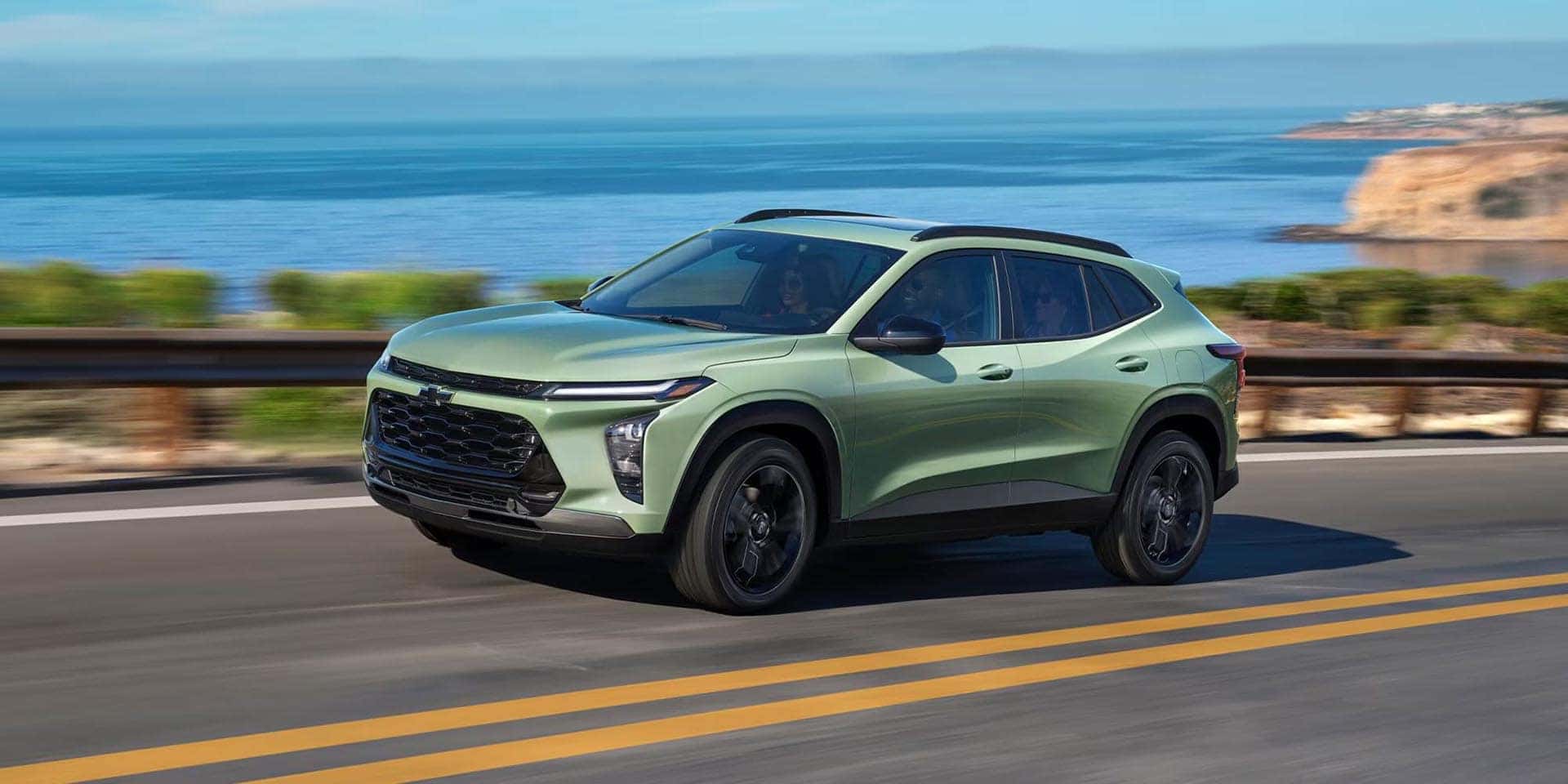
The 2026 Chevy Trax starts at $20,500 with a 1.2L turbocharged three-cylinder making 137 hp and 162 lb-ft of torque, an available 11-inch infotainment touchscreen, an 8-inch digital instrument cluster, and standard Chevy Safety Assist. The 2026 Hyundai Kona starts at $25,500 with a 2.0L naturally aspirated four-cylinder (147 hp / 132 lb-ft) or a 1.6L turbocharged four-cylinder on Limited (190 hp / 195 lb-ft from $32,650), standard 12.3-inch touchscreen across the lineup, available HTRAC AWD, and Hyundai’s signature 5-year/60,000-mile bumper-to-bumper and 10-year/100,000-mile powertrain warranty. For Denver and Lakewood drivers prioritizing the lowest entry price plus turbocharged altitude performance, the Trax is the smarter value pick — saving roughly $5,000 over the base Kona. For shoppers who specifically want AWD or Hyundai’s industry-leading warranty, the Kona is the better technical fit.
See the Chevy Trax in Person at Emich Chevrolet
Top-rated Chevrolet dealer in Denver. Best selection, best pricing, and the area’s most trusted Chevy sales and service team.
Chevy Trax vs Hyundai Kona at a Glance
The Trax and Kona sit in the same subcompact SUV bracket but optimize for different priorities. Chevrolet builds the 2026 Trax around aggressive pricing, a turbocharged three-cylinder, and a generous standard tech package on its higher trims. Hyundai builds the 2026 Kona around two engine options, available HTRAC AWD on every trim, standard 12.3-inch infotainment across the entire lineup, and one of the best new-vehicle warranties in the industry. Both work well for Denver and Lakewood commuters; they target different shoppers.
Below is a side-by-side comparison of the 2026 Chevy Trax and the 2026 Hyundai Kona in the trims most Denver and Lakewood shoppers actually cross-shop. Specs come from each manufacturer’s official 2026 model pages and press materials.
| Specification | 2026 Chevy Trax | 2026 Hyundai Kona |
|---|---|---|
| Starting MSRP | $20,500 (LS) | $25,500 (SE) / $32,650 (Limited) |
| Engine | 1.2L ECOTEC Turbo I3, 137 hp / 162 lb-ft | 2.0L I4, 147 hp / 132 lb-ft (SE, SEL Sport); 1.6L Turbo I4, 190 hp / 195 lb-ft (SEL Premium, Limited) |
| Transmission | 6-speed automatic | IVT (2.0L) / 8-speed automatic (1.6L turbo) |
| Available AWD | FWD only | HTRAC AWD available on every trim |
| EPA Combined MPG | 30 mpg (GM-estimated) | 31 mpg FWD SE / 28 mpg FWD turbo / 26-28 mpg AWD |
| Seating | 5 passengers | 5 passengers |
| Cargo Behind 2nd Row | 25.6 cu ft (54.1 cu ft max) | 25.5 cu ft (63.7 cu ft max) |
| Standard Touchscreen | 8-inch (LS, 1RS); 11-inch on LT, 2RS, ACTIV | 12.3-inch standard on every trim |
| Digital Gauge Cluster | 8-inch on LT and above | 4.2-inch (SE, SEL Sport); 12.3-inch (SEL Premium, Limited) |
| Bumper-to-Bumper Warranty | 3 years / 36,000 miles | 5 years / 60,000 miles |
| Powertrain Warranty | 5 years / 60,000 miles | 10 years / 100,000 miles |
Performance and Powertrain
The 2026 Chevy Trax uses a 1.2L ECOTEC turbocharged three-cylinder producing 137 horsepower and 162 lb-ft of torque, paired with a six-speed automatic transmission. The headline number is the torque: 162 lb-ft is more than the base 2026 Kona’s 132 lb-ft, and it arrives lower in the rev band. That matters most at Denver elevation, where naturally aspirated engines lose roughly 3 percent of power per 1,000 feet of altitude. Turbocharging keeps the Trax’s rated output more consistent as you climb out of downtown toward C-470 or head into the foothills.
The 2026 Hyundai Kona offers two engine options. The Kona SE and SEL Sport use a 2.0L naturally aspirated four-cylinder rated at 147 horsepower and 132 lb-ft, paired with an Intelligent Variable Transmission (IVT, a CVT-style gearbox). The Kona SEL Premium and Limited step up to a 1.6L turbocharged four-cylinder rated at 190 horsepower and 195 lb-ft, paired with a conventional 8-speed automatic with paddle shifters and column-mounted shift-by-wire. The Limited adds clear advantages — more power, more torque, real gears — but it asks $32,650, about $12,000 more than the Trax LS. The fair head-to-head at the value end is Trax LS vs Kona SE: the Trax has 22 lb-ft more torque from a turbo three; the Kona has 10 more peak horsepower from a naturally aspirated four.
AWD and winter driving in Colorado
This is one of the clearer functional differences. The 2026 Chevy Trax is front-wheel drive only across every trim — no AWD option is offered. The 2026 Hyundai Kona offers HTRAC AWD as an option on every trim, with a more sophisticated multi-link rear suspension on AWD models. For Denver buyers who specifically require AWD in a Chevy SUV, the Chevy Trailblazer is the right cross-shop — it’s the next step up in the Chevy lineup with available AWD. For drivers who run quality winter tires on a FWD vehicle the way most Front Range commuters already do, the Trax remains a practical year-round daily.
Interior, Tech, and Daily Comfort
The 2026 Hyundai Kona makes a strong case on standard tech. Every trim — even the base SE — includes a 12.3-inch infotainment touchscreen with wireless Apple CarPlay and wireless Android Auto. SEL Premium and Limited add a 12.3-inch digital instrument cluster matched to the touchscreen for a unified two-screen layout. The Limited adds heated and ventilated front seats, a power tailgate, a surround-view monitor, Bose premium audio, ambient lighting, and a panoramic sunroof.
The 2026 Chevy Trax counters with an 8-inch infotainment touchscreen on the LS and 1RS, and an 11-inch infotainment touchscreen plus an 8-inch digital instrument cluster on the LT, 2RS, and ACTIV trims. Wireless Apple CarPlay and Android Auto are standard. The Trax LT ($23,295) delivers a real two-screen tech layout for thousands less than where the Kona introduces its 12.3-inch digital cluster (SEL Premium at $28,550). At the entry trim, the Kona wins on standard infotainment screen size; at the mid-trim cross-shop, the Trax wins on dollar-for-dollar tech.

Safety and Driver Assistance
Both subcompact SUVs come with comprehensive standard safety packages. The 2026 Chevy Trax includes Chevy Safety Assist standard, bundling Automatic Emergency Braking, Front Pedestrian Braking, Lane Keep Assist with Lane Departure Warning, Forward Collision Alert, Following Distance Indicator, and IntelliBeam auto high beams. Adaptive cruise control is available on higher trims.
The 2026 Hyundai Kona includes Hyundai SmartSense standard across the entire lineup. The base SE already bundles Forward Collision-Avoidance Assist with Pedestrian, Cyclist, and Junction Turning Detection, Blind-Spot Collision-Avoidance Warning, Rear Cross-Traffic Collision-Avoidance Assist, Lane Following Assist, Lane Keeping Assist, Driver Attention Warning, Safe Exit Warning, Rear Occupant Alert, and High Beam Assist. The Limited adds Highway Driving Assist, Blind-Spot View Monitor, Parking Distance Warning, and Navigation-based Smart Cruise Control with Curve Control. On standard content, the Kona has the meaningful edge — Blind-Spot Warning and Rear Cross-Traffic Alert are standard on every Kona but typically optional or trim-gated on the Trax.
Cargo, Space, and Everyday Practicality
Cargo numbers behind the second row are nearly identical: 25.6 cubic feet on the Trax versus 25.5 cubic feet on the Kona. Where the Kona pulls ahead is with the rear seats folded — 63.7 cubic feet of maximum cargo versus 54.1 cubic feet on the Trax. For Denver-area buyers who routinely run a ski-trip load, a Costco haul, or a couple of road bikes, those extra 9.6 cubic feet show up in real life. The Kona’s longer wheelbase (104.7 inches) and slightly wider body (71.9 inches) help here.
Both seat five and accept standard rooftop cargo, ski boxes, and bike racks. The Trax has a lower load floor and a more car-like seating position; the Kona has a slightly higher hip point and more rear-seat legroom in the second row.
Pricing, Value, and Warranty
The 2026 Chevy Trax starts at $20,500 (LS). The 2026 Hyundai Kona starts at $25,500 (SE) and tops out at $32,650 (Limited). That’s a $5,000 gap at the base trim in the Trax’s favor — and a $12,150 gap to the top Kona Limited. Even a fully loaded Trax ACTIV comes in well below the Kona SEL Premium ($28,550) and the Kona Limited.
Where the Kona spends some of its premium is on warranty. Hyundai’s America’s Best Warranty covers the Kona with 5 years / 60,000 miles bumper-to-bumper and 10 years / 100,000 miles powertrain — a meaningful step up from the Trax’s 3 years / 36,000 miles bumper-to-bumper and 5 years / 60,000 miles powertrain. For long-term-hold buyers who plan to keep the vehicle 8-10 years, that warranty math is real. For shoppers who finance over 5-6 years and trade in, the Trax’s lower entry price typically delivers more net value. The right pick depends on how long you plan to own the vehicle.
Common mistakes Denver shoppers make
- Comparing a Kona Limited ($32,650) to a Trax LS ($20,500) and missing that the fair price-to-price head-to-head is Trax LS vs Kona SE — where the Trax saves you $5,000.
- Cross-shopping the Trax for AWD without realizing it is FWD-only. If AWD is non-negotiable, the Chevy Trailblazer is the next-step-up Chevy SUV with available AWD.
- Ignoring the warranty gap. Hyundai’s 10-year / 100,000-mile powertrain warranty is genuinely strong; for long-term-hold buyers, that’s worth real money. For shoppers who trade in inside 5 years, the warranty gap matters much less.
- Assuming the Trax base trim has poor tech. Trax LT ($23,295) adds the 11-inch infotainment screen and 8-inch digital cluster — competitive with vehicles costing thousands more.
Top Reasons to Choose the Chevy Trax
The Trax doesn’t beat the Kona on warranty or AWD availability. It wins on the lines Denver value shoppers care about most: entry price and turbocharged torque.
1. Lower starting price — by about $5,000
$20,500 vs $25,500 at base. That gap reshapes the monthly payment, financing math, and trade-up timing. Add the Kona Limited’s $32,650 sticker and the gap stretches to over $12,000.
2. More torque at base, turbocharged for altitude
162 lb-ft of torque from the Trax’s turbo three vs 132 lb-ft from the Kona’s base naturally aspirated 2.0L four — a 30 lb-ft advantage delivered low in the rev band. Turbocharging also holds power more consistently as elevation rises. The Kona Limited’s 1.6L turbo (195 lb-ft) outpunches the Trax — but only at the $32,650 price point.
3. Real two-screen tech at LT pricing
Trax LT ($23,295) includes the 11-inch infotainment touchscreen and 8-inch digital instrument cluster. The Kona introduces its 12.3-inch digital cluster at SEL Premium ($28,550). If you’re shopping the $23-25k window, the Trax delivers a genuine two-screen layout for thousands less.
4. Bold styling on RS and ACTIV trims
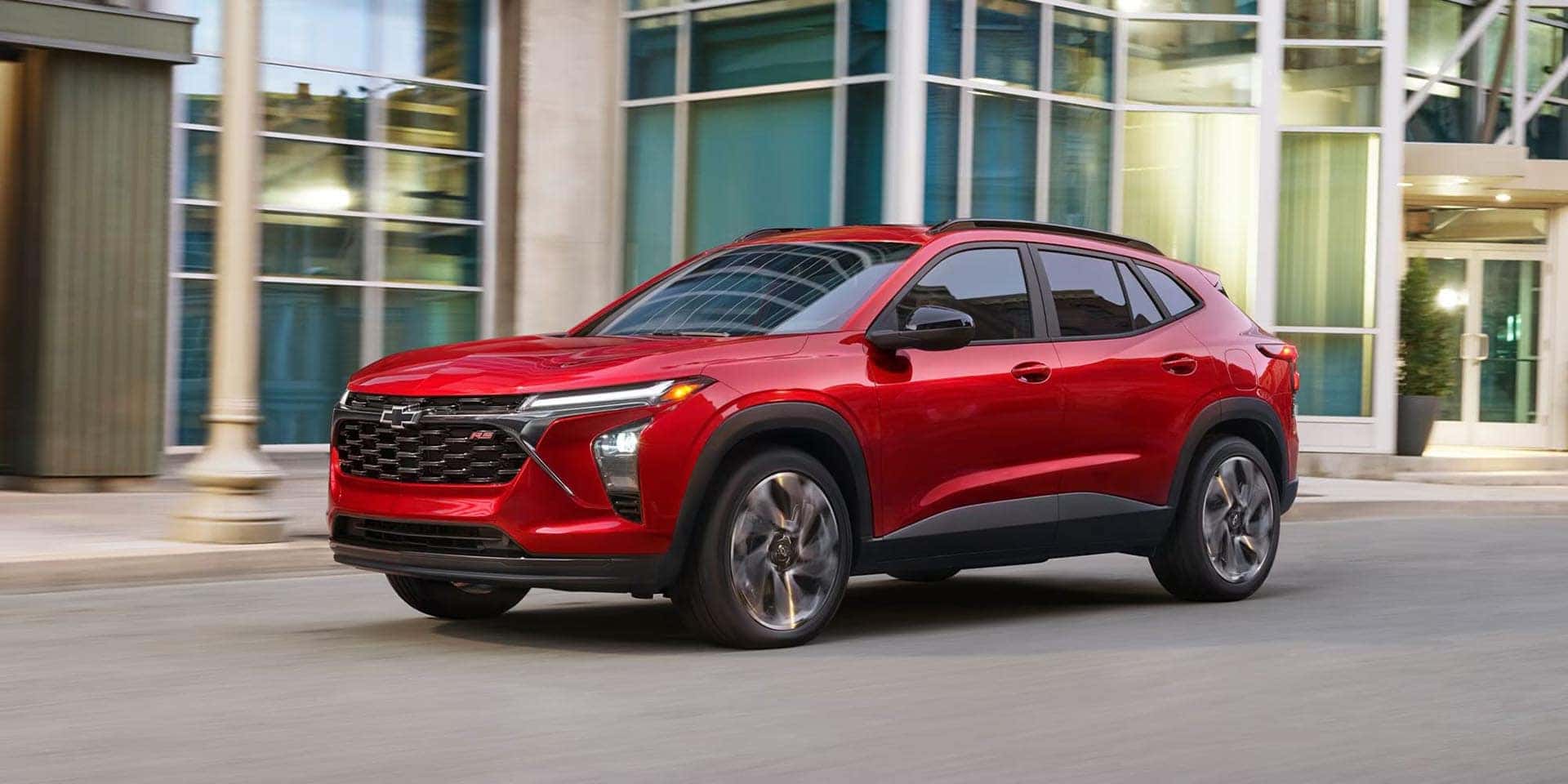
The 2RS adds a flat-bottom steering wheel and red interior accents; the ACTIV adds Titanium chrome trim and yellow interior accents. The Trax looks more distinctive on Denver and Lakewood streets than its sticker suggests.
5. Conventional 6-speed automatic
The Trax uses a traditional six-speed automatic. The Kona’s base 2.0L uses an IVT (a CVT-style gearbox); the 1.6L turbo gets a real 8-speed automatic with paddle shifters but only on SEL Premium and Limited. For drivers who prefer the familiar feel of a conventional automatic at base-trim pricing, the Trax delivers.
6. Net cost of ownership at typical loan terms
If you finance over 5-6 years and trade in inside the powertrain warranty windows, the Trax’s $5,000 entry-price advantage typically beats the Kona’s 10-year / 100,000-mile powertrain warranty advantage in dollar terms. For 10-year-hold buyers, the math can flip toward the Kona. Match the math to how you actually drive.
Why Shop the Chevy Trax in Denver With Emich Chevrolet
Buying a Chevy Trax near Denver should be the easy part of your week. As a top-rated Chevrolet dealer in the Denver metro, Emich Chevrolet built our process around transparency and speed. You get clear pricing up front, a no-pressure test drive, and a finance team that walks you through every line on the page — no surprises, no rushed signatures.
Our service department is staffed by Chevrolet-certified technicians who know the Trax platform inside and out. That matters in Colorado, where cold-weather starts, altitude tuning, and brake wear on Front Range descents all need specific expertise. Every Trax we sell gets a multi-point inspection before delivery. We aim to offer the best selection, best pricing, and best sales and service in Denver and Lakewood — and we work to prove it on every visit.
Frequently Asked Questions
Is the Chevy Trax better than the Hyundai Kona?
For most Denver and Lakewood drivers shopping on value, yes — at the base trim. The 2026 Chevy Trax vs Hyundai Kona comparison favors the Trax on starting price ($20,500 vs $25,500), off-the-line torque (162 lb-ft vs 132 lb-ft on the base Kona engine), and turbocharged altitude performance. The 2026 Kona counters with available HTRAC AWD on every trim, the industry’s strongest warranty (5/60 bumper, 10/100 powertrain), more standard safety content, and a turbocharged 190-hp 1.6L on the SEL Premium and Limited trims — but those advantages start at a $5,000 higher base price.
Does the 2026 Chevy Trax come with all-wheel drive?
No. The 2026 Chevy Trax is front-wheel drive only across every trim — LS, 1RS, LT, 2RS, and ACTIV. If all-wheel drive is required for your driving needs in Denver, the Chevy Trailblazer is the next-step-up Chevy SUV with available AWD. Many Front Range commuters drive FWD vehicles year-round with a quality set of winter tires.
How much horsepower does the 2026 Chevy Trax have versus the Kona?
The 2026 Chevrolet Trax produces 137 horsepower and 162 lb-ft of torque from its 1.2L ECOTEC turbocharged three-cylinder engine, paired with a six-speed automatic transmission. The 2026 Hyundai Kona SE and SEL Sport use a 2.0L naturally aspirated four-cylinder rated at 147 horsepower and 132 lb-ft, with an IVT (CVT-style) transmission. The Kona SEL Premium and Limited step up to a 1.6L turbocharged four-cylinder rated at 190 hp and 195 lb-ft with an 8-speed automatic — significantly more power than the Trax, but at a starting price of $28,550 and $32,650 respectively.
What is the MPG of the 2026 Chevy Trax versus the Kona?
The 2026 Chevy Trax delivers a GM-estimated 30 mpg combined. The 2026 Hyundai Kona SE FWD comes in at 31 mpg combined (29 city / 34 highway); the Kona Limited FWD with the 1.6L turbo comes in at 28 mpg combined; AWD Konas range from 26 to 28 mpg combined depending on trim. For a typical Denver-area commute of 12,000 to 15,000 miles a year, the difference between the Trax’s 30 mpg and a Kona FWD at 28-31 mpg works out to between $0 and $50 a year at average fuel prices.
How much cargo space does the 2026 Chevy Trax have?
The 2026 Chevy Trax offers 25.6 cubic feet behind the second row and up to 54.1 cubic feet with the 60/40 split-folding rear seats down. The 2026 Hyundai Kona is essentially identical behind the second row at 25.5 cubic feet but adds meaningfully more max cargo at 63.7 cubic feet with the seats folded. For Denver-area buyers who routinely run a ski-trip load or a Costco haul, the Kona’s longer cargo bay is a real-world advantage.
What is the warranty on the 2026 Chevy Trax versus the Hyundai Kona?
The 2026 Chevy Trax carries Chevrolet’s standard factory warranty: 3 years / 36,000 miles bumper-to-bumper and 5 years / 60,000 miles powertrain. The 2026 Hyundai Kona carries Hyundai’s America’s Best Warranty: 5 years / 60,000 miles bumper-to-bumper, 10 years / 100,000 miles powertrain, 7 years / unlimited miles anti-perforation, and 5 years / unlimited miles roadside assistance. Hyundai’s warranty is genuinely the stronger paper. For long-term-hold buyers, that’s worth real money; for buyers who finance over 5-6 years and trade in, the Trax’s lower entry price typically delivers more net value.
What safety features come standard on the 2026 Trax?
Every 2026 Chevy Trax includes Chevy Safety Assist, which bundles Automatic Emergency Braking, Front Pedestrian Braking, Lane Keep Assist with Lane Departure Warning, Forward Collision Alert, Following Distance Indicator, and IntelliBeam auto high beams. Higher trims add adaptive cruise control. The Kona counters with Hyundai SmartSense standard across the entire lineup, which adds Blind-Spot Collision-Avoidance Warning and Rear Cross-Traffic Collision-Avoidance Assist at base — a real standard-content edge on the Hyundai side.
Can I test drive a Chevy Trax in Lakewood the same day?
Yes. You can test drive any Trax on the Emich Chevrolet lot the same day you visit our Denver showroom — convenient for shoppers driving in from Lakewood, Aurora, Englewood, or anywhere along the Front Range. Most shoppers tell us the difference between the Trax and Kona is most obvious back-to-back. Our team can have a Trax staged and ready when you arrive.
Key Takeaways
- The 2026 Chevy Trax starts at $20,500; the 2026 Hyundai Kona starts at $25,500 — a $5,000 gap at base trim in the Trax’s favor.
- The Trax uses a 1.2L turbocharged I3 with 137 hp and 162 lb-ft on every trim. The Kona uses a 147-hp 2.0L on SE / SEL Sport and a 190-hp 1.6L turbo on SEL Premium / Limited.
- The Trax is FWD-only. The Kona offers HTRAC AWD on every trim. For AWD in a Chevy SUV, look at the Chevy Trailblazer.
- Combined fuel economy: Trax 30 mpg (GM-estimated) vs Kona 28-31 mpg depending on engine and drivetrain.
- Cargo: Trax 25.6 / 54.1 cu ft vs Kona 25.5 / 63.7 cu ft. Near-identical behind the second row; Kona wins on max cargo by about 9.6 cu ft.
- Tech: Trax 8-inch standard / 11-inch on LT+, plus 8-inch digital cluster on LT+. Kona 12.3-inch standard with 12.3-inch digital cluster on SEL Premium and Limited.
- Warranty: Trax 3/36 bumper, 5/60 powertrain. Kona 5/60 bumper, 10/100 powertrain — a meaningful Hyundai advantage for long-hold owners.
- If entry price and turbocharged torque are the priorities, the Trax is the smarter pick. If the strongest warranty plus AWD availability are essential, the Kona is the better fit.
Cost, Timing, and What to Expect
Most Denver-area Trax shoppers complete a test drive, trade-in appraisal, and financing review in about 90 minutes at Emich Chevrolet. Same-day delivery is common for units already on our lot. Custom factory orders typically arrive within 8 to 14 weeks depending on configuration and demand. Trade-in values are based on transparent market data — we walk through every number with you. Financing and leasing options are both available, and GM Financial regularly offers Denver-area incentives we can apply at checkout.
See the Chevy Trax in Person at Emich Chevrolet
Top-rated Chevrolet dealer in Denver. Best selection, best pricing, and the area’s most trusted Chevy sales and service team.
Last updated: May 17, 2026 | Service area: Denver, Lakewood, Aurora, and the Front Range