

2026 Silverado EV vs Ford F-150 Lightning | Emich Chevrolet Denver
Last updated: July 13, 2026 | Service area: Denver, Lakewood, Aurora, and the Front Range
The electric truck race is heating up in 2026, and two heavyweights are battling for the top spot: the Chevrolet Silverado EV and the Ford F-150 Lightning. Both are full-size, four-wheel-drive electric pickups built for real work — but they differ sharply on range, towing capability, price, and technology. For Denver-area truck buyers weighing an electric upgrade, this comparison breaks down every verified spec so you can make a confident decision before visiting the lot.
Quick Answer
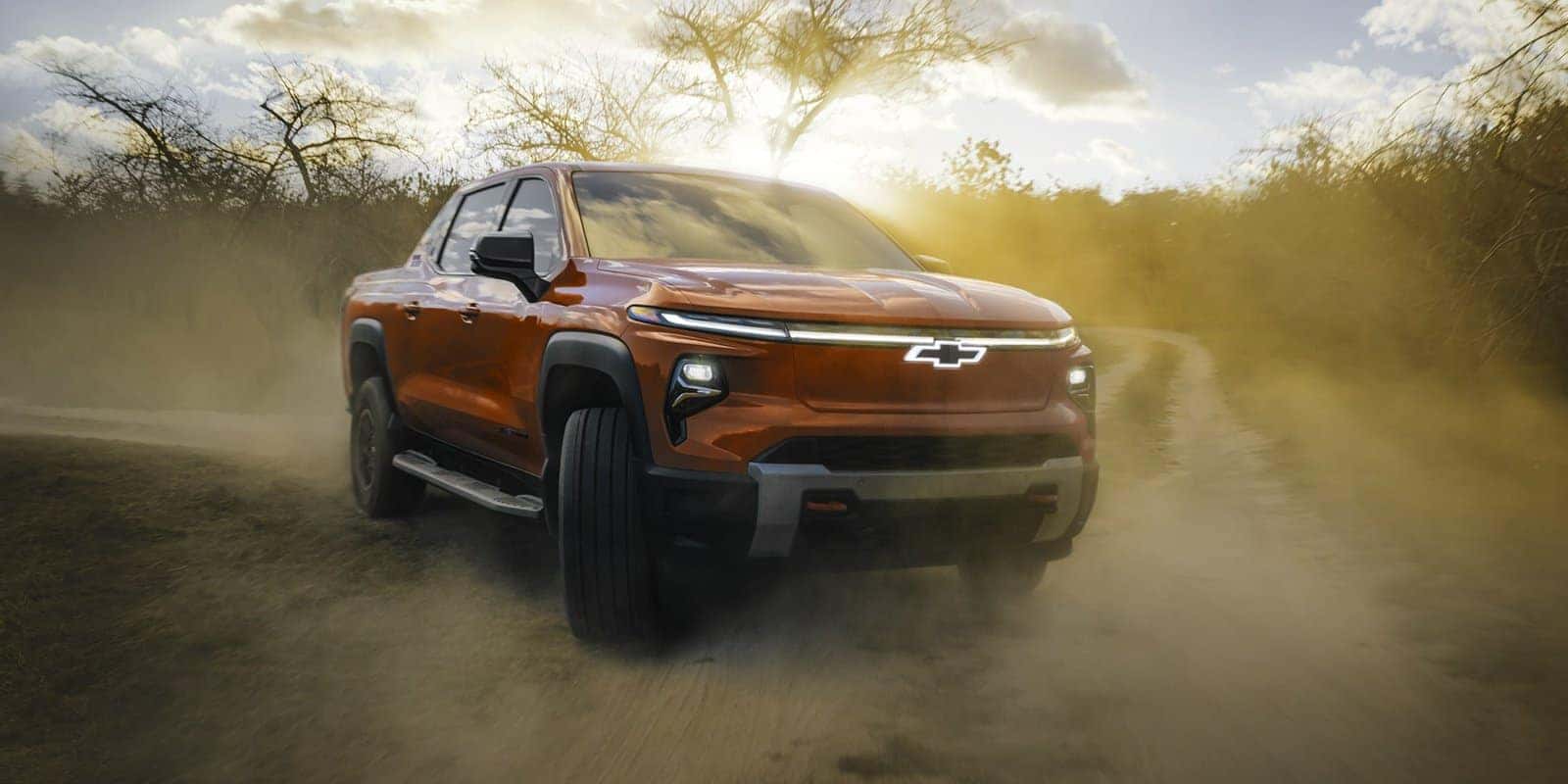
The 2026 Silverado EV starts at $55,895 for the Custom (WT) trim and delivers up to 478 miles of GM-estimated range with the Max Range battery — over 150 miles more than the F-150 Lightning’s best of roughly 320 miles. The Silverado EV also tows up to 12,500 lbs (vs. 10,000 for the Lightning), charges at up to 350 kW, and offers Super Cruise hands-free driving that works while towing. For Front Range truck buyers who need maximum range, capability, and technology, the Silverado EV is the stronger choice.
See the Silverado EV in Person at Emich Chevrolet
Top-rated Chevrolet dealer in Denver. Best selection, best pricing, and the area’s most trusted Chevy sales and service team.
At-a-Glance: 2026 Silverado EV vs. 2026 F-150 Lightning
| Spec | 2026 Silverado EV | 2026 F-150 Lightning |
|---|---|---|
| Starting MSRP | $55,895 (Custom/WT) | $65,995 (Flash) + $2,595 dest. |
| Max Range (est.) | Up to 478 mi (GM-est., Max Range) | ~320 mi (extended battery) |
| Max Horsepower | 760 hp (Wide Open Watts) | 580 hp (extended battery) |
| Max Torque | 775 lb-ft (Wide Open Watts) | 775 lb-ft |
| Max Towing | 12,500 lbs | 10,000 lbs |
| Payload | ~1,800–2,350 lbs | Up to 2,235 lbs |
| DC Fast Charging | 350 kW (120 mi in 10 min) | 10–80% under 40 min |
| Bed Length | 5’11” (10’10” w/ Multi-Flex Midgate) | 5’6″ |
| Drivetrain | Standard 4WD | Standard 4WD |
| Hands-Free Driving | Super Cruise (works while towing) | BlueCruise (does NOT support towing) |
| Trims | Custom (WT), LT, Trail Boss | Pro, STX, Flash, Lariat, Platinum |
Range & Charging
Range anxiety is the number-one concern for truck buyers going electric, and this is where the Silverado EV pulls away decisively. With the Max Range battery on the LT trim, Chevrolet estimates up to 478 miles on a full charge. Even the standard battery configuration offers substantial range. The F-150 Lightning tops out at roughly 320 miles with its 131 kWh extended-range battery, and the standard 123 kWh pack delivers about 300 miles.
That 150-plus-mile advantage matters in Colorado. A round trip from Denver to Glenwood Springs is about 320 miles — doable in the Silverado EV without a charging stop, but tight in the Lightning, especially in winter when cold temperatures reduce EV range.
Charging speed is equally important. The Silverado EV supports up to 350 kW DC fast charging, adding approximately 120 miles of range in just 10 minutes at a compatible station. The Lightning charges from 10 to 80 percent in under 40 minutes but does not match the Silverado’s peak charging rate. For a truck owner who frequently hauls gear to the mountains, faster charging translates directly to less time waiting and more time on the trail.
Towing & Capability
A truck that can’t tow isn’t really a truck. The Silverado EV tows up to 12,500 pounds, enough for a large camper, horse trailer, or loaded construction trailer. The F-150 Lightning maxes out at 10,000 pounds with the Max Tow Package on Flash or Lariat trims. That 2,500-pound difference opens up a wider range of towing scenarios for Silverado EV buyers.
Payload capacity is competitive between the two. The Silverado EV handles roughly 1,800 to 2,350 pounds depending on configuration, while the Lightning carries up to 2,235 pounds. Both figures are more than adequate for typical loads — lumber, equipment, or a bed full of landscaping supplies.
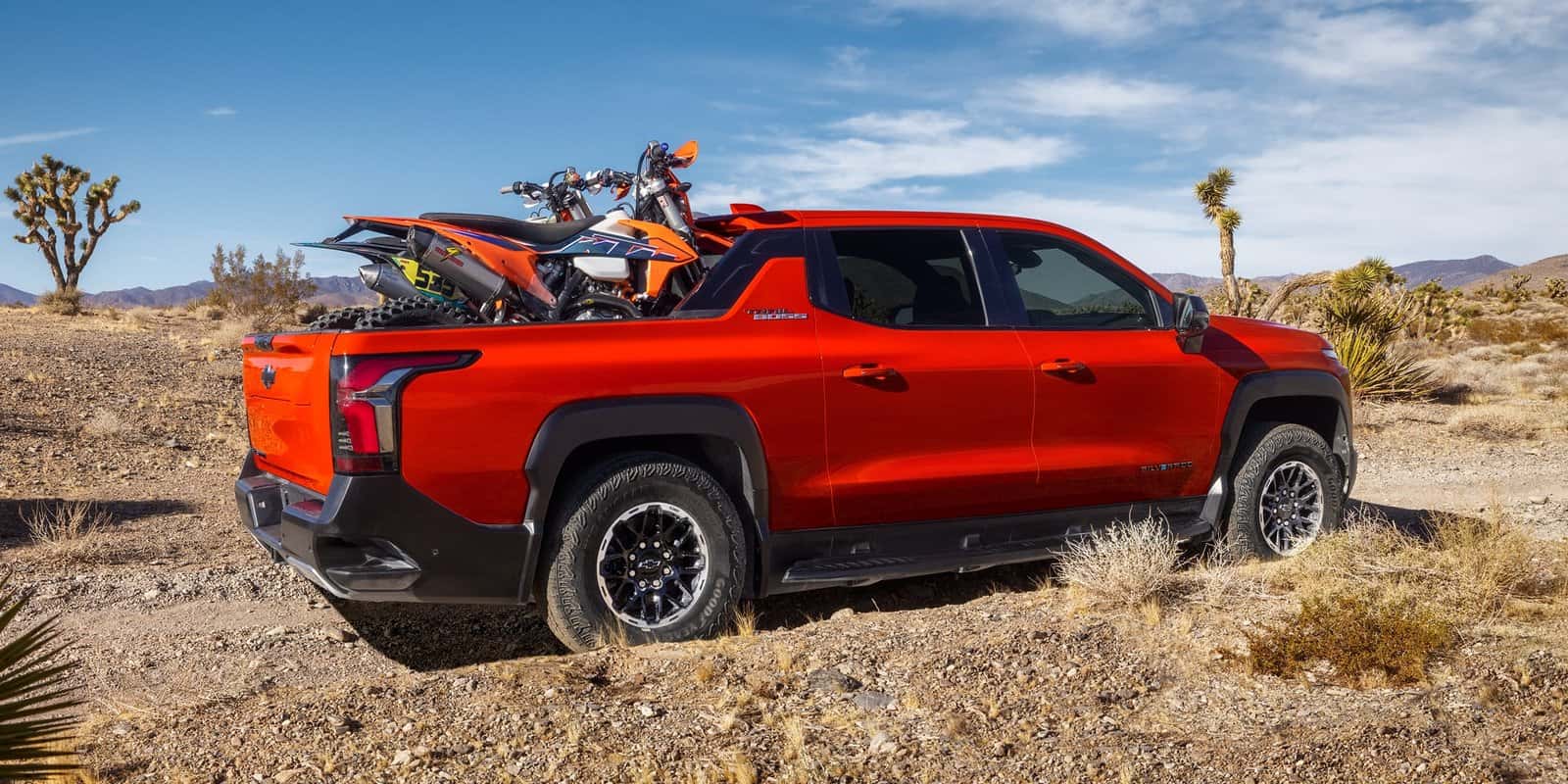
The Silverado EV’s bed is also longer at 5 feet 11 inches, and the available Multi-Flex Midgate extends that to a remarkable 10 feet 10 inches — long enough for full sheets of plywood or a pair of mountain bikes without the tailgate down. The Lightning’s 5-foot-6-inch bed is adequate but cannot match that versatility. The Silverado EV also offers an eTrunk with 10.7 cubic feet of lockable, weatherproof front storage and available Sidewinder four-wheel steer for improved maneuverability on tight Denver streets and job sites.
Technology & Interior
Inside the Silverado EV, a massive 17.7-inch diagonal infotainment screen dominates the dashboard, paired with an 11-inch driver information center. The system runs Google Built-In with available navigation, voice commands, and over-the-air updates. Ford’s Lightning offers its 15.5-inch portrait-style SYNC 4A touchscreen, which is capable but smaller than what Chevrolet provides.
The biggest technology gap is in hands-free driving. The Silverado EV offers Super Cruise, GM’s hands-free highway driving system — and critically, Super Cruise works while towing a trailer. That feature is a genuine game-changer for anyone hauling a camper on I-70 to the mountains. Ford’s BlueCruise offers hands-free driving too, but it does not support towing. The moment you hook up a trailer, you lose that capability in the Lightning.
The Silverado EV also serves as a mobile power source, providing up to 10.2 kW of offboard power through up to 11 outlets — enough to run power tools on a job site or keep a campsite fully powered at a Front Range campground. Ford offers its Pro Power Onboard system with similar functionality, making both trucks viable mobile generators.
Safety
Both electric trucks come with comprehensive safety suites. The Silverado EV includes Chevy Safety Assist with automatic emergency braking, front pedestrian braking, lane-keep assist, forward collision alert, and more. The available Super Cruise system adds an extra layer of safety on mapped highways by keeping the truck centered in its lane and maintaining a safe following distance — even with a trailer attached.
The F-150 Lightning offers Ford Co-Pilot360 with pre-collision assist, automatic high beams, and a blind-spot information system. Ford adds Pro Trailer Hitch Assist on select trims, which helps with the often-stressful task of backing up to a trailer. Both trucks benefit from the low center of gravity that comes with floor-mounted battery packs, reducing rollover risk compared to gas-powered pickups.
Pricing & Value
The Silverado EV starts at $55,895 for the Custom (WT) trim — significantly less than the Lightning’s lowest retail trim, the Flash, at $65,995 (plus $2,595 destination). That is a difference of over $12,000 at the entry level before any incentives. The Silverado EV LT at $69,100 and Trail Boss at $70,000 offer more features at prices that still compete favorably with the Lightning’s Lariat ($74,995) and Platinum ($84,995).
When you factor in the Silverado EV’s advantages — 158 more miles of estimated range, 2,500 more pounds of towing, faster DC charging, and Super Cruise with towing — the value proposition is clear. You get more truck for less money.
Chevrolet backs the Silverado EV with a 3-year/36,000-mile bumper-to-bumper warranty, a 5-year/60,000-mile powertrain warranty, and an 8-year/100,000-mile EV battery and drivetrain warranty. That layered coverage provides confidence through the years that matter most.
Common Mistakes Denver Shoppers Make When Comparing Electric Trucks
- Comparing range without considering altitude and cold. Colorado’s elevation and winter temperatures reduce EV range. The Silverado EV’s 478-mile ceiling gives you a much larger buffer for mountain driving and cold-weather range loss than the Lightning’s ~320 miles.
- Ignoring towing with hands-free driving. Both trucks offer hands-free highway driving, but only Super Cruise in the Silverado EV works while towing. If you tow a trailer to the mountains regularly, that distinction is critical.
- Focusing on MSRP without comparing entry-level content. The Silverado EV Custom (WT) starts over $12,000 less than the Lightning Flash. Even the LT at $69,100 undercuts the Lightning Lariat by nearly $6,000.
- Overlooking charging speed differences. Adding 120 miles in 10 minutes (Silverado EV at 350 kW) versus 40 minutes for a 10–80% charge (Lightning) is a significant real-world difference on road trips along I-70.
Top Reasons to Choose the 2026 Silverado EV
1. Up to 478 Miles of Estimated Range
No electric truck on the market comes close. With the Max Range battery, the Silverado EV offers a GM-estimated 478 miles — enough to drive from Denver to Moab, Utah, without stopping to charge. The Lightning’s best is roughly 320 miles, a gap of over 150 miles.
2. 12,500-Pound Max Towing Capacity
The Silverado EV tows 2,500 pounds more than the Lightning’s maximum of 10,000 pounds. Whether you’re hauling a boat to Chatfield Reservoir or a camper to Rocky Mountain National Park, the Silverado EV gives you more headroom.
3. 760 Horsepower with Wide Open Watts
Activate Wide Open Watts mode and the Silverado EV delivers 760 hp and 775 lb-ft of torque, launching this full-size truck from 0 to 60 in under 4.5 seconds. The Lightning’s extended-battery output of 580 hp is strong, but it cannot match those numbers.
4. Super Cruise with Towing Support
GM’s Super Cruise is the only hands-free highway driving system that works while towing. On long I-70 hauls through the mountains with a trailer, that feature reduces driver fatigue dramatically. BlueCruise in the Lightning shuts off when a trailer is connected.
5. Multi-Flex Midgate for a 10’10” Bed
The available Multi-Flex Midgate extends the Silverado EV’s bed from 5’11” to 10’10”, accommodating long cargo that would require a full-size trailer in the Lightning. Add the eTrunk’s 10.7 cubic feet of secure front storage, and you have unmatched cargo flexibility.
6. Lower Starting Price
The Silverado EV Custom (WT) starts at $55,895 — over $12,000 less than the Lightning Flash at $65,995 (+ destination). That savings can go toward a home charger installation, Colorado adventures, or simply staying under budget.
Why Shop the Silverado EV at Emich Chevrolet
Emich Chevrolet has served Denver and Lakewood for decades as the area’s trusted Chevy dealer. Our EV-certified sales team can walk you through the Silverado EV lineup — from the work-ready Custom to the off-road-ready Trail Boss — and help you understand home charging options, Colorado EV tax incentives, and real-world range expectations at altitude. Our factory-certified service department is equipped to handle every aspect of EV maintenance, from software updates to tire rotations, right here in Lakewood. When you’re ready to drive the future of trucks, Emich makes the process simple.
Frequently Asked Questions
How does the Silverado EV’s range compare to the F-150 Lightning?
The Silverado EV offers up to 478 miles of GM-estimated range with the Max Range battery, while the F-150 Lightning tops out at roughly 320 miles with its extended-range battery. That gives the Silverado EV a lead of more than 150 miles.
Which electric truck can tow more?
The 2026 Silverado EV tows up to 12,500 pounds compared to the F-150 Lightning’s maximum of 10,000 pounds. The Silverado EV also supports Super Cruise hands-free driving while towing, which the Lightning’s BlueCruise does not.
Is the 2026 Silverado EV cheaper than the F-150 Lightning?
Yes. The Silverado EV Custom (WT) starts at $55,895, while the lowest retail Lightning trim (Flash) starts at $65,995 plus $2,595 destination. That is a difference of over $12,000 at the entry level.
How fast does the Silverado EV charge?
The Silverado EV supports up to 350 kW DC fast charging and can add approximately 120 miles of range in just 10 minutes at a compatible station. On a Level 2 home charger, you can fully recharge overnight.
Does the Silverado EV work well at Denver’s altitude?
Electric motors are unaffected by altitude, so the Silverado EV delivers the same power output at 5,280 feet that it does at sea level — an advantage over gas trucks that lose horsepower in thin air. Cold weather can reduce range, but the Silverado EV’s class-leading 478-mile estimate provides a generous buffer.
What warranty does the 2026 Silverado EV include?
Chevrolet provides a 3-year/36,000-mile bumper-to-bumper warranty, a 5-year/60,000-mile powertrain warranty, and an 8-year/100,000-mile warranty on the EV battery and drivetrain components.
Key Takeaways
- The 2026 Silverado EV starts at $55,895 — over $12,000 less than the F-150 Lightning Flash at $65,995 (+ destination).
- Up to 478 miles of GM-estimated range vs. roughly 320 miles for the Lightning — a gap of more than 150 miles.
- 12,500-pound max towing vs. 10,000 for the Lightning. The Silverado EV handles bigger loads.
- 760 hp with Wide Open Watts and 0–60 in under 4.5 seconds.
- Super Cruise works while towing; BlueCruise does not.
- 350 kW DC fast charging adds 120 miles in 10 minutes.
- Multi-Flex Midgate extends the bed to 10’10” for maximum cargo flexibility.
Cost & Timing
The 2026 Chevrolet Silverado EV is available now at Emich Chevrolet, with the Custom (WT) starting at $55,895, the LT at $69,100, and the Trail Boss at $70,000. Colorado EV buyers may qualify for federal and state tax incentives that can further reduce the effective purchase price. Contact our team to learn about current offers, available inventory, and financing options tailored to your budget.
See the Silverado EV in Person at Emich Chevrolet
Top-rated Chevrolet dealer in Denver. Best selection, best pricing, and the area’s most trusted Chevy sales and service team.
Last updated: July 13, 2026 | Service area: Denver, Lakewood, Aurora, and the Front Range