

Colorado Savings on the 2027 Bolt EV
Last updated: April 6, 2026 | Service area: Denver, Lakewood, CO
Bolt EV Cost: How Colorado Drivers Save Big in 2026
Quick Answer
The 2026 Chevrolet Bolt EV starts at $26,500 MSRP. Colorado residents can stack a $3,250 state tax credit (for vehicles priced under $35,000) with a $9,000 VXC rebate for income-qualified buyers who trade in an older gas vehicle. Qualifying buyers in Denver and Lakewood can reduce their effective Bolt EV cost by over $12,000 — making it one of the most affordable EV deals in the country.
Ready to see your real Bolt EV price?
Top-rated selection and pricing in Denver and Lakewood.
Why the Bolt EV Is One of the Most Affordable EVs Available
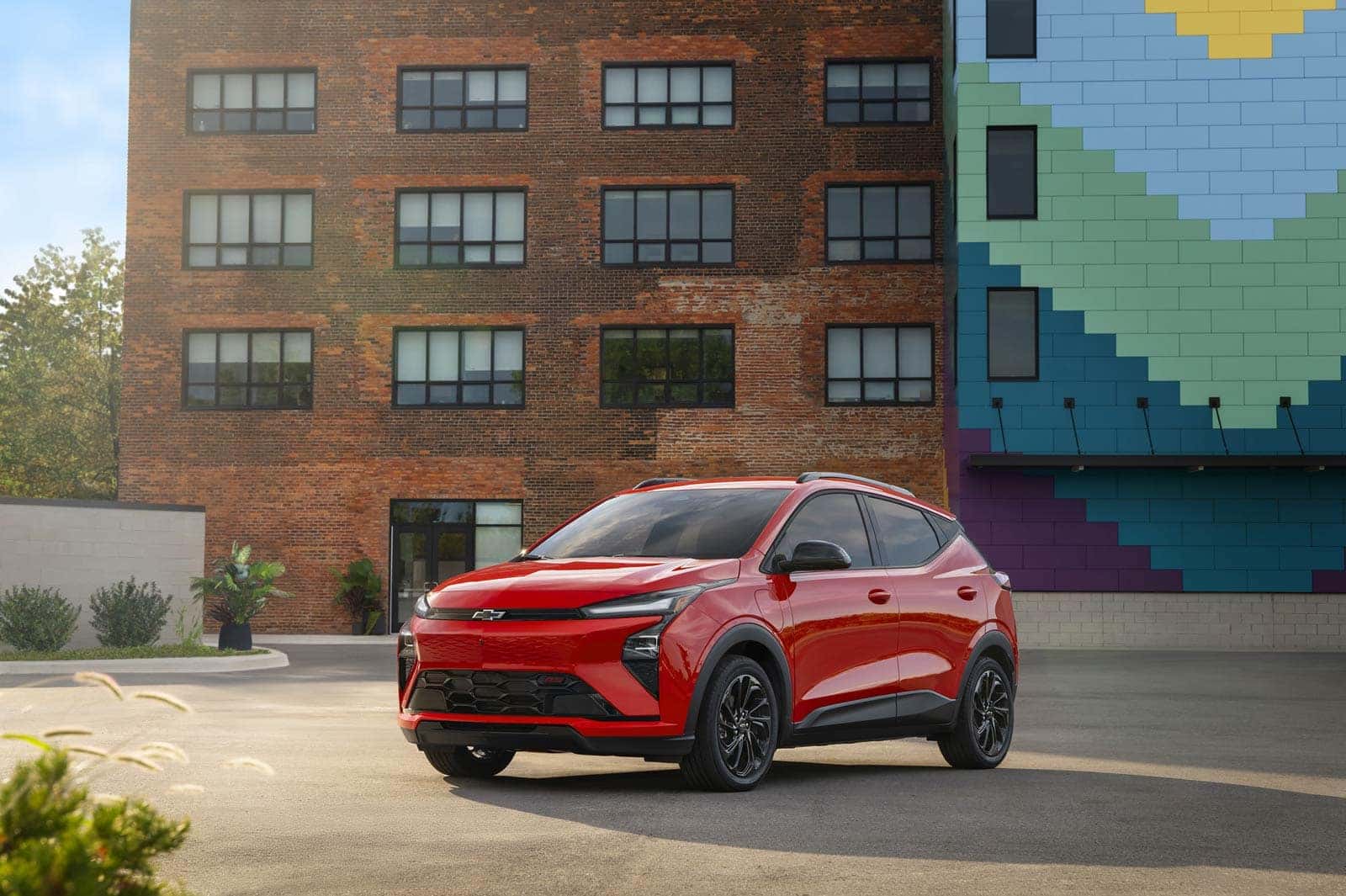
When shoppers compare EV costs in 2026, the Chevrolet Bolt EV stands out as the best-priced EV from a major automaker. Starting at $26,500 MSRP, it falls well under Colorado’s $35,000 threshold that unlocks the maximum state tax credit — a deliberate sweet spot that makes the numbers work exceptionally well for Colorado buyers.
The real Bolt EV cost for Colorado residents is significantly lower than sticker price once state incentive programs are factored in. The Colorado Innovative Motor Vehicle Credit, the Colorado Vehicle Exchange Program (VXC), and potential federal credits can combine to take thousands off the purchase price. For eligible Denver and Lakewood buyers, the effective out-of-pocket EV cost can be reduced by $12,000 or more.
For shoppers looking for the cheapest EV that still delivers range, technology, and long-term reliability backed by a major manufacturer, the Bolt EV is the clear answer.
Colorado’s Innovative Motor Vehicle Credit: What You Actually Get in 2026
Colorado’s Innovative Motor Vehicle Credit is a state income tax credit for the purchase or lease of a new qualifying electric or plug-in hybrid vehicle. The credit applies dollar-for-dollar against your Colorado state income tax liability when you file your taxes.
For 2026, the credit structure is as follows according to the Colorado Energy Office and the Colorado Department of Revenue:
Current Credit Amounts — New Vehicles
| Vehicle / MSRP Tier | Credit Amount | Notes |
|---|---|---|
| New BEV or PHEV (MSRP up to $80,000) | $750 | Base credit — all qualifying new EVs |
| Additional credit for vehicles with MSRP up to $35,000 | $2,500 | Bolt EV qualifies at $26,500 MSRP |
| Total Bolt EV State Credit (new purchase) | $3,250 | $750 + $2,500 combined |
Because the Bolt EV’s $26,500 MSRP falls well below the $35,000 threshold, buyers receive both the base $750 credit and the additional $2,500 credit — totaling $3,250 in state tax savings. Lease agreements must have an initial term of at least two years to qualify.
Some Chevrolet dealers in Denver and Lakewood allow buyers to assign the tax credit directly to the dealer as a point-of-sale discount, so you don’t have to wait until you file your taxes. Ask your dealer if this option is available. For full credit details, visit the Colorado Department of Revenue — Innovative Motor Vehicle Credit page.
Who Qualifies for the State Credit?
Any Colorado taxpayer — resident or business — who purchases or leases a qualifying new electric or plug-in hybrid vehicle that is titled and registered in Colorado is eligible. There are no income limits for the standard state credit. The vehicle must have an MSRP of $80,000 or less to qualify, and the Bolt EV comfortably meets that requirement.
The Colorado Vehicle Exchange Program (VXC): A $9,000 Rebate for Eligible Buyers
The Colorado Vehicle Exchange Program, known as VXC, is a state rebate program that helps income-qualified Coloradans trade in older or high-emitting gas vehicles and replace them with electric vehicles like the Chevrolet Bolt EV. The VXC rebate is applied as a point-of-sale discount at the time of purchase or lease — it comes directly off the vehicle price, not as a tax filing.
As of November 3, 2025, the VXC rebate amount for a new electric vehicle is $9,000. This is a substantial increase from prior program years and makes the Bolt EV an extraordinarily compelling option for qualifying Denver and Lakewood residents.
VXC Rebate Amounts
| Vehicle Type | VXC Rebate Amount |
|---|---|
| New BEV or PHEV (MSRP $80,000 or less) | $9,000 |
| Used BEV or PHEV (negotiated price $50,000 or less) | $6,000 |
The Bolt EV’s $26,500 MSRP is well under the $80,000 MSRP cap for new vehicle VXC eligibility. Note that the VXC rebate cannot exceed the remaining purchase price after all other rebates and discounts have been applied.
How VXC Works: Step by Step

- Confirm your eligibility. Review income requirements and verify your trade-in vehicle qualifies. See eligibility details in the next section.
- Gather your application materials. You will need your name, contact information, driver’s license, proof of income qualification, proof of current Colorado address, and your old vehicle’s information.
- Submit your online application through the Vehicle Exchange Colorado Application Portal before visiting a dealer.
- Receive application approval. The program team will contact you if any application issues need to be resolved.
- Trade in your old vehicle at a participating dealer and receive your $9,000 point-of-sale rebate on a qualifying new EV purchase or lease.
Important: You must be approved for a VXC rebate before purchasing. Rebates are not retroactive to past purchases or leases. The vehicle must be purchased after approval is received.
For program questions, contact the VXC customer service team: Phone: 833-933-9602 | Email: [email protected]. Full program details are at the Colorado Energy Office VXC page.
VXC Eligibility: Applicant and Vehicle Requirements
Eligible Applicants Must:
- Live in Colorado and be 18 years or older
- Hold a current and valid Colorado driver’s license
- Own an eligible old or high-emitting vehicle
- Meet at least one of the income requirements below
Income Qualification — Meet at Least One:
- Household income below 80% of the Area Median Income (AMI) in your Colorado county — view the 80% AMI chart
- OR current enrollment in one of the following programs: Colorado CARE, Weatherization Assistance Program (WAP), Medicaid, RTD LiVE, Section 8, SSDI, WIC, LEAP, SNAP, or SSI
Your Trade-In Vehicle Must:
- Be an operational gasoline- or diesel-powered vehicle
- Be model year 2014 or older (12 years or older for a 2026 application), OR fail a Colorado emissions test
- Be currently titled and registered in Colorado in the applicant’s name only
- Have a clear title with no outstanding lien
- Not be an electric vehicle, hybrid, motorcycle, RV, camper, or boat
Only one VXC rebate is allowed per tax household. The VXC rebate can be stacked with the Colorado state EV tax credit. Reach out to the VXC program or your dealer for guidance on combining multiple incentives.
Real Bolt EV Cost Breakdown: Standard Buyer vs. VXC-Eligible Buyer
The table below shows how EV savings stack up for a typical Denver or Lakewood buyer in 2026, using current published incentive amounts. Individual results will vary based on income, tax liability, and program availability at time of purchase.
| Cost / Incentive | Standard Buyer | VXC-Eligible Buyer |
|---|---|---|
| 2026 Bolt EV Starting MSRP | $26,500 | $26,500 |
| Colorado Innovative Motor Vehicle Credit (base) | – $750 | – $750 |
| Additional Credit (MSRP under $35,000) | – $2,500 | – $2,500 |
| Colorado VXC Rebate (new EV) | N/A | – $9,000 |
| Federal EV Tax Credit (if applicable)* | None Available | None Available |
| Effective Price (state incentives only) | ~$23,250 | ~$14,250 |
*Federal credit eligibility for 2026 should be verified with a tax professional or at IRS.gov, as federal EV incentive rules are subject to ongoing legislative changes. State incentive amounts are based on published Colorado program figures as of April 2026. Pricing is illustrative and does not include taxes, dealer fees, or destination charges.
Why the Bolt EV Is a Smart Long-Term Investment for Colorado Drivers
EV savings extend well beyond the purchase price. The Bolt EV delivers one of the lowest total costs of ownership of any vehicle in its segment — electric or gas-powered.
Fuel Cost Savings
Denver-area gas prices fluctuate, but a driver covering 12,000 miles per year in a 30-mpg gas vehicle spends roughly $1,300 to $1,500 annually on fuel. The same miles in a Bolt EV cost approximately $550 to $650 at Colorado’s residential electricity rates — a savings of $700 to $900 per year. Over a 10-year ownership period, that difference adds up to $7,000 to $9,000 in fuel savings alone.
Maintenance Savings
The Bolt EV eliminates oil changes, transmission service, spark plugs, and exhaust repairs. Studies consistently show EV maintenance costs run 30 to 40% lower than comparable gas vehicles over a 5-year period. For Bolt EV owners, that typically translates to $2,000 to $3,500 in savings over the course of ownership.
Range for Real Colorado Life
The Bolt EV’s EPA-estimated 259 miles of range comfortably handles daily Denver and Lakewood commutes. It reaches Colorado Springs or Fort Collins without a stop and handles most Front Range day trips without charging anxiety. For the occasional mountain trip, Lakewood and Denver are well-served by public fast-charging infrastructure along major Colorado corridors.
Timing and What to Expect at the Dealership
Act Before VXC Funds Run Out
VXC program funding is allocated for each program cycle and is distributed until funds are exhausted. Program procedures, requirements, and rebate levels are subject to change or cancellation without notice. Prior VXC funding rounds have closed before the end of the year. Denver and Lakewood buyers who qualify should apply as early as possible in 2026 to secure their rebate.
What to Bring When You Apply (VXC)
- Current and valid Colorado driver’s license
- Proof of income qualification: 2023, 2024, or 2025 federal Form 1040 (Line 9), OR four consecutive weeks of pay stubs (all less than six months old), OR proof of enrollment in a qualifying assistance program
- Proof of current Colorado address (utility bill, bank statement, or other acceptable document dated within the past year)
- Your old vehicle’s title (clear title, solely in your name, no liens)
- Current Colorado vehicle registration for the trade-in
How Long Does It Take?
A standard Bolt EV purchase with no VXC involvement takes no longer than any other new vehicle transaction. VXC applicants should allow time for online application submission and approval before visiting a participating dealer. Processing times vary, so apply as early as possible before committing to a specific purchase timeline. The Colorado state tax credit is claimed when you file your taxes — unless your dealer offers point-of-sale assignment, which brings the savings forward to the day of purchase.
Why Choose Chevrolet — and Our Denver and Lakewood Dealerships
Chevrolet has sold over 200,000 Bolt EVs since launch, building one of the most extensive real-world EV track records of any brand. The Bolt EV battery is backed by an 8-year / 100,000-mile warranty — among the strongest coverage available in the affordable EV category.
Our dealerships serving Denver and Lakewood bring that manufacturer strength together with local expertise:
- Best Selection: We carry one of the largest in-stock Bolt EV inventories in the Denver metro, spanning multiple trim levels and color options.
- Transparent Pricing: No added dealer markups. Your negotiation starts from the published price, not above it.
- Colorado Incentive Expertise: Our finance team is trained on the current VXC program, state tax credit rules, and any available Chevrolet manufacturer incentives. We identify every dollar available to you — including whether you can assign the state tax credit at point of sale.
- VXC Participating Dealer: Our Denver and Lakewood locations are authorized VXC program participants, so your trade-in and rebate are processed in-house without additional steps or delays.
- Certified EV Service: Chevrolet-certified EV technicians at both our Denver and Lakewood service centers provide expert Bolt EV maintenance and warranty service throughout ownership.
Key Takeaways
- The Chevrolet Bolt EV starts at $26,500 MSRP — below Colorado’s $35,000 threshold that unlocks the maximum state tax credit.
- Colorado’s Innovative Motor Vehicle Credit provides a $3,250 total state tax credit for new Bolt EV buyers ($750 base + $2,500 additional for vehicles under $35,000).
- Income-qualified buyers who trade in a 2014 or older gas vehicle can receive a $9,000 VXC point-of-sale rebate — applied directly off the purchase price at the dealership.
- VXC-eligible buyers who stack both programs bring their effective Bolt EV cost to approximately $14,250 before any federal credits.
- VXC funding is limited and first-come, first-served — funding has run out before year-end in prior cycles. Apply early in 2026.
- Fuel and maintenance EV savings add another $1,000 to $1,400 per year compared to a comparable gas vehicle.
- The Bolt EV battery warranty covers 8 years or 100,000 miles — one of the strongest guarantees in the affordable EV segment.
Frequently Asked Questions: Bolt EV Cost and Colorado EV Programs in 2026
What is the starting price of the Bolt EV in 2026?
The Chevrolet Bolt EV starts at $26,500 MSRP for 2026. This places it below Colorado’s $35,000 threshold that qualifies buyers for the maximum state Innovative Motor Vehicle Credit. It is one of the cheapest EVs available from a major automaker and falls well within the $80,000 MSRP cap for both the state credit and VXC program eligibility.
How much is the Colorado EV tax credit for a Bolt EV in 2026?
Colorado buyers of a new Bolt EV in 2026 can claim a total state tax credit of $3,250 — consisting of a $750 base credit available for all qualifying new EVs with an MSRP up to $80,000, plus an additional $2,500 credit for vehicles with an MSRP at or below $35,000. Since the Bolt EV starts at $26,500, it qualifies for both credits. Some dealers allow buyers to assign the credit as a point-of-sale discount rather than waiting to file taxes.
How much is the Colorado VXC rebate for a new Bolt EV?
As of November 3, 2025, the VXC rebate for a new battery electric or plug-in hybrid vehicle is $9,000, applied as a point-of-sale discount at an authorized dealer. Used EV purchases receive a $6,000 rebate. These rebate levels are subject to change based on available program funds. The Bolt EV’s MSRP is well under the $80,000 cap required for new vehicle VXC eligibility.
Can I stack the VXC rebate with the Colorado state EV tax credit?
Yes. The Colorado Energy Office confirms that VXC participants are allowed to combine the VXC rebate with the Colorado state Innovative Motor Vehicle Credit. A qualifying buyer could receive the $9,000 VXC rebate plus the $3,250 state tax credit, for a combined state incentive of $12,250 off a new Bolt EV. However, the VXC rebate cannot exceed the remaining vehicle price after all other discounts and rebates are applied.
Who qualifies for the Colorado VXC program?
To qualify, you must be a Colorado resident aged 18 or older with a valid Colorado driver’s license, own an eligible old vehicle (model year 2014 or older for a 2026 application, or a vehicle that fails Colorado emissions testing), and meet income eligibility — either household income below 80% of the area median income in your county, or current enrollment in a qualifying assistance program such as SNAP, Medicaid, LEAP, SSI, WIC, SSDI, or others listed by the Colorado Energy Office.
Do I apply for VXC before or after buying the car?
You must apply and receive approval before purchasing the vehicle. VXC rebates are not retroactive — they cannot be applied to a vehicle you have already bought. Apply through the online portal at coloradoenergyoffice.aptim.com, wait for approval, and then complete your Bolt EV purchase at an authorized VXC participating dealer. Contact the VXC team at 833-933-9602 or [email protected] with questions.
What model year does my trade-in need to be for VXC eligibility in 2026?
For a 2026 VXC application, your trade-in must be model year 2014 or older — that is 12 years old or more. Alternatively, a newer vehicle that fails a Colorado emissions test can also qualify. The vehicle must be a gasoline or diesel vehicle titled and registered in Colorado in your name with no outstanding lien.
How much does it cost to charge a Bolt EV in Denver or Lakewood?
At Colorado’s average residential electricity rate of approximately $0.13 to $0.15 per kWh, fully charging a Bolt EV from empty costs roughly $8.50 to $9.75. Most Denver and Lakewood drivers with average daily commutes spend well under $15 per week on electricity for their Bolt — compared to $30 to $50 per week in gasoline for a typical gas vehicle covering the same distance.
Is the Bolt EV a good investment for Colorado drivers in 2026?
Yes — particularly with the current Colorado incentive stack. The Bolt EV cost after combining the $3,250 state credit and $9,000 VXC rebate (for qualifying buyers) drops to approximately $14,250 before any federal incentive. Add annual fuel and maintenance EV savings of $1,000 to $1,400, and the Bolt EV delivers a total cost of ownership that is difficult to match at any price point in the Colorado market.
Official Resources for Colorado EV Buyers
- Colorado Energy Office — Vehicle Exchange Colorado (VXC) Program
- VXC Online Application Portal
- Colorado Energy Office — Electric Vehicle Tax Credits Overview
- Colorado Department of Revenue — Innovative Motor Vehicle Credit
- Colorado VXC — 80% AMI Income Eligibility Chart
- VXC — List of Participating Automobile Dealers
- IRS — Federal Clean Vehicle Credit Information
- EV CO — Colorado’s Electric Vehicle Education Resource
- U.S. DOE — Find EV Charging Stations Near Denver and Lakewood
See the Bolt EV and your real savings today.
Best selection and pricing in Denver and Lakewood. Top-rated Chevrolet sales and service.
Program amounts, eligibility requirements, and funding availability are subject to change or cancellation without notice. All incentive figures reflect published Colorado Energy Office and Colorado Department of Revenue program values as of April 2026. VXC rebate amounts shown are effective November 3, 2025. VXC funding is limited and first-come, first-served. The VXC rebate may not exceed the remaining vehicle purchase price after all other discounts are applied. Federal EV credit eligibility should be confirmed with a qualified tax professional or at IRS.gov. Fuel economy estimates are based on EPA ratings. Actual range varies with driving conditions, temperature, and load.