

How the 2027 Chevrolet Bolt EV Stacks Up
Last updated: April 6, 2026 | Service area: Denver, Lakewood, CO
Bolt EV vs. the Competition: Best Affordable EV for Denver Drivers in 2026
⚡ Quick Answer
The Chevrolet Bolt EV is the most affordable new EV in America in 2026, starting at $28,995 — before Colorado’s state tax credit of up to $3,250. With 262 miles of range, 150 kW DC fast charging, and the lowest sticker price among comparable EVs, the Bolt EV is the clearest value choice for Denver and Lakewood commuters who no longer have access to a federal EV tax credit.
Ready to Drive Electric for Less?
Denver and Lakewood’s top-rated Chevrolet dealer — best selection, best pricing, best service.
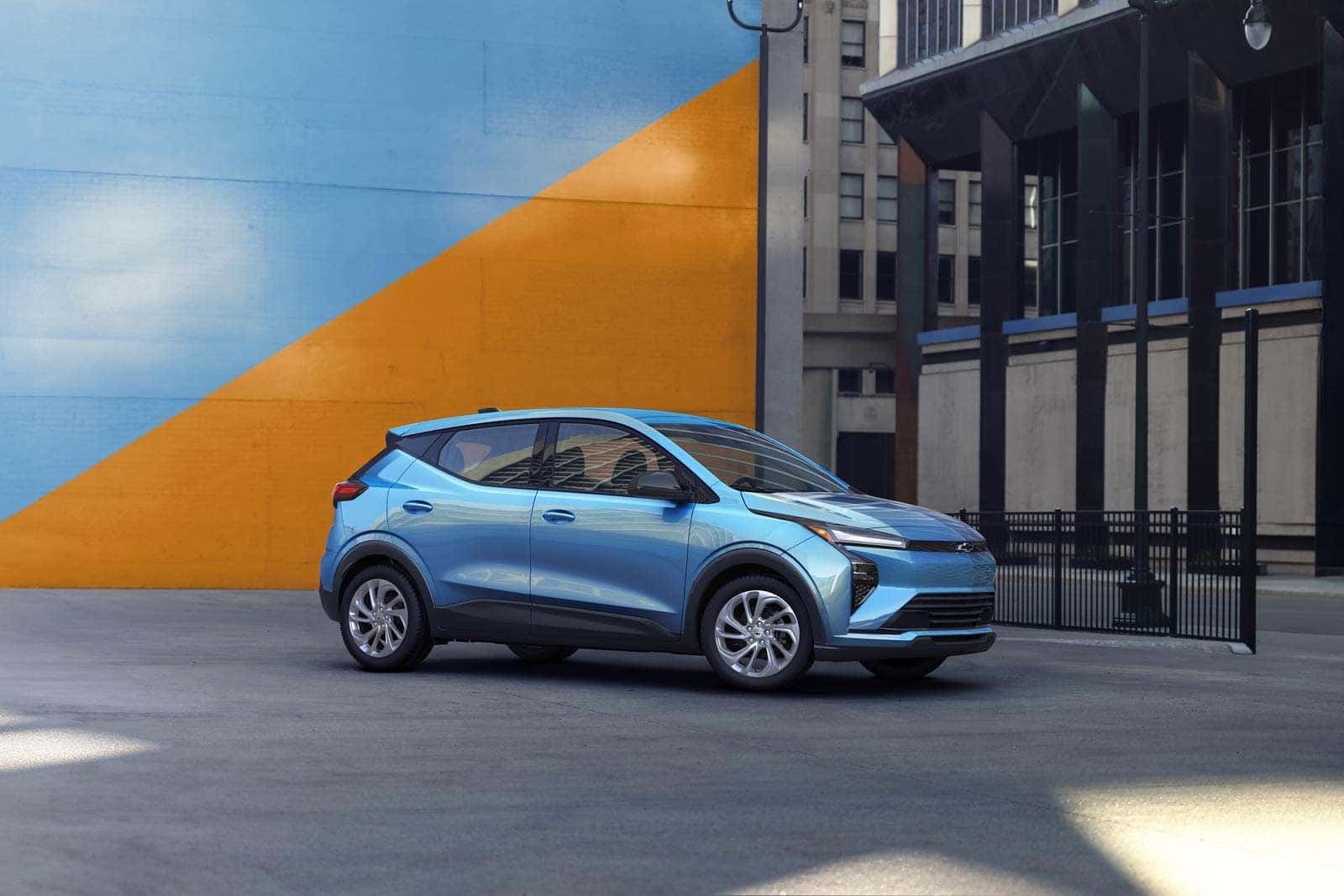
Why Affordable EV Shopping Just Changed in 2026
There is no longer a federal EV tax credit available to most Colorado buyers. The $7,500 federal incentive expired in late 2025, reshaping the math for anyone shopping for an affordable EV in Denver or Lakewood. That makes the starting sticker price of an EV more important than ever — and it’s where the Bolt EV stands alone.
With competitors like the Nissan Leaf and Hyundai Kona EV now starting at $31,000–$34,000+, the Bolt EV’s $28,995 base price creates a real, tangible savings advantage. Add Colorado’s remaining state-level incentives, and the Bolt EV delivers more value per dollar than any other new EV you can buy today near Denver.
Head-to-Head: Bolt EV vs. Nissan Leaf vs. Hyundai Kona EV
Here is how the three most popular affordable EVs available to Denver-area shoppers stack up in 2026 across the metrics that matter most to everyday drivers.
| Spec | Chevy Bolt EV ✓ | Nissan Leaf (2026) | Hyundai Kona EV (2025) |
|---|---|---|---|
| Starting MSRP | $28,995 | $31,485 | $34,470 |
| EPA Range (base) | 262 miles | 255 miles | 261 miles |
| DC Fast Charge Speed | 150 kW | 150 kW | 100 kW |
| 10–80% Charge Time | ~26 min | ~35 min | ~41 min |
| Horsepower | 210 hp | 214 hp | 201 hp |
| NACS Port (Tesla Supercharger) | Standard | Standard | Adapter Req. |
| Heat Pump (standard) | Yes | Higher trims only | Yes |
| Infotainment Screen | 11.3-inch | 12.3-inch | 12.3-inch |
| Battery Warranty | 8 yr / 100K mi | 8 yr / 100K mi | 10 yr / 100K mi |
| CO State Credit Eligible (MSRP < $35K) | Yes ($3,250) | Yes ($3,250) | Yes ($750 Only) |
Sources: GM News, InsideEVs, Autoblog, KBB, Colorado Energy Office. Pricing includes destination freight charge. Confirm current trim pricing with dealer.
What Colorado EV Credits Are Still Available in 2026?
The federal EV tax credit is gone, but Colorado EV savings remain meaningful — especially when you’re buying a vehicle priced under $35,000. Here is exactly what Denver and Lakewood buyers can stack on a Bolt EV purchase in 2026:
| Incentive | Amount | Notes |
|---|---|---|
| CO State EV Tax Credit (base) | $750 | All new EVs, MSRP ≤ $80K |
| CO Bonus Credit (MSRP ≤ $35,000) | +$2,500 | Bolt EV qualifies. Kona EV does not. |
| Vehicle Exchange Colorado (VXC) | Up to $9,000 | Income-qualified; scrapping older high-emission vehicle |
| Home Charger Tax Credit (Federal) | 30% / up to $1,000 | Level 2 home charger installation; active through mid-2026 |
Sources: Colorado Energy Office, Boulder County, EVPlugPros.com. Incentive amounts and eligibility subject to change. Consult a tax professional to confirm your eligibility. Claiming the discount at point of sale requires a $250 processing fee, bringing the final CO EV Credit to $3,000 on the 2027 Bolt.
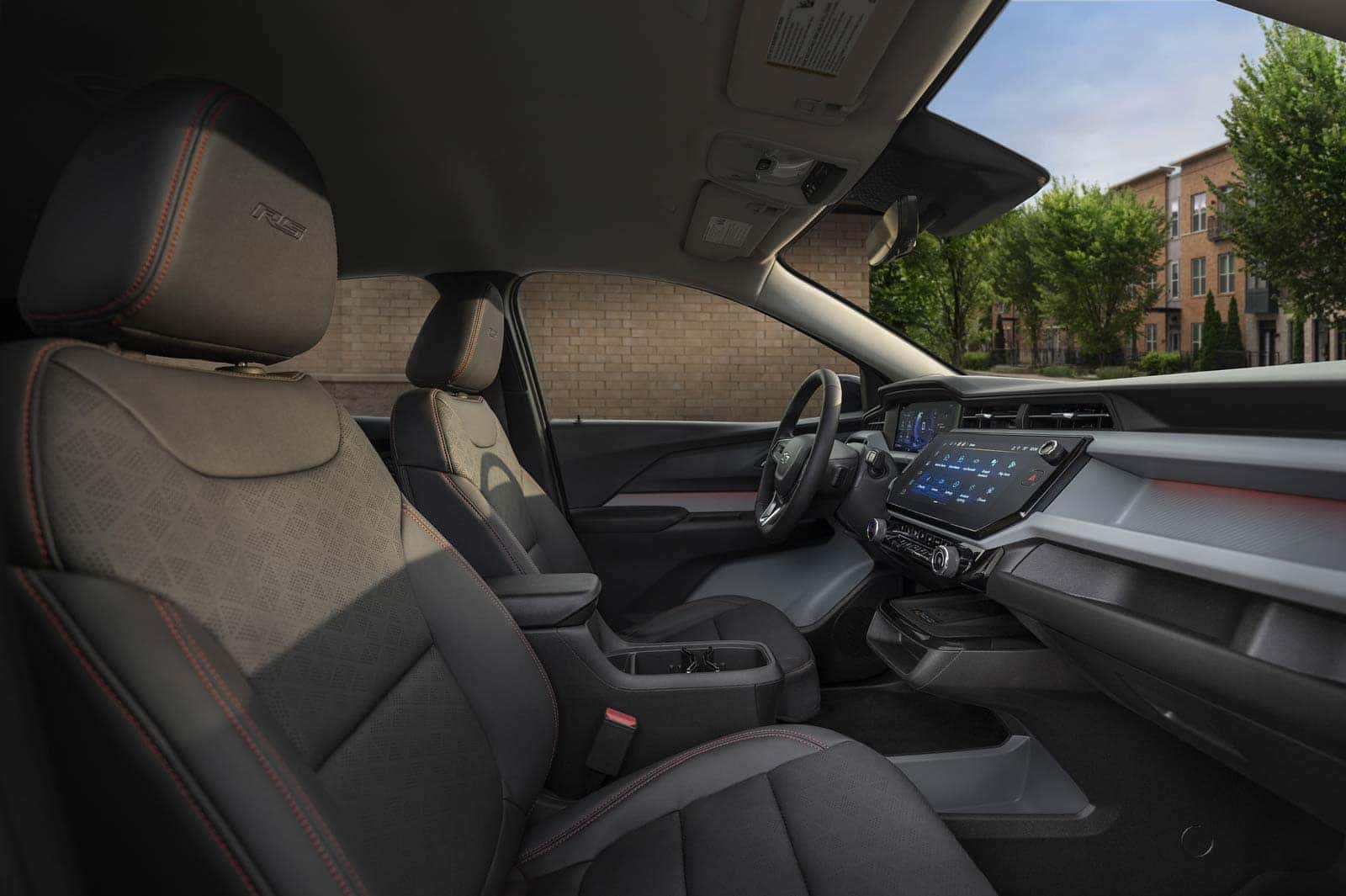
Real Cost of Ownership: Bolt EV in Denver vs. the Alternatives
Sticker price is only part of the EV savings story. Denver-area drivers also benefit from Colorado’s inexpensive electricity rates — averaging around $0.13 per kWh at home — which means charging an Bolt EV costs a fraction of filling a comparable gas car. Here is a simplified total cost breakdown for a typical Denver commuter driving 15,000 miles per year.
| Cost Factor | Bolt EV | Nissan Leaf | Hyundai Kona EV |
|---|---|---|---|
| Starting MSRP | $28,995 | $31,485 | $34,470 |
| CO State Tax Credit | −$3,250 | −$750 | −$750 |
| Effective Price After CO Credit | $25,745 | $30,735 | $33,720 |
| Est. Annual Home Charging Cost (15K mi) | ~$445 | ~$430 | ~$450 |
| Avg. Annual Maintenance Savings vs. Gas | ~$800–$1,200 | ~$800–$1,200 | ~$800–$1,200 |
Estimates based on Colorado average electricity rate of $0.13/kWh, EPA efficiency ratings, and industry maintenance cost averages. Individual results will vary. Consult your dealer and tax advisor for personalized numbers.
Why the Bolt EV Is Built for Denver Driving
Denver drivers face a specific set of conditions that make the Bolt EV’s feature set particularly well-suited to life along the Front Range:
Cold Weather Performance
Colorado winters are hard on EV batteries. The Bolt EV comes standard with a heat pump — a feature that helps preserve range when temperatures dip in Denver, Lakewood, and across the metro area. The Leaf only includes a heat pump on higher trim levels, and buyers have to pay more to get it.
Fastest Charging at the Lowest Entry Price
The Bolt EV delivers 150 kW DC fast charging — charging from 10% to 80% in about 26 minutes. That is faster than the Hyundai Kona EV (41 minutes) and notably quicker than the Nissan Leaf S+ (35 minutes). For Denver drivers who rely on the growing public charging network along I-25 and at Xcel-powered locations around town, speed at the charger matters.
Tesla Supercharger Access — Standard
The Bolt EV comes standard with a NACS port, giving Denver drivers direct access to Tesla’s Supercharger network — one of the largest and most reliable in the country — with no adapter required. The Hyundai Kona EV requires an adapter to use Superchargers.
Colorado’s $35,000 MSRP Threshold Is Critical
Colorado’s state EV tax credit provides an additional $2,500 bonus when the vehicle MSRP is $35,000 or less. The Bolt EV qualifies at $28,995. The Nissan Leaf’s base price of $31,485 also qualifies for $750 but misses the full bonus credit — and the Hyundai Kona EV at $34,470 for the base trim (SE) sits right at the edge of eligibility. The Bolt EV’s lower price means more Coloradans qualify for the maximum savings with no additional risk of crossing the threshold.
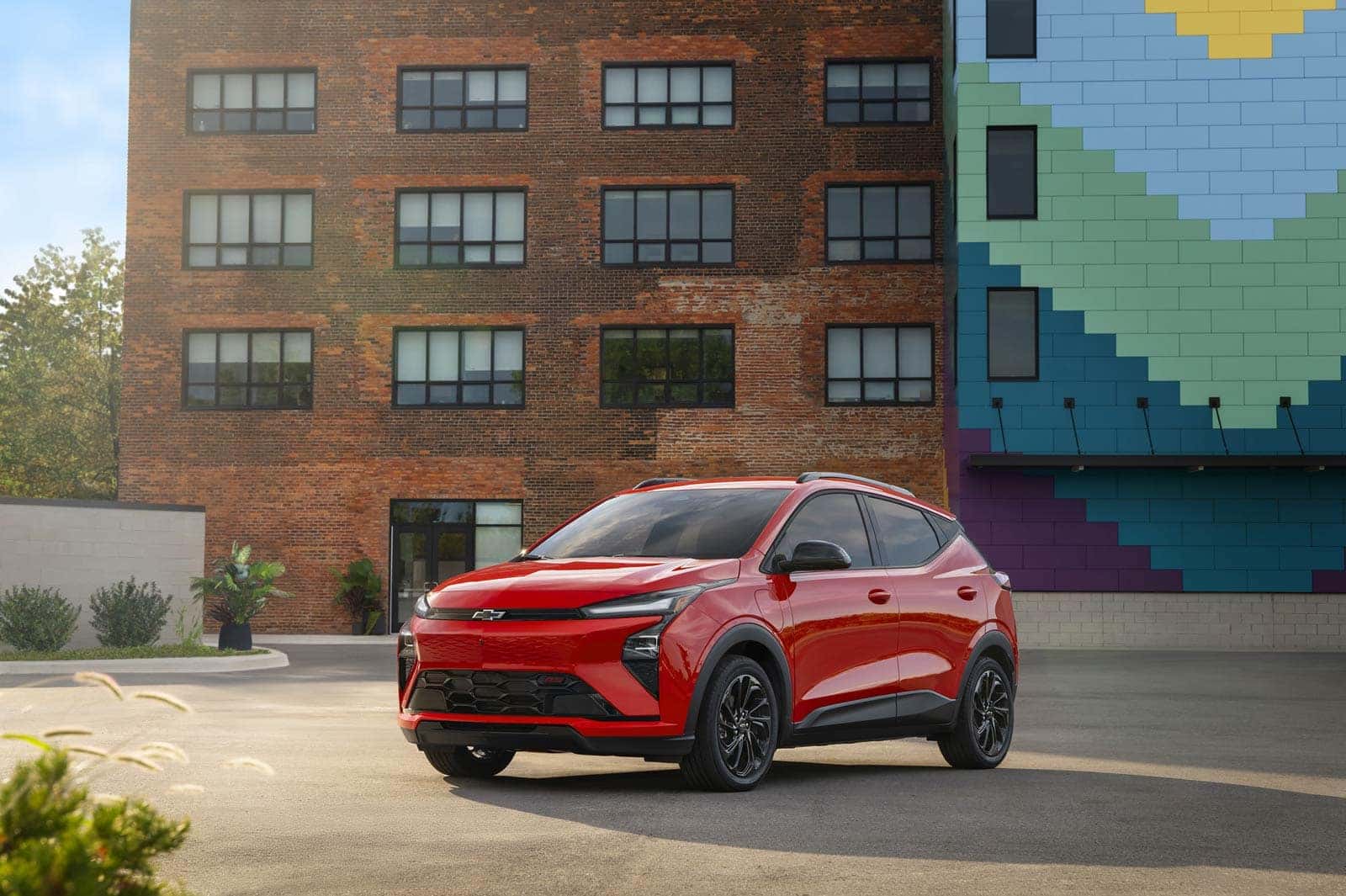
What’s New on the Redesigned Bolt EV
The Bolt EV has returned as a significantly upgraded vehicle built on GM’s Ultium platform. These are not minor tweaks — the improvements address the most common criticisms of the original Bolt:
Charging speed: 150 kW DC fast charging is more than 2.5 times faster than the previous Bolt EV. For Denver drivers near Lakewood or making runs to Boulder or Colorado Springs, this is a meaningful upgrade.
Technology: A new 11.3-inch infotainment display with Google built-in provides hands-free navigation and entertainment control. Available Super Cruise driver assistance makes the Bolt EV the most affordable vehicle in America to offer hands-free driving technology.
Design: A completely refreshed exterior with new lighting elements, available in new colors including Habanero Orange, Marina Blue Metallic, and Atomic Yellow for the RS trim.
Interior: A quieter, more premium cabin with soft-touch materials, a flat floor enabled by Ultium architecture, and improved cargo flexibility. Over 20 standard safety and driver assistance features come on every trim.
Why Choose Chevrolet for Your EV in Denver and Lakewood
Choosing the right vehicle is only part of the equation. Choosing the right Chevrolet dealer in the Denver metro area matters just as much — for pricing transparency, inventory availability, and long-term service support.
Our team serves Denver and Lakewood drivers with the area’s top-rated Chevrolet EV selection. We are one of the few Colorado Chevrolet dealers equipped to handle EV-specific service, including battery diagnostics and charging system maintenance. When you buy a Bolt EV from us, you get:
Transparent, up-front pricing — no hidden fees, no markup surprises. What you see is what you pay.
Colorado EV credit expertise — our finance team knows how to apply CO state credits at the point of sale, so you get your savings immediately rather than waiting for tax season.
Largest Bolt EV inventory near Denver and Lakewood — we maintain a wide selection of trims and colors so you can drive home in the Bolt EV that fits your life.
EV-certified service — our technicians are trained specifically on Chevrolet electric vehicles. From warranty work to Ultium battery service, we have you covered for the long term.
📋 Key Takeaways
- The Bolt EV starts at $28,995 — America’s lowest-priced new EV and the cheapest option available to Denver and Lakewood shoppers in 2026.
- There is no federal EV tax credit in 2026. Colorado’s state credit of up to $3,250 (for vehicles under $35,000) is your primary incentive — and the Bolt EV maximizes it.
- The Bolt EV’s 150 kW DC fast charging delivers a 10–80% charge in ~26 minutes — faster than both the Nissan Leaf (35 min) and Hyundai Kona EV (41 min).
- A standard heat pump protects your range during Denver winters — a feature the Nissan Leaf only offers on higher, more expensive trims.
- The Bolt EV uses a standard NACS port, giving direct access to Tesla Superchargers across Colorado with no adapter needed.
- Income-qualified Denver-area Xcel Energy customers may stack up to $5,500 in additional rebates on top of state credits.
- Chevrolet is now the #2 EV brand in U.S. market share, with a growing dealer service network that supports long-term EV ownership near Denver.
Frequently Asked Questions: Bolt EV for Denver Buyers
Is there still a federal tax credit for the Chevy Bolt EV in 2026?
No. The federal EV tax credit expired in late 2025 and is no longer available to new EV buyers in 2026. Colorado’s own state EV tax credit remains active. Bolt EV buyers can receive up to $3,250 in Colorado state credits — $750 base plus a $2,500 bonus for vehicles with an MSRP at or below $35,000.
How does the Bolt EV compare to the Nissan Leaf on price?
The Bolt EV starts at $28,995, roughly $2,490 less than the base 2026 Nissan Leaf at $31,485. After applying Colorado’s full state credit (which both qualify for at the base level), the Bolt EV’s effective price drops to approximately $25,745 versus $30,735 for the base Leaf. That is a nearly $5,000 real-world savings advantage for Bolt EV buyers.
How does the Bolt EV handle Colorado winters?
The Bolt EV comes standard with a heat pump, which significantly improves cold-weather range efficiency compared to resistive heating. Denver drivers can also use the myChevrolet app to precondition the cabin while the car is still plugged in — pulling heat from the charger rather than the battery. This is especially useful on cold Front Range mornings before your commute.
Can I charge a Bolt EV at a Tesla Supercharger near Denver?
Yes, directly. The Bolt EV comes standard with a NACS (North American Charging Standard) port, the same plug used by Tesla Superchargers. Denver has multiple Supercharger locations, and new ones continue to open across the metro area and along I-70. No adapter is needed.
What Colorado EV incentives are available to Denver buyers in 2026?
Denver-area buyers can access a $750 Colorado state EV tax credit, plus an additional $2,500 if the MSRP is at or below $35,000 (the Bolt EV qualifies). Xcel Energy customers may be eligible for up to $5,500 in EV rebates if income-qualified. The Vehicle Exchange Colorado (VXC) program offers up to $9,000 in rebates for income-qualified buyers who trade in older high-emitting vehicles. A 30% federal tax credit (up to $1,000) still applies to home Level 2 charger installation through mid-2026.
What is the Bolt EV’s range, and is 262 miles enough for Denver commuting?
The Bolt EV is rated at approximately 262 miles of range. The average Denver metro commute is well under 40 miles round-trip, meaning most drivers charge once every several days at home. For longer trips — say, Denver to Vail or Colorado Springs — the Bolt EV can top up quickly at public fast chargers along major Colorado corridors.
How fast does the Bolt EV charge?
The Bolt EV supports up to 150 kW DC fast charging, enabling a 10% to 80% charge in approximately 26 minutes. This is significantly faster than the Hyundai Kona EV (41 minutes) and slightly faster than the Nissan Leaf’s base trim (35 minutes). Level 2 home charging adds roughly 25 miles of range per hour overnight.
Does the Bolt EV qualify for Colorado’s MSRP bonus credit?
Yes. Colorado offers an extra $2,500 state credit for EVs with an MSRP of $35,000 or less. The Bolt EV at $28,995 comfortably qualifies, bringing your total Colorado state credit to $3,250. Some competing models — including higher Kona EV trims — may not qualify for this bonus.
Is the Bolt EV a good everyday car, or just affordable on paper?
The Bolt EV is a genuinely practical daily driver — compact enough for Denver parking, spacious enough for errands and passengers, and tech-equipped with Google built-in, 20+ standard safety features, and available Super Cruise hands-free driving. It is the only vehicle under $30,000 to offer hands-free highway driving assistance, making it an unusually capable affordable EV.
Can I get the Colorado EV credit as a point-of-sale discount?
Yes, in many cases. Colorado allows buyers to assign their state tax credit to the dealer and receive it as a direct price reduction at the point of sale — meaning you do not have to wait until you file taxes. Ask our finance team about this option when you visit our Denver or Lakewood showroom.
Denver’s Best Bolt EV Selection & Pricing
Top-rated sales and service in Denver and Lakewood. Get your CO state credit applied at the point of sale.
Last updated: April 6, 2026 | Service area: Denver, CO and Lakewood, CO | Pricing and incentive information is subject to change. Consult your dealer and a qualified tax professional before purchase.