

2027 Chevy Bolt vs 2026 Kia Niro EV | Denver EV Comparison
Last updated: June 15, 2026 | Service area: Denver, Lakewood, and the Front Range
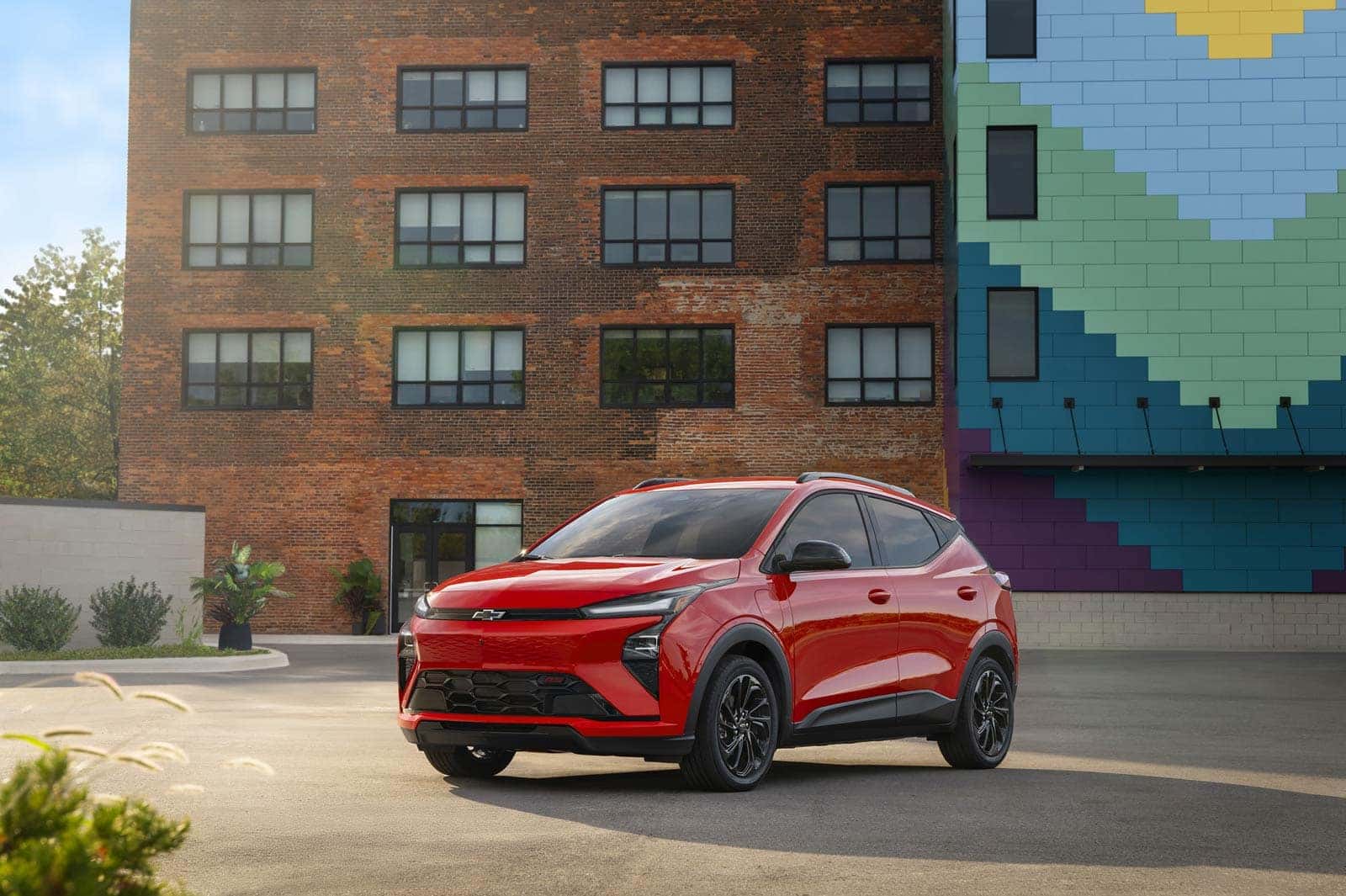
Denver EV shoppers keep asking the same question: should I get the new Chevy Bolt EV or the Kia Niro EV? Both are all-electric, five-seat hatchbacks with front-wheel drive, generous range, and a price that sits well below most of the EV market. But when you park a 2027 Chevy Bolt EV ($27,600 starting MSRP) next to a 2026 Kia Niro EV ($41,195 starting MSRP), the price gap alone — roughly $13,600 at the base trim — reshapes the entire conversation. For Front Range buyers who want the most EV for the money, the Bolt makes a very strong case.
Quick Answer
The 2027 Chevy Bolt EV starts at $27,600 with 262 miles of EPA-estimated range, 210 horsepower, 150 kW DC fast charging (10-80% in about 25 minutes), an NACS port for Tesla Supercharger access, and an 11.3-inch touchscreen. The 2026 Kia Niro EV starts at $41,195 with 253 miles of range, 201 horsepower, and slower DC fast charging (~43 minutes to 80%). For Denver and Lakewood drivers who want a capable, well-equipped electric vehicle at a substantially lower price, the Chevy Bolt EV is the clear value leader — saving roughly $13,600 at the base trim while delivering more range and faster charging.
See the Chevy Bolt EV in Person at Emich Chevrolet
Top-rated Chevrolet dealer in Denver. Best selection, best pricing, and the area’s most trusted Chevy sales and service team.
Chevy Bolt EV vs Kia Niro EV at a Glance
The Bolt EV and Niro EV occupy the same affordable-EV niche, but they approach it differently. The 2027 Chevy Bolt EV leads with aggressive pricing, faster DC charging, longer range, and a brand-new NACS charging port that opens the Tesla Supercharger network. The 2026 Kia Niro EV counters with more cargo room, more torque, and a longer factory warranty. Below is a side-by-side comparison pulled from each manufacturer’s official specs.
| Specification | 2027 Chevy Bolt EV | 2026 Kia Niro EV |
|---|---|---|
| Starting MSRP | $27,600 (LT) | $41,195 (Wind) |
| Motor | Single electric, 210 hp / 169 lb-ft | Single electric, 201 hp / 188 lb-ft |
| Drivetrain | FWD | FWD |
| EPA-Estimated Range | 262 miles | 253 miles |
| Battery | 65 kWh LFP | 64.8 kWh lithium-ion polymer |
| DC Fast Charging (10-80%) | 150 kW — ~25 minutes | ~43 minutes |
| Charging Port | NACS (Tesla Supercharger compatible) | CCS (adapter needed for Superchargers) |
| Touchscreen | 11.3″ infotainment + 11″ driver info center | Dual 10.25″ screens |
| Cargo (behind seats / max) | 16.2 cu ft / 56.3 cu ft | 22.8 cu ft / 63.7 cu ft |
| Seating | 5 passengers | 5 passengers |
| Basic Warranty | 3 yr / 36k bumper-to-bumper | 5 yr / 60k basic |
| Powertrain Warranty | 5 yr / 60k | 10 yr / 100k |
| EV Battery Warranty | 8 yr / 100k | 10 yr / 100k |
| Assembly | Fairfax, Kansas (USA) | South Korea |
Performance and Powertrain
The 2027 Chevy Bolt EV produces 210 horsepower and 169 lb-ft of torque from its single electric motor, driving the front wheels. In daily Denver driving — merging onto I-25, accelerating through roundabouts in Lakewood, or climbing the grade on 6th Avenue toward Golden — the Bolt delivers smooth, instant torque off the line with that distinctly quiet EV punch. The 9-hp advantage over the Niro EV is noticeable when you push for a highway pass, and the Bolt feels genuinely quick for the segment.
The 2026 Kia Niro EV counters with 201 horsepower and 188 lb-ft of torque. That 19 lb-ft torque advantage is worth acknowledging: the Niro EV pulls with slightly more grunt in low-speed maneuvers and when fully loaded. Both vehicles are front-wheel drive, both are single-motor, and both deliver the kind of responsive acceleration that makes EV converts out of first-time shoppers. In real-world city and suburban driving across the Front Range, the performance difference between the two is marginal — the price difference is not.
Range and Charging
Range anxiety is the first concern Denver EV shoppers raise, and the Bolt has the edge here. The 2027 Chevy Bolt EV delivers 262 miles of EPA-estimated range from its 65 kWh LFP battery — nine more miles than the Niro EV’s 253-mile rating on a nearly identical battery capacity (64.8 kWh). For a Lakewood commuter driving 30 to 40 miles a day, both vehicles comfortably cover a full workweek on a single charge. But the extra range gives the Bolt more breathing room on longer Front Range trips — say, Denver to Colorado Springs and back — without the mental math of planning a mid-trip charge.
Where the Bolt really separates itself is DC fast charging. The 2027 Bolt supports 150 kW DC fast charging and goes from 10% to 80% in roughly 25 minutes. The 2026 Kia Niro EV takes about 43 minutes for the same 10-80% charge — nearly twice as long. On a road trip through Colorado’s I-70 corridor, that difference means you are back on the highway while the Niro EV is still plugged in.
NACS port: Tesla Supercharger access
The 2027 Chevy Bolt EV comes standard with an NACS (North American Charging Standard) port. That means it can plug directly into Tesla Superchargers — the largest and most reliable fast-charging network in Colorado — without an adapter. The Kia Niro EV uses a CCS port and requires a separate adapter to access Tesla Superchargers, adding cost and inconvenience. For Denver-area EV owners, native Supercharger access dramatically expands where you can charge quickly and confidently.
Interior and Technology
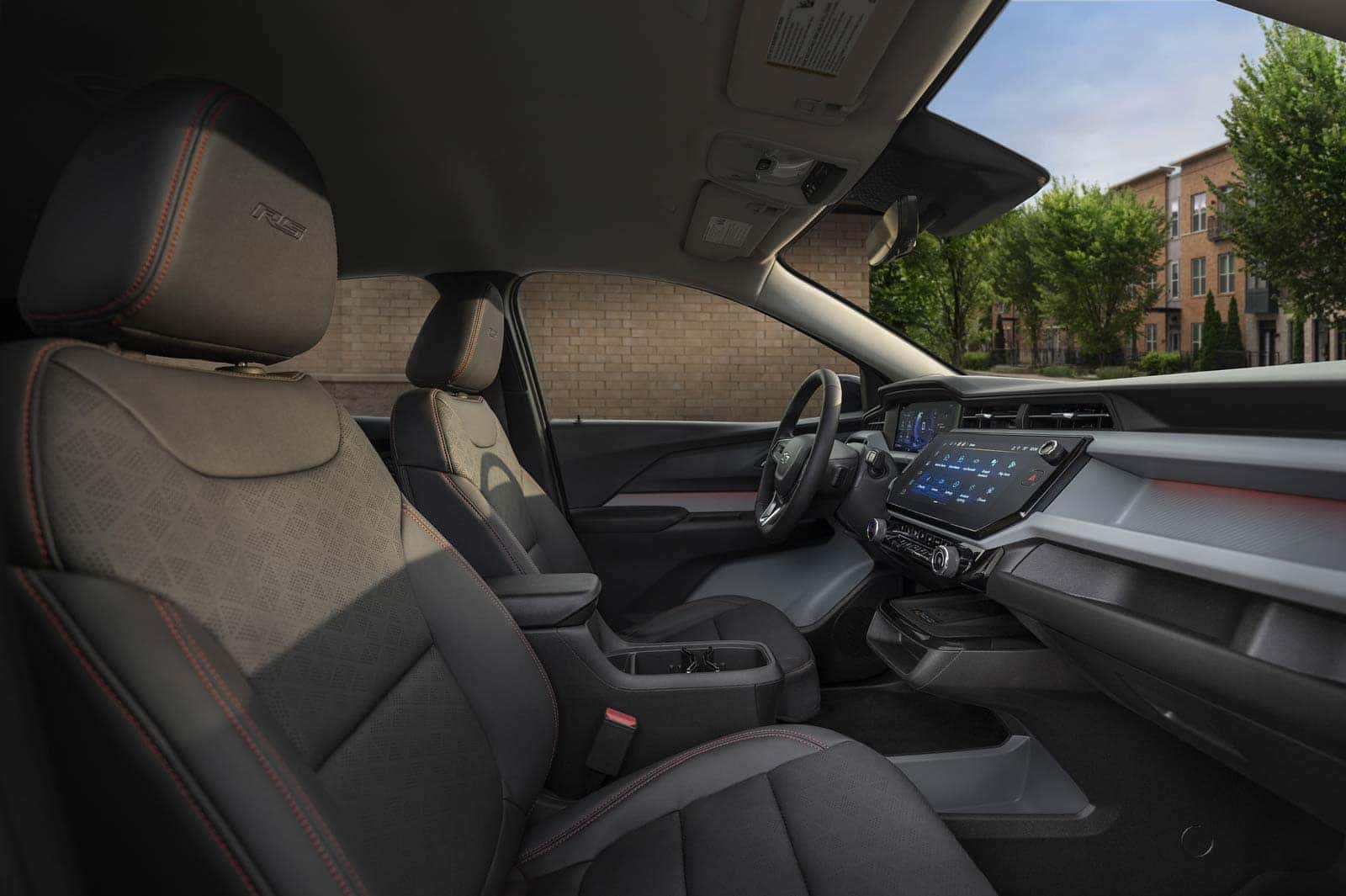
Inside, the 2027 Chevy Bolt EV pairs an 11.3-inch diagonal infotainment touchscreen with an 11-inch diagonal driver information center — a commanding dual-screen layout that gives you navigation, media, and vehicle data at a glance. Google is built in, providing Google Maps, Google Assistant, and the Google Play Store directly on the screen. Wireless Apple CarPlay and wireless Android Auto are standard. The RS trim adds sport-contoured seats with red stitching and a flat-bottom steering wheel, giving the cabin a more driver-focused feel than you’d expect from a sub-$32,000 EV.
The 2026 Kia Niro EV features dual 10.25-inch screens — a clean, modern setup that Kia executes well. Materials are solid, the layout is logical, and the Niro EV’s interior has a refined, European-influenced aesthetic. Both interiors are genuinely good for the segment. However, the Bolt’s 11.3-inch screen is slightly larger, Google built-in adds deeper integration than a mirrored phone experience, and available Super Cruise hands-free driver assistance on the Bolt brings highway-driving tech that the Niro EV simply does not offer.
Cargo and Space
This is one area where the Kia Niro EV holds a clear advantage. The Niro EV offers 22.8 cubic feet of cargo behind the rear seats and 63.7 cubic feet maximum with the seats folded. The 2027 Chevy Bolt EV provides 16.2 cubic feet behind the seats and 56.3 cubic feet with seats folded. That is a meaningful difference — about 6.6 cubic feet behind the second row and 7.4 cubic feet at max capacity. For Denver families who routinely haul gear to trailheads, load up at Costco, or shuttle strollers and sports equipment, the Niro EV’s cargo advantage is real.
That said, the Bolt EV’s 56.3 cubic feet with seats folded still comfortably handles most daily-life cargo tasks. Both seat five, both have flat load floors when the rear seats fold, and both work well for the typical Lakewood or Highlands Ranch family. The question is whether the extra cargo justifies paying $13,600 more — and for most shoppers, it does not.
Safety and Driver Assistance
The 2027 Chevy Bolt EV comes with over 20 standard safety and driver-assistance features, including Automatic Emergency Braking, Lane Keep Assist with Lane Departure Warning, Forward Collision Alert, Following Distance Indicator, and IntelliBeam automatic high beams. Available Super Cruise — GM’s hands-free highway driving system — is a standout feature that no Kia in this price range can match. Super Cruise uses cameras, sensors, LiDAR map data, and a driver attention monitor to allow hands-free driving on compatible highways, making long Colorado highway stretches significantly less fatiguing.
The 2026 Kia Niro EV includes Kia’s Drive Wise suite with Forward Collision-Avoidance Assist, Lane Keeping Assist, Blind-Spot Collision-Avoidance Assist, and Highway Driving Assist. Both vehicles deliver a comprehensive safety package for daily Denver commuting. The Bolt’s available Super Cruise and its larger standard feature count give it the edge for tech-forward buyers.
Pricing, Value, and Warranty
The numbers tell the story. The 2027 Chevy Bolt EV LT starts at $27,600. The 2026 Kia Niro EV Wind starts at $41,195. That is a $13,595 gap at the base trim — in the Bolt’s favor. Even the fully loaded Bolt RS at $31,600 undercuts the base Niro EV Wind by nearly $10,000. When you factor in that the Bolt offers more range, faster charging, a larger infotainment screen, native Tesla Supercharger access, and available Super Cruise at a dramatically lower price, the value equation tilts heavily toward the Bolt for Denver and Front Range buyers.
In fairness, the Kia Niro EV wins on warranty. Kia offers a 5-year / 60,000-mile basic warranty (versus Chevrolet’s 3-year / 36,000-mile bumper-to-bumper), a 10-year / 100,000-mile powertrain warranty (versus Chevrolet’s 5-year / 60,000-mile), and a 10-year / 100,000-mile EV battery warranty (versus Chevrolet’s 8-year / 100,000-mile). That longer coverage is genuine peace of mind and worth considering — but the savings on the Bolt could easily cover an extended warranty and still leave thousands in the buyer’s pocket.
The Bolt EV is also assembled in Fairfax, Kansas — a U.S.-built vehicle — which may matter for buyers who prioritize domestic manufacturing or want to maximize eligibility for federal EV tax incentives tied to North American assembly.
Common mistakes Denver shoppers make
- Comparing base-to-base MSRP without noticing the Bolt RS ($31,600) still undercuts the Niro EV Wind ($41,195) by nearly $10,000.
- Assuming all EVs charge at the same speed — the Bolt’s 25-minute 10-80% DC fast charge is nearly twice as fast as the Niro EV’s 43 minutes.
- Overlooking the NACS port advantage. The Bolt plugs directly into Tesla Superchargers; the Niro EV needs an adapter, adding cost and hassle.
- Dismissing the Bolt’s range lead — 262 vs 253 miles matters more than it looks on paper when you are planning a Colorado mountain trip at altitude.
- Forgetting that the $13,600 you save on the Bolt could buy years of home-charging electricity, an extended warranty, or both.
Top Reasons to Choose the Chevy Bolt EV
The case for the Bolt over the Niro EV comes down to delivering more of what EV buyers actually need — range, charging speed, tech, and price — while the Niro EV’s advantages in cargo and warranty, while real, are less likely to tip the scale for most Denver shoppers.
1. Save roughly $13,600 at the base trim
$27,600 vs $41,195. That gap reshapes monthly payments, financing terms, and total cost of ownership. Even comparing the top Bolt RS ($31,600) to the base Niro EV, the Bolt saves nearly $10,000.
2. More range — 262 miles vs 253 miles
Nine extra miles of EPA-estimated range gives the Bolt additional margin for Colorado’s altitude, cold-weather range reduction, and those longer Front Range trips without a charging stop.
3. Nearly twice as fast DC charging
The Bolt’s 150 kW DC fast charging delivers 10-80% in about 25 minutes. The Niro EV takes approximately 43 minutes. On road trips through Colorado, that gap is the difference between a quick coffee stop and a full sit-down meal.
4. NACS port — direct Tesla Supercharger access
The Bolt plugs into any Tesla Supercharger without an adapter. In Colorado, where the Supercharger network is the most widespread and reliable fast-charging option, this is a genuine everyday advantage.
5. Bigger screens and available Super Cruise
The Bolt’s 11.3-inch infotainment display and 11-inch driver info center outsize the Niro EV’s dual 10.25-inch setup. Available Super Cruise hands-free highway driving is a feature the Niro EV cannot match at any price.
6. American-assembled with Google built-in
Built in Fairfax, Kansas, the Bolt supports domestic manufacturing and may qualify for assembly-related federal EV incentives. Google built-in provides native navigation, voice assistant, and app access without relying on phone mirroring.
Why Shop the Chevy Bolt EV in Denver With Emich Chevrolet
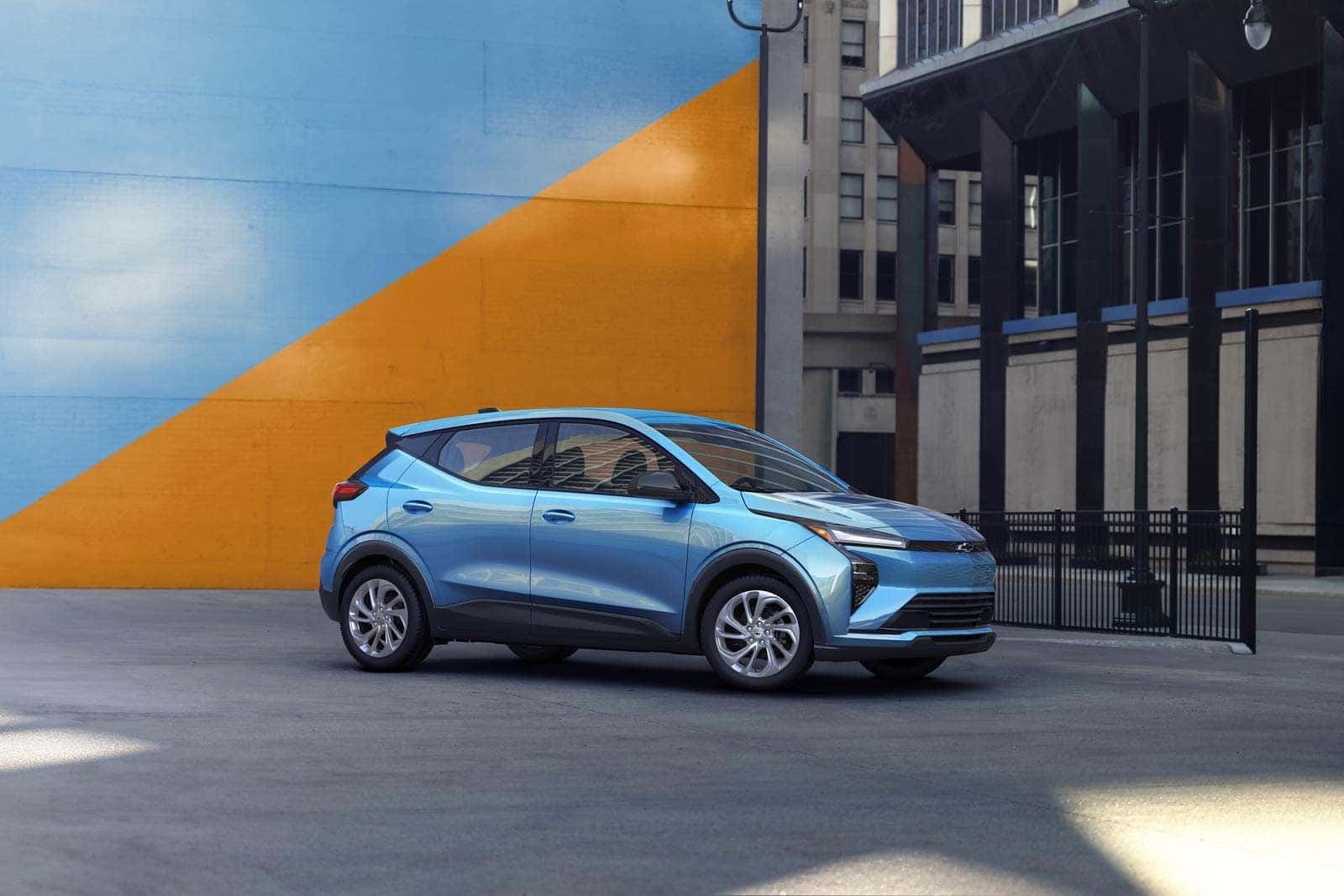
Buying your first (or next) EV should be straightforward, not stressful. As a top-rated Chevrolet dealer in the Denver metro, Emich Chevrolet built our EV sales process around transparency and education. You get clear pricing up front, a no-pressure test drive with time to experience one-pedal driving and the infotainment system, and a finance team that walks you through EV incentives, home-charging options, and every line on the page.
Our service department is staffed by Chevrolet-certified EV technicians who understand the Bolt’s Ultium-based platform, LFP battery, and high-voltage systems. That matters in Colorado, where altitude and temperature swings affect EV range and battery conditioning. Every Bolt we sell gets a thorough multi-point inspection. We are confident Emich offers the best Bolt EV selection, best pricing, and best sales and service experience in Denver, Lakewood, and the greater Front Range — and we work to prove it on every visit.
Frequently Asked Questions
Is the 2027 Chevy Bolt EV better than the 2026 Kia Niro EV?
For most Denver and Lakewood drivers shopping on value, yes. The 2027 Chevy Bolt EV starts at $27,600 — about $13,600 less than the Niro EV’s $41,195. It also offers more range (262 vs 253 miles), faster DC charging (25 vs 43 minutes to 80%), a larger touchscreen (11.3 inches), and native Tesla Supercharger access via its NACS port. The Niro EV counters with more cargo space, more torque, and a longer warranty. For buyers who prioritize price, range, and charging speed, the Bolt is the stronger pick.
How far can the 2027 Chevy Bolt EV go on a single charge?
The 2027 Chevy Bolt EV has an EPA-estimated range of 262 miles on a full charge from its 65 kWh LFP battery. In real-world Colorado driving, range varies with temperature, altitude, speed, and climate control use, but the Bolt’s rating gives most Denver-area commuters a full week of driving between charges.
Can the 2027 Chevy Bolt EV use Tesla Superchargers?
Yes. The 2027 Bolt EV comes standard with an NACS port, which is the same connector type used by Tesla Superchargers. You can plug into any Tesla Supercharger in Colorado without an adapter. This gives Bolt owners access to the largest and most reliable DC fast-charging network in the state.
How fast does the 2027 Chevy Bolt EV charge?
On a 150 kW DC fast charger, the 2027 Bolt EV charges from 10% to 80% in approximately 25 minutes. That is nearly twice as fast as the Kia Niro EV’s roughly 43-minute DC fast charge. At home on a Level 2 (240V) charger, the Bolt can fully recharge overnight — making daily home charging seamless for Denver-area residents.
What is the price difference between the Chevy Bolt EV and Kia Niro EV?
The 2027 Chevy Bolt EV LT starts at $27,600. The 2026 Kia Niro EV Wind starts at $41,195. That is a $13,595 difference at the base trim. Even the top Bolt RS at $31,600 is nearly $10,000 less than the entry Niro EV. At Emich Chevrolet, we post live Denver pricing on our inventory pages so Bolt shoppers can compare specific units side by side.
Does the Kia Niro EV have a better warranty than the Chevy Bolt EV?
Yes, on paper. The 2026 Kia Niro EV offers a 5-year / 60,000-mile basic warranty, a 10-year / 100,000-mile powertrain warranty, and a 10-year / 100,000-mile EV battery warranty. The 2027 Chevy Bolt EV offers a 3-year / 36,000-mile bumper-to-bumper, a 5-year / 60,000-mile powertrain, and an 8-year / 100,000-mile battery warranty. Kia’s coverage is longer, but the Bolt’s $13,600 price savings could easily fund an extended warranty while still leaving thousands in your pocket.
Is the Chevy Bolt EV good for Colorado winters?
Yes. The Bolt EV’s 262-mile range provides a solid buffer for cold-weather range reduction. The LFP battery chemistry handles temperature extremes well, and the Bolt includes battery preconditioning to optimize charging in cold weather. Many Denver, Lakewood, and Front Range commuters drive FWD EVs year-round with a quality set of winter tires. For buyers who specifically need AWD, Chevrolet offers the Equinox EV as the next step up.
Can I test drive a Chevy Bolt EV in Denver today?
Yes. You can test drive any Bolt EV on the Emich Chevrolet lot the same day you visit — convenient for shoppers coming from Lakewood, Aurora, Englewood, or anywhere along the Front Range. Our team can have a Bolt staged and ready so you experience the acceleration, one-pedal driving, and the 11.3-inch touchscreen firsthand before making your decision.
Key Takeaways
- The 2027 Chevy Bolt EV starts at $27,600; the 2026 Kia Niro EV starts at $41,195 — a gap of roughly $13,600 in the Bolt’s favor.
- The Bolt delivers 262 miles of EPA-estimated range versus the Niro EV’s 253 miles.
- DC fast charging on the Bolt takes about 25 minutes (10-80%) versus roughly 43 minutes on the Niro EV — nearly twice as fast.
- The Bolt’s standard NACS port provides direct Tesla Supercharger access without an adapter.
- The Bolt’s 11.3-inch infotainment screen, 11-inch driver display, Google built-in, and available Super Cruise give it a tech advantage.
- The Niro EV wins on cargo space (22.8 / 63.7 cu ft vs 16.2 / 56.3 cu ft), torque (188 vs 169 lb-ft), and warranty length.
- Both are FWD, five-seat electric hatchbacks with similar battery capacities and over 250 miles of range.
- If price-to-value is the priority, the Chevy Bolt EV is the smarter pick for Denver and Front Range buyers. If maximum cargo and the longest warranty are your top needs, the Niro EV is worth a look — at a significant premium.
See the Chevy Bolt EV in Person at Emich Chevrolet
Top-rated Chevrolet dealer in Denver. Best selection, best pricing, and the area’s most trusted Chevy sales and service team.
Last updated: June 15, 2026 | Service area: Denver, Lakewood, Aurora, and the Front Range