

2027 Chevy Bolt vs 2026 Nissan LEAF: Denver Compare
Last updated: June 14, 2026 | Service area: Denver, Lakewood, Aurora, and the Front Range
Two of the most affordable electric vehicles on the American market are squaring off for 2027: the returning Chevrolet Bolt EV and the completely redesigned Nissan LEAF. Both promise more than 250 miles of range, standard DC fast charging, and starting prices under $30,000 — but they take very different approaches. The Bolt returns as a clean-sheet hatchback with a native NACS port, while the LEAF reinvents itself as a subcompact crossover. Below, we break down every spec, feature, and cost detail so Denver-area shoppers can make a confident decision.
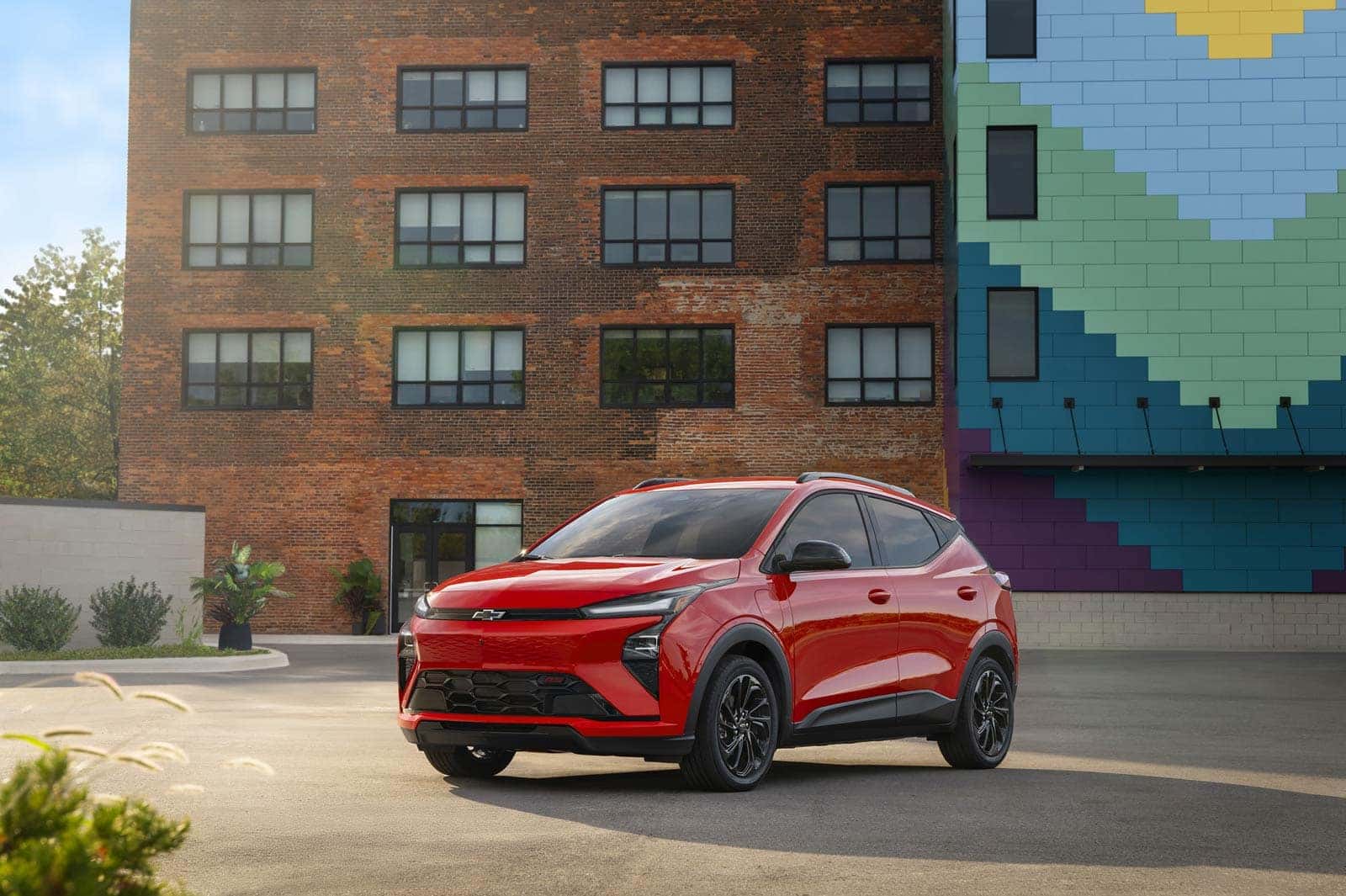
Quick Answer
The 2027 Chevy Bolt EV starts at $28,995 — roughly $1,000 less than the 2026 Nissan LEAF — and delivers 262 miles of EPA-estimated range with 150 kW DC fast charging. The redesigned LEAF offers more range (up to 303 miles) but starts at $29,990 and climbs quickly in upper trims. For Denver shoppers who want the best combination of price, charging speed, and Chevrolet’s 8-year/100,000-mile battery warranty, the Bolt is the stronger value.
See the Chevy Bolt in Person at Emich Chevrolet
Top-rated Chevrolet dealer in Denver. Best selection, best pricing, and the area’s most trusted Chevy sales and service team.
At-a-Glance: 2027 Bolt EV vs. 2026 LEAF
| Spec | 2027 Chevy Bolt EV | 2026 Nissan LEAF |
|---|---|---|
| Starting MSRP | $28,995 (LT) | $29,990 (S+) |
| Motor Output | 210 hp / 169 lb-ft | 174 hp / 254 lb-ft (S+) |
| Available Higher Output | — | 214 hp / 261 lb-ft (SV+/Platinum+) |
| Battery Capacity | 65 kWh | 75 kWh |
| EPA-Est. Range | 262 miles | Up to 303 miles |
| DC Fast Charging | 150 kW (10–80% in 26 min) | Standard (speed TBD) |
| Charging Port | Native NACS | Dual ports (NACS compatible) |
| Drivetrain | FWD | FWD |
| Trims | LT, RS | S+, SV+, Platinum+ |
| Battery/EV Warranty | 8 yr / 100,000 mi | 8 yr / 100,000 mi |
Performance & Powertrain
The 2027 Bolt EV produces 210 horsepower and 169 lb-ft of torque from a single front-mounted motor. That output is consistent across both trims, giving every buyer the same punchy acceleration. Chevrolet tuned the Bolt’s throttle response for responsive city driving — exactly the kind of stop-and-go you encounter on I-25 through Denver or along Colfax Avenue.
Nissan takes a tiered approach with the redesigned 2026 LEAF. The base S+ trim delivers 174 hp and 254 lb-ft, while the SV+ and Platinum+ step up to 214 hp and 261 lb-ft. The LEAF’s higher torque figures sound impressive on paper, but the Bolt’s lighter weight and purpose-built hatchback platform help it feel equally quick in everyday driving. Both vehicles use front-wheel drive, so neither offers an AWD option for Colorado winters — good snow tires remain essential.
Battery, Range & Charging
Range is often the deciding factor for first-time EV buyers. The 2026 LEAF leads here with up to 303 miles from its 75 kWh battery pack, while the 2027 Bolt EV delivers 262 EPA-estimated miles on a smaller 65 kWh pack. Both numbers are more than enough for most Denver commuters — the average Colorado round-trip commute is well under 50 miles.
Where the Bolt pulls ahead is DC fast charging. Its 150 kW capability charges from 10 to 80 percent in roughly 26 minutes — ideal for a quick top-up at a ChargePoint or Electrify America station along I-70 heading to the mountains. The Bolt is also the first Chevrolet with a native NACS charging port, giving it direct access to the Tesla Supercharger network without an adapter. The LEAF supports NACS compatibility through dual charging ports, but Nissan has not yet confirmed its peak DC charging rate for the redesigned model.
Interior & Tech
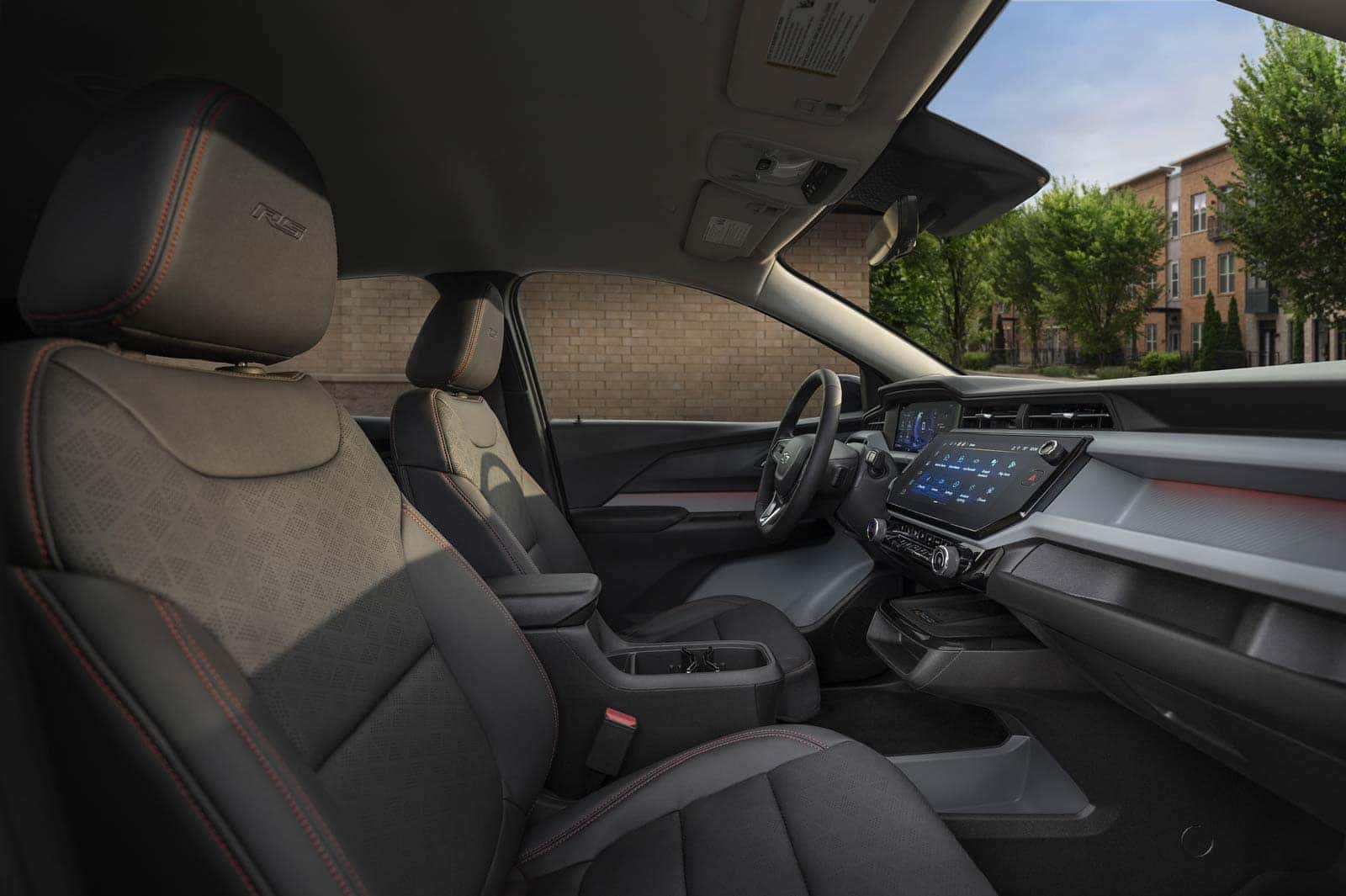
Inside, the 2027 Bolt EV features a modern, driver-focused cockpit. The RS trim adds sport-bolstered seats with red stitching, a flat-bottom steering wheel, and a fully digital instrument cluster paired with a central infotainment display. Standard features across both trims include wireless Apple CarPlay, wireless Android Auto, and a Wi-Fi hotspot. The cabin materials represent a clear upgrade over the previous-generation Bolt, with soft-touch surfaces and tighter panel gaps throughout.
The 2026 LEAF’s interior reflects its crossover repositioning, with a raised seating position and a more SUV-like dashboard. Nissan’s infotainment system is competent, offering a large touchscreen, navigation, and smartphone integration. The Platinum+ trim layers on premium touches like leather-appointed seating. Both vehicles deliver a quiet, refined cabin — a natural advantage of electric powertrains.
Safety
Both the 2027 Bolt EV and 2026 LEAF come standard with advanced driver-assistance systems. The Bolt includes Chevy Safety Assist — a suite of automatic emergency braking, front pedestrian braking, lane-keep assist, forward collision alert, and IntelliBeam headlamps. The system operates reliably on Colorado highways and surface streets alike.
Nissan equips the LEAF with ProPILOT Assist for semi-autonomous highway driving, along with automatic emergency braking, blind-spot monitoring, and rear cross-traffic alert. Both vehicles benefit from the low center of gravity inherent to EVs, which improves stability and reduces rollover risk. For families in Denver, either vehicle offers a strong safety package — but the Bolt’s standard suite requires no trim upgrades to access its full feature set.
Cargo & Practicality
The Bolt EV’s hatchback design creates a wide, flat cargo floor that makes loading groceries, luggage, or ski gear straightforward. With the rear seats folded, the Bolt offers generous cargo volume for its class — a practical advantage over traditional sedans.
The 2026 LEAF, now shaped as a subcompact crossover, gains a taller roof and a slightly higher load floor. That raised ride height may appeal to shoppers who prefer the SUV look, but the Bolt’s lower liftover height can be easier for daily loading. Both vehicles seat five and offer split-folding rear seats for flexibility.
Pricing, Value & Warranty
Value is where the Bolt makes its strongest case. At $28,995, the Bolt EV LT undercuts the LEAF S+ by nearly $1,000 — and the gap widens dramatically at the top end. A fully loaded Bolt RS at $32,995 costs more than $6,000 less than the LEAF Platinum+ at $38,990. For budget-conscious Denver buyers, that difference could cover years of home charging costs.
Both manufacturers offer an 8-year/100,000-mile warranty on battery and EV components. Chevrolet adds a 3-year/36,000-mile bumper-to-bumper warranty and a 5-year/60,000-mile powertrain warranty, providing layered coverage that gives buyers peace of mind through the critical early years of ownership.
Common Mistakes When Comparing the Bolt and LEAF
- Confusing the old LEAF with the new one. The 2026 Nissan LEAF is a completely redesigned vehicle — it’s now a subcompact crossover, not the hatchback from previous years. Specs from older models do not apply.
- Ignoring real-world charging speed. Raw range numbers only tell part of the story. The Bolt’s confirmed 150 kW DC fast charging and 26-minute 10–80% time means less waiting on road trips.
- Comparing base prices without factoring trim content. The Bolt LT includes a strong standard feature set at $28,995. To get comparable features in the LEAF, you may need the SV+ at $34,230.
- Overlooking the NACS advantage. The Bolt’s native NACS port provides adapter-free access to Tesla Superchargers — a major convenience for Colorado road trips.
Top Reasons to Choose the 2027 Chevy Bolt EV
1. Lowest Starting Price in the Segment
At $28,995, the Bolt EV LT is one of the most affordable new EVs you can buy in 2027. It undercuts the LEAF by nearly $1,000 at the base level and by more than $6,000 when comparing top trims. That pricing advantage makes the Bolt accessible to a wider range of Denver buyers.
2. Fast, Confirmed DC Charging
The Bolt charges at up to 150 kW, reaching 10–80% in about 26 minutes. For anyone who road-trips from Denver to Vail, Breckenridge, or Colorado Springs, that predictability matters. You know exactly how long a charging stop will take.
3. Native NACS Port — No Adapters Needed
The 2027 Bolt is the first Chevrolet with a built-in NACS charging port, unlocking the entire Tesla Supercharger network without an adapter. That’s thousands of additional fast-charging stations across Colorado and the country.
4. More Horsepower Than the Base LEAF
Every Bolt EV delivers 210 horsepower regardless of trim. The base LEAF S+ produces just 174 hp. You’d need to step up to the $34,230 SV+ to match the Bolt’s output — and even then, the LEAF only edges ahead by 4 hp.
5. Practical Hatchback Design
The Bolt’s low, wide hatchback opening makes cargo loading effortless. Whether you’re hauling ski boots or flat-pack furniture, the lower liftover height is a genuine everyday advantage over the LEAF’s raised crossover floor.
6. Strong Warranty Coverage
Chevrolet backs the Bolt with a 3-year/36,000-mile bumper-to-bumper warranty, a 5-year/60,000-mile powertrain warranty, and an 8-year/100,000-mile warranty on battery and EV components. That three-layer structure provides confidence that extends well beyond the typical new-car honeymoon period.
Why Shop the Chevy Bolt in Denver with Emich
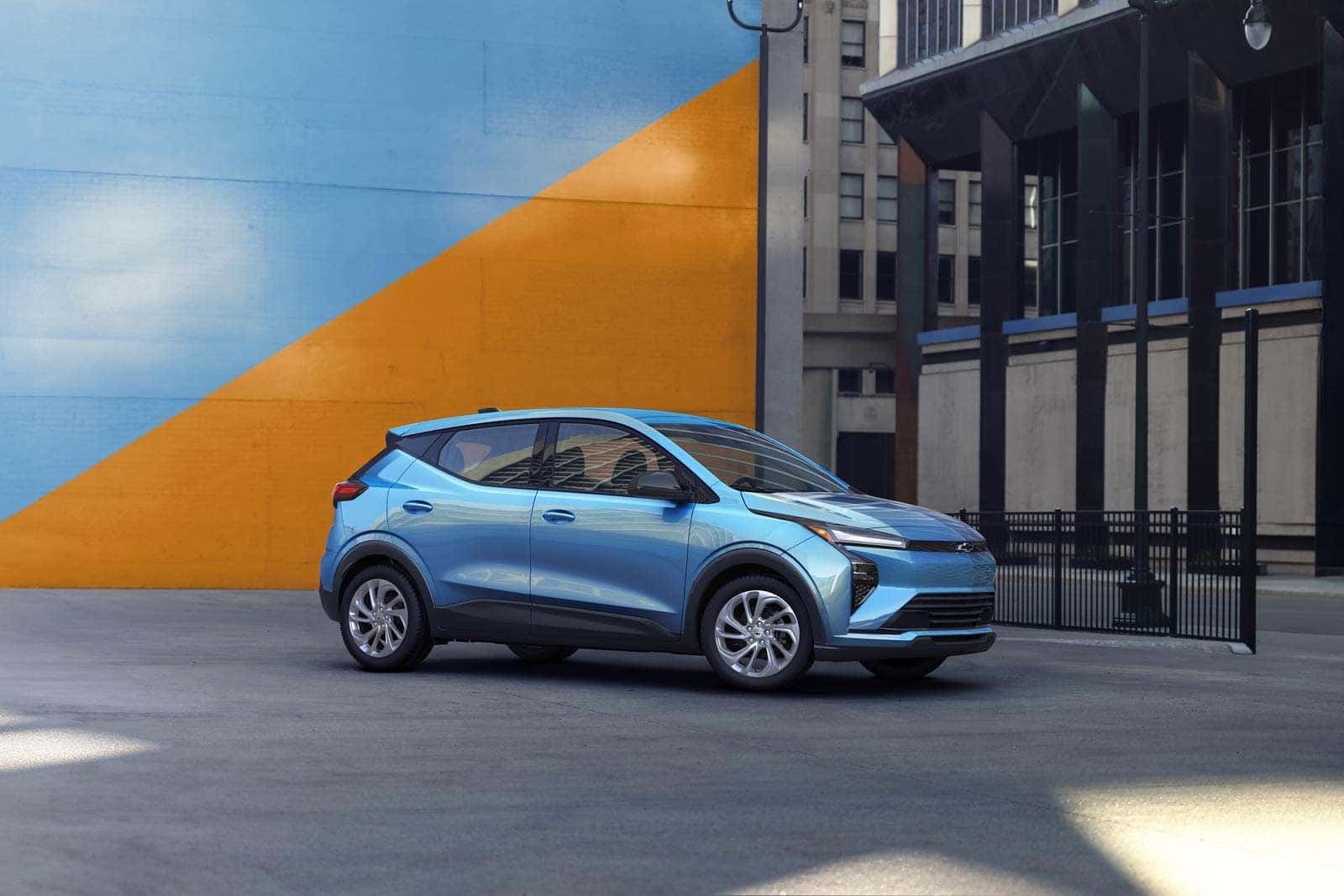
Emich Chevrolet has been Denver’s trusted Chevy dealer for decades. Our sales team specializes in electric vehicles and can walk you through everything from home-charging installation to federal and Colorado state EV incentives. We maintain a strong Bolt EV inventory so you can test-drive both the LT and RS trims on the same visit. After the sale, our factory-certified service department handles all EV maintenance — from software updates to tire rotations — right here in Lakewood. When you’re ready to go electric, Emich makes the process simple.
Frequently Asked Questions
Is the 2027 Chevy Bolt EV cheaper than the 2026 Nissan LEAF?
Yes. The Bolt EV LT starts at $28,995 compared to the LEAF S+ at $29,990. The price gap grows at higher trims — the Bolt RS tops out at $32,995 while the LEAF Platinum+ reaches $38,990.
Which has more range — the Bolt or the LEAF?
The 2026 LEAF offers up to 303 miles of EPA-estimated range from its 75 kWh battery. The 2027 Bolt EV delivers 262 EPA-estimated miles from a 65 kWh pack. Both numbers comfortably exceed the daily needs of most Denver-area drivers.
How fast does the 2027 Bolt EV charge?
The Bolt supports 150 kW DC fast charging and can go from 10% to 80% in approximately 26 minutes. On a Level 2 home charger, you can fully recharge overnight.
Does the Bolt work with Tesla Superchargers?
Yes. The 2027 Bolt EV is the first Chevrolet with a native NACS charging port, allowing direct access to Tesla Supercharger stations without needing an adapter.
Is the 2026 Nissan LEAF still a hatchback?
No. Nissan completely redesigned the LEAF for 2026, transforming it from a compact hatchback into a subcompact crossover/SUV shape with a taller ride height and more upright proportions.
What warranty does the 2027 Bolt EV come with?
Chevrolet provides a 3-year/36,000-mile bumper-to-bumper warranty, a 5-year/60,000-mile powertrain warranty, and an 8-year/100,000-mile warranty covering the battery and EV-specific components.
Which trims are available for the 2027 Bolt EV?
The 2027 Bolt EV is offered in two trims: the LT starting at $28,995 and the sportier RS starting at $32,995. Both prices include the $1,395 destination and freight charge.
Can I test-drive the Bolt EV at Emich Chevrolet?
Absolutely. Emich Chevrolet in Lakewood maintains Bolt EV inventory in both LT and RS trims. Stop by or schedule an appointment to test-drive the Bolt and experience it firsthand.
Key Takeaways
- The 2027 Bolt EV starts at $28,995 — nearly $1,000 less than the 2026 LEAF and over $6,000 less at the top trim.
- The Bolt offers 262 miles of EPA-estimated range; the LEAF offers up to 303 miles.
- The Bolt’s 150 kW DC fast charging (10–80% in 26 minutes) is confirmed and proven — critical for Colorado mountain road trips.
- A native NACS port gives the Bolt adapter-free Tesla Supercharger access.
- Every Bolt produces 210 hp; you need the LEAF SV+ ($34,230) to exceed that.
- Chevrolet’s 8-year/100,000-mile battery warranty matches Nissan’s coverage.
Cost & Timing
The 2027 Chevy Bolt EV is available now at Emich Chevrolet, with the LT starting at $28,995 and the RS at $32,995 (both including destination). Colorado EV buyers may also qualify for federal and state tax incentives that can further reduce the effective purchase price. Contact our team to learn about current offers, available inventory, and financing options tailored to your budget.
See the Chevy Bolt in Person at Emich Chevrolet
Top-rated Chevrolet dealer in Denver. Best selection, best pricing, and the area’s most trusted Chevy sales and service team.
Last updated: June 14, 2026 | Service area: Denver, Lakewood, Aurora, and the Front Range