

2027 Chevy Bolt EV vs 2026 Tesla Model 3 | Emich Chevy
Last updated: June 22, 2026 | Service area: Denver, Lakewood, and the Front Range
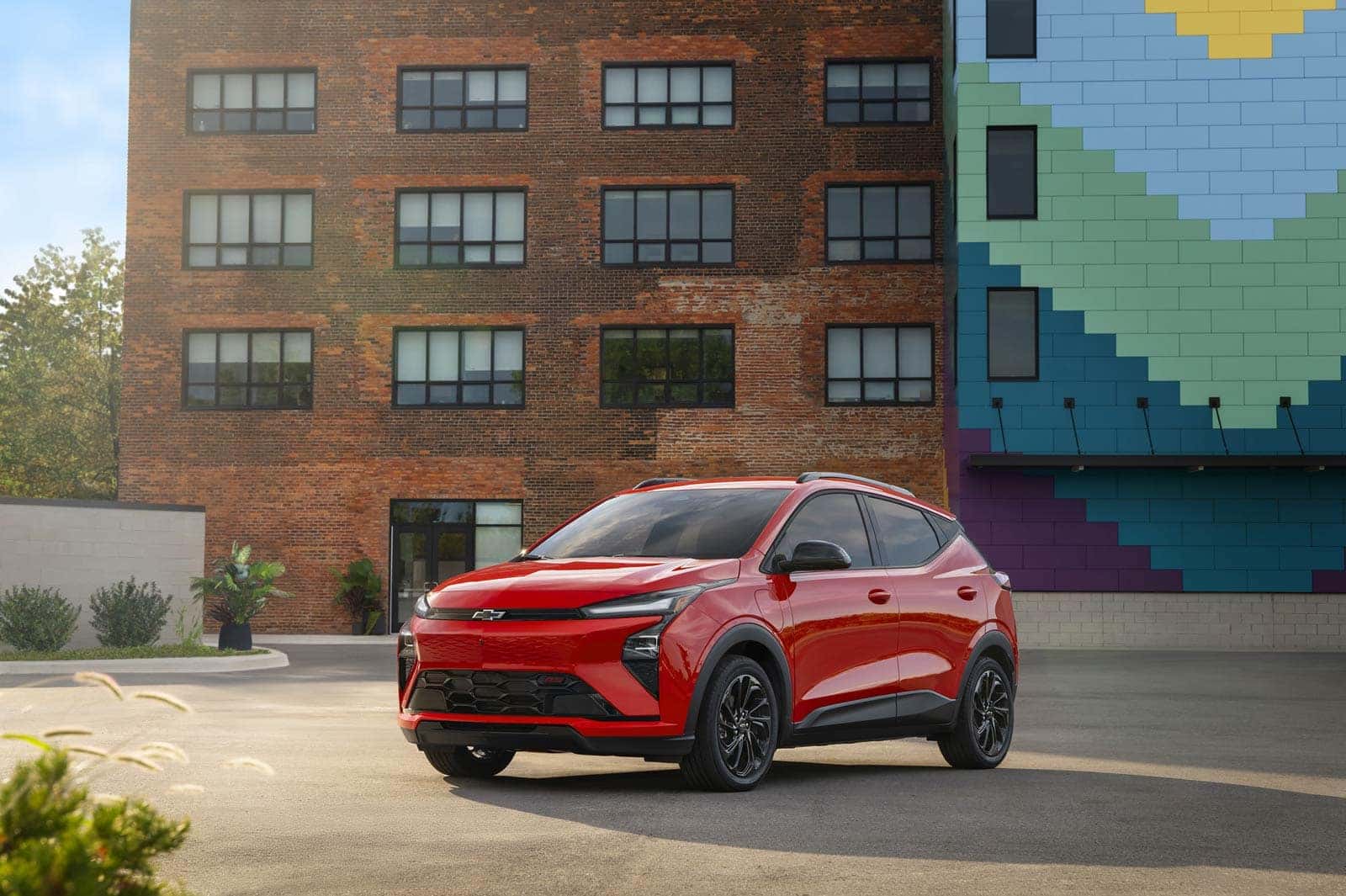
The 2027 Chevy Bolt vs Tesla Model 3 comparison lands on our lot every week — and it is one of the most lopsided value stories in the EV market right now. Both are fully electric, both seat five, and both now share the same NACS charging connector. But the 2027 Chevrolet Bolt EV starts at $27,600, while the 2026 Tesla Model 3 Standard starts at approximately $36,990. That is roughly a $9,400 gap before incentives — and the Bolt fills it with a practical hatchback body, an 11.3-inch touchscreen, available Super Cruise hands-free driving, and 262 miles of EPA-estimated range. For Denver drivers looking for the smartest entry point into electric ownership, the math favors the Bolt.
Quick Answer
The 2027 Chevy Bolt EV starts at $27,600 with 210 hp, 262 miles of EPA-estimated range, 150 kW DC fast charging, a standard NACS charge port (Tesla Supercharger compatible), and an 11.3-inch touchscreen — making it America’s most affordable new EV. The 2026 Tesla Model 3 starts at $36,990 with 271 hp, 363 miles of range, and access to the Tesla Supercharger network. The Bolt costs roughly $9,400 less, offers a versatile hatchback with more max cargo space, and includes available Super Cruise hands-free driving — a compelling value proposition for Denver and Lakewood buyers entering the EV market.
See the Chevy Bolt EV in Person at Emich Chevrolet
Top-rated Chevrolet dealer in Denver. Best selection, best pricing, and the area’s most trusted Chevy sales and service team.
Chevy Bolt EV vs Tesla Model 3 at a Glance
The Bolt and Model 3 occupy different market positions but compete for the same first-time EV buyer. The 2027 Chevy Bolt is a compact hatchback designed around maximum value and everyday practicality. The 2026 Tesla Model 3 is a sport sedan built around range, performance, and the Tesla ecosystem. Below is a head-to-head comparison of the specs Denver shoppers care about most.
| Specification | 2027 Chevy Bolt EV | 2026 Tesla Model 3 |
|---|---|---|
| Starting MSRP | $27,600 (LT) | ~$36,990 (Standard) |
| Motor / Horsepower | Single motor, 210 hp / 169 lb-ft | Single motor, 271 hp / 310 lb-ft (Standard RWD) |
| Drivetrain | Front-wheel drive | Rear-wheel drive (Standard); AWD available |
| EPA-Estimated Range | 262 miles | 363 miles (Standard RWD) |
| Battery | 65 kWh LFP | ~60 kWh (Standard) |
| DC Fast Charging | 150 kW; 25 min 10–80% | 170 kW (Supercharger); ~15 min 10–80% |
| Charge Port | NACS standard | NACS (native Tesla) |
| Body Style | Compact hatchback | Compact sedan |
| Max Cargo (seats folded) | 56.3 cu ft | ~24.1 cu ft (trunk) |
| Touchscreen | 11.3-inch + 11-inch digital cluster | 15-inch center screen (no instrument cluster) |
| Hands-Free Driving | Available Super Cruise | Autopilot standard; FSD ~$8,000 option |
| Battery Warranty | 8 years / 100,000 miles | 8 years / 100,000 miles (Standard) |
Range and Charging
The 2026 Tesla Model 3 Standard delivers an EPA-estimated 363 miles of range — roughly 100 miles more than the Bolt’s 262. On paper, that is a meaningful gap. In practice, most Denver-area commuters drive fewer than 40 miles per day, and the Bolt’s 262-mile range covers a full work week of city driving plus a weekend trip to the mountains without needing a charge. For daily commuting between Lakewood, Denver, and Aurora, 262 miles is more than enough.
Where the Bolt has closed the gap is charging. The 2027 Bolt now comes standard with a NACS charge port — the same connector Tesla uses — giving it access to Tesla Superchargers along with the entire CCS public network. Bolt supports 150 kW DC fast charging and reaches 10% to 80% in an estimated 25 minutes. The Model 3 charges faster at peak (170 kW at Superchargers), but both vehicles can add meaningful range in a lunch-break stop. The Bolt’s new LFP battery also allows regular charging to 100% without degradation concerns, which simplifies ownership.
Performance
The 2027 Chevy Bolt produces 210 horsepower and 169 lb-ft of torque from a single front-mounted electric motor. It is front-wheel drive, responsive off the line, and perfectly suited for city and highway driving around the Denver metro. The 2026 Tesla Model 3 Standard counters with 271 hp and 310 lb-ft of torque from a single rear motor, delivering quicker acceleration and a sportier feel on the highway. The Performance variant adds a second motor, all-wheel drive, and a 3.0-second 0-60 time — but it also starts well above $50,000.
For the typical Denver commuter, the Bolt’s 210 hp delivers smooth, confident acceleration for merging onto I-25, climbing grades out of Lakewood, and handling everyday driving. The Model 3 is the faster car. The Bolt is the more affordable car. Neither is slow — both are quicker than most similarly priced gas vehicles.
Interior, Tech, and Daily Comfort
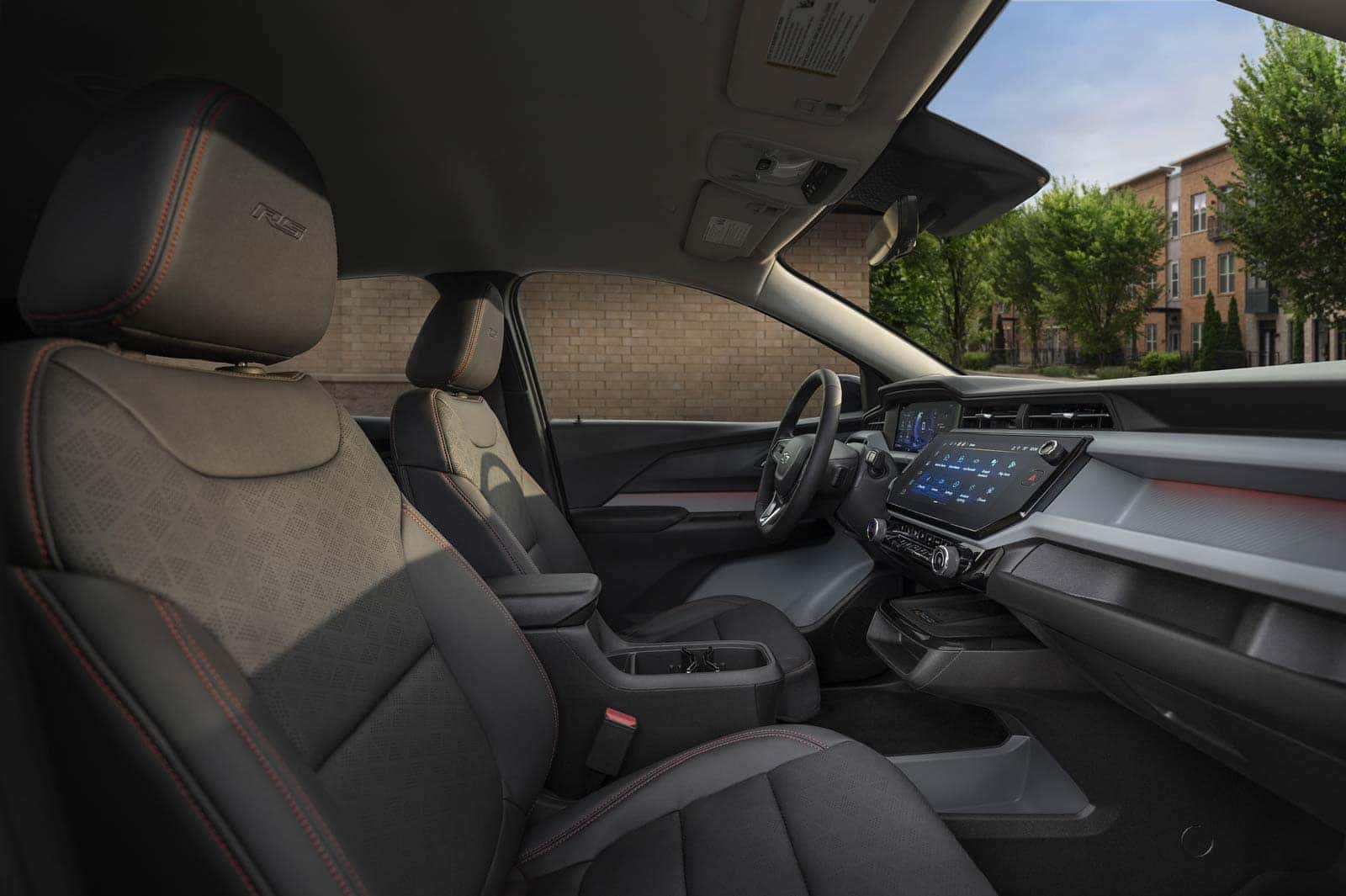
The 2027 Bolt’s redesigned interior includes an 11.3-inch diagonal infotainment touchscreen and an 11-inch diagonal Driver Information Center — a genuine dual-screen setup at a sub-$28,000 starting price. Google is built in, wireless Apple CarPlay and wireless Android Auto are standard, and the RS trim adds Evotex seating with red stitching and multi-color ambient lighting. The cabin feels more premium than the price suggests.
The 2026 Tesla Model 3 uses a single 15-inch center touchscreen that controls nearly every vehicle function. There is no instrument cluster behind the steering wheel — speed and driving info appear on the center screen or an optional heads-up display. Tesla’s interface is clean and minimalist, but some drivers prefer having key information directly in their sightline. The Bolt’s dual-screen layout puts driving data behind the wheel where most people expect it.
Safety and Driver Assistance
Every 2027 Chevy Bolt includes over 20 standard safety and driver assistance features, including Automatic Emergency Braking, Lane Keep Assist, Forward Collision Alert, Adaptive Cruise Control, Front Pedestrian Braking, and IntelliBeam auto high beams. Available Super Cruise adds true hands-free highway driving on over 400,000 miles of compatible roads — one of the most capable driver-assistance systems available at this price point.
The 2026 Tesla Model 3 includes Tesla Autopilot as standard, which provides traffic-aware cruise control and autosteer within a lane. Tesla’s Full Self-Driving (FSD) capability is available as an approximately $8,000 add-on. Both vehicles offer strong driver-assistance packages for Denver highway driving, but the Bolt’s Super Cruise is available as a factory option rather than a separate subscription or high-cost add-on.
Cargo and Everyday Practicality
This is where the Bolt’s hatchback body pays off. The 2027 Chevy Bolt offers 16.2 cubic feet of cargo behind the rear seats and up to 56.3 cubic feet with the 60/40 split-folding rear seats down — plus 4 cubic feet of underfloor storage. The wide hatchback opening makes it easy to load bulky items like strollers, ski gear, or Costco hauls that simply will not fit through a sedan trunk opening.
The 2026 Tesla Model 3 offers approximately 24.1 cubic feet of trunk space plus a small front trunk (frunk). However, the sedan body limits the opening size and the types of cargo you can fit. For Denver families who treat their EV as a daily hauler, the Bolt’s hatchback flexibility is a practical advantage the Model 3 cannot match.
Pricing, Value, and Warranty
The 2027 Chevy Bolt LT starts at $27,600. The Bolt RS starts at $31,600. The 2026 Tesla Model 3 Standard starts at approximately $36,990. That puts the Bolt LT roughly $9,400 below the base Model 3 — and the fully loaded Bolt RS still undercuts the entry-level Tesla by over $5,000. Both vehicles may qualify for federal EV tax credits depending on eligibility, but the Bolt’s lower base price means lower monthly payments, less sales tax, and a meaningfully lower total cost of entry.
Warranty coverage is comparable. The Bolt carries a 3-year/36,000-mile bumper-to-bumper warranty, a 5-year/60,000-mile powertrain warranty, and an 8-year/100,000-mile battery limited warranty. The Model 3 Standard carries a 4-year/50,000-mile basic warranty and an 8-year/100,000-mile battery warranty. Tesla’s basic coverage is slightly longer; Chevrolet adds a dedicated powertrain warranty. Both include 8-year battery protection at the base trim level.
Common mistakes Denver EV shoppers make
- Assuming the Bolt cannot use Tesla Superchargers — the 2027 Bolt has a standard NACS port and is fully compatible with select Tesla Superchargers.
- Comparing the base Bolt to a loaded Model 3 Performance and concluding the Tesla is a different class of vehicle — compare them at the same price point and the Bolt is the better-equipped option.
- Overlooking the cargo difference — the Bolt’s 56.3 cu ft of max cargo with seats folded more than doubles the Model 3’s ~24.1 cu ft trunk. The hatchback body is a real functional advantage.
- Forgetting that Tesla’s Full Self-Driving is an $8,000 add-on, while the Bolt’s Super Cruise is a factory-available option at a fraction of the cost.
Top Reasons to Choose the Chevy Bolt Over the Tesla Model 3
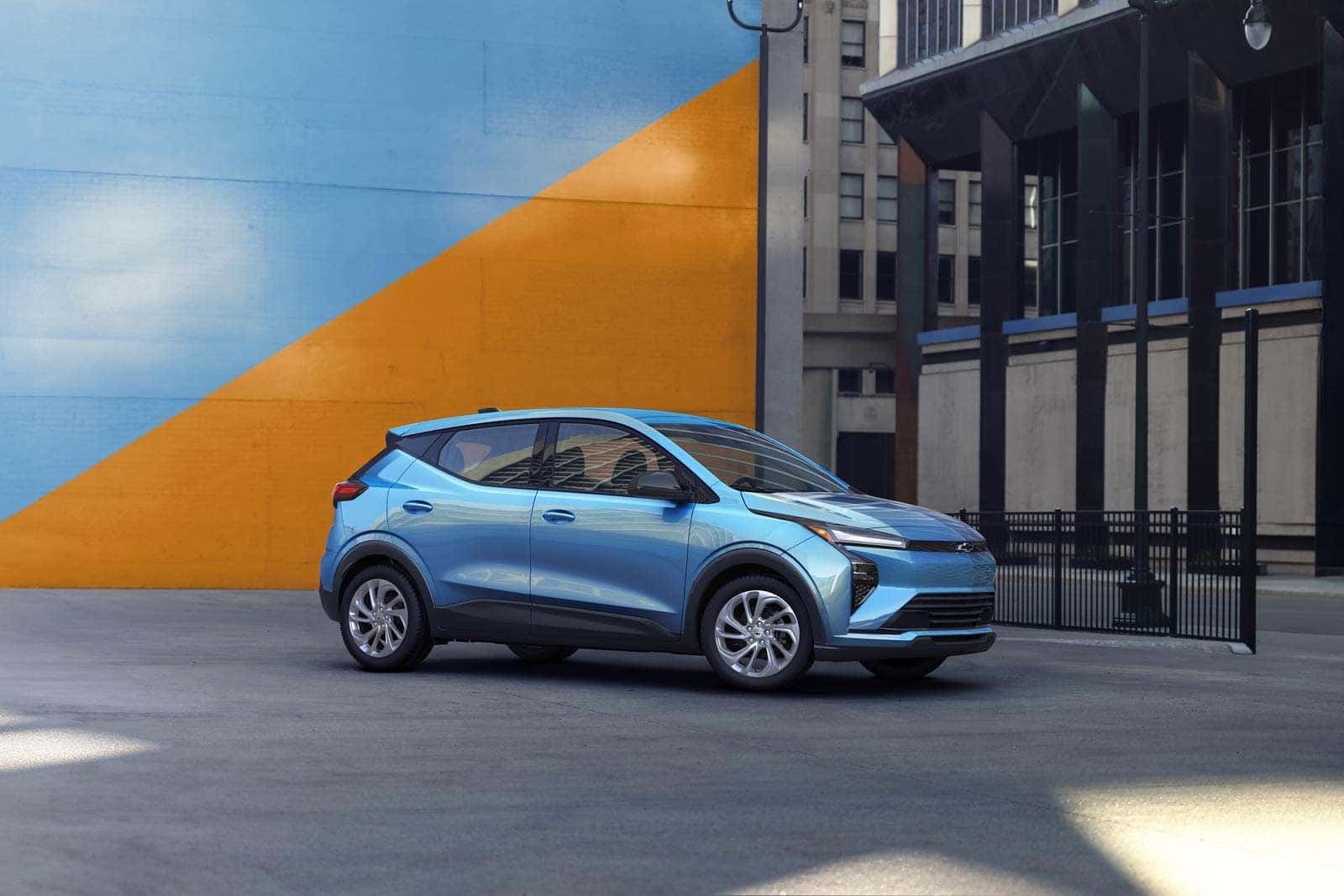
The case for the Bolt is not about matching the Model 3 spec for spec — it is about delivering a better value equation for everyday EV ownership in Denver.
1. Nearly $9,400 less to start
$27,600 vs ~$36,990. That gap reshapes monthly payments, insurance costs, and total cost of ownership over a five-year period. For many Denver buyers, the Bolt makes EV ownership possible where the Model 3 stretches the budget.
2. Hatchback versatility with more max cargo
56.3 cubic feet with seats folded vs ~24.1 cubic feet in the Model 3 trunk. The Bolt’s wide hatchback opening swallows furniture, bikes, ski gear, and Costco runs that a sedan trunk simply cannot accommodate.
3. Dual-screen tech with a driver-facing cluster
The Bolt’s 11.3-inch infotainment screen plus 11-inch digital instrument cluster keeps speed and driving data directly in the driver’s line of sight — a layout many drivers prefer over the Model 3’s single center screen.
4. Tesla Supercharger access via standard NACS port
The 2027 Bolt’s standard NACS charge port eliminates the Supercharger exclusivity that once set Tesla apart. Bolt owners can charge at Tesla Superchargers, CCS stations, and the full public network.
5. Available Super Cruise hands-free driving
GM’s Super Cruise allows true hands-free highway driving on over 400,000 miles of compatible roads. Tesla’s comparable Full Self-Driving capability costs approximately $8,000 extra.
6. Full dealer support and service network
The Bolt is backed by Chevrolet’s nationwide dealer network, including certified EV technicians at Emich Chevrolet in Denver. Service, warranty claims, and parts are handled locally with in-person support — no mobile service appointments or shipping the car to a service center.
Why Shop the Chevy Bolt in Denver With Emich Chevrolet
Buying an EV should be straightforward. At Emich Chevrolet, you get transparent pricing, no-pressure test drives, and a finance team that walks you through every option. Our service department includes Chevrolet-certified EV technicians who know the Bolt platform — battery health checks, software updates, brake maintenance, and everything that comes with EV ownership in Colorado’s climate and altitude. We are confident Emich offers the best selection, best pricing, and best sales and service for Bolt buyers in Denver and Lakewood.
Frequently Asked Questions
Is the Chevy Bolt cheaper than the Tesla Model 3?
Yes. The 2027 Chevrolet Bolt EV LT starts at $27,600, while the 2026 Tesla Model 3 Standard starts at approximately $36,990. That is roughly a $9,400 difference in the Bolt’s favor before any incentives.
How does the Chevy Bolt range compare to the Tesla Model 3?
The 2027 Chevy Bolt offers an EPA-estimated 262 miles of electric range. The 2026 Tesla Model 3 Standard offers an EPA-estimated 363 miles. The Model 3 has the range advantage, but the Bolt’s 262 miles covers the vast majority of Denver-area daily driving needs with room to spare.
Can the 2027 Chevy Bolt use Tesla Superchargers?
Yes. The 2027 Chevrolet Bolt comes standard with a NACS charge port, giving it access to select Tesla Superchargers along with the broader network of public DC fast chargers. The Bolt supports 150 kW DC fast charging, reaching 10% to 80% in approximately 25 minutes.
Does the Chevy Bolt have self-driving features?
Yes. The 2027 Chevy Bolt offers available Super Cruise, GM’s hands-free driver assistance technology for compatible highways. Every Bolt also includes over 20 standard safety and driver assistance features including Adaptive Cruise Control, Automatic Emergency Braking, and Lane Keep Assist.
How much cargo space does the Chevy Bolt have compared to the Tesla Model 3?
The 2027 Chevy Bolt offers 16.2 cubic feet behind the rear seats and up to 56.3 cubic feet with seats folded, thanks to its hatchback design. The 2026 Tesla Model 3 has approximately 24.1 cubic feet of trunk space. The Bolt’s hatchback opening and fold-flat seats give it a significant versatility advantage for larger or awkwardly shaped items.
What warranty does the 2027 Chevy Bolt have?
The 2027 Chevrolet Bolt comes with a 3-year/36,000-mile bumper-to-bumper warranty, a 5-year/60,000-mile powertrain warranty, and an 8-year/100,000-mile battery limited warranty. Tesla offers a 4-year/50,000-mile basic warranty and an 8-year/100,000-mile battery warranty on the Standard Model 3.
Is the Chevy Bolt a good first EV?
The 2027 Chevy Bolt is widely considered one of the best first EVs available. It is America’s most affordable new EV, offers 262 miles of range, charges quickly with 150 kW DC fast charging, and includes modern tech with an 11.3-inch touchscreen and 11-inch digital instrument cluster. For Denver drivers making the switch from gas, the Bolt removes the biggest barrier to EV ownership: price.
Can I test drive a Chevy Bolt in Denver?
Yes. You can test drive a 2027 Chevrolet Bolt at Emich Chevrolet in Denver. Same-day test drives are available for units on our lot. Our team can have a Bolt LT or RS staged and ready when you arrive.
Key Takeaways
- The 2027 Chevy Bolt starts at $27,600; the 2026 Tesla Model 3 starts at ~$36,990 — roughly a $9,400 gap in the Bolt’s favor.
- The Model 3 offers 363 miles of range vs the Bolt’s 262 miles. Both cover daily Denver commuting comfortably.
- The Bolt now has a standard NACS charge port, giving it access to Tesla Superchargers and the full public charging network.
- The Bolt’s hatchback body delivers up to 56.3 cu ft of cargo with seats folded — more than double the Model 3’s ~24.1 cu ft trunk.
- Both offer advanced driver assistance: Bolt has available Super Cruise; Tesla has Autopilot standard with FSD as a ~$8,000 option.
- Both carry 8-year/100,000-mile battery warranties at the base trim level.
- If affordable EV ownership with practical cargo flexibility is the priority, the Bolt is the smarter pick. If maximum range and peak performance matter most, the Model 3 is the right cross-shop.
Cost, Timing, and What to Expect
Most Denver-area Bolt shoppers complete a test drive, trade-in appraisal, and financing review in about 90 minutes at Emich Chevrolet. Delivery the same day is common for units on our lot. Custom factory orders typically arrive within 8 to 14 weeks depending on configuration and demand. Trade-in values are based on transparent market data. Financing and leasing options are both available, and GM Financial regularly runs Denver-area incentives we can apply at checkout. The 2027 Bolt is assembled in Fairfax, Kansas.
See the Chevy Bolt EV in Person at Emich Chevrolet
Top-rated Chevrolet dealer in Denver. Best selection, best pricing, and the area’s most trusted Chevy sales and service team.
Last updated: June 22, 2026 | Service area: Denver, Lakewood, Aurora, and the Front Range