

2027 Chevy Bolt EV vs 2026 Tesla Model 3 | Price, Range & Cargo Compared
Last updated: June 16, 2026 | Service area: Denver, Lakewood, and the Front Range
The Chevy Bolt EV vs Tesla Model 3 comparison comes up constantly in Denver EV conversations — and for good reason. These are two of the most popular affordable electric vehicles in the country, but they take very different approaches. The 2027 Chevrolet Bolt EV starts at $28,995 and delivers 255 miles of range from a compact, practical hatchback. The 2026 Tesla Model 3 starts at $36,990 and counters with 321 miles of range and a sedan body. That is an $7,995 price difference at the base trim — real money that reshapes the financing and ownership picture for Denver buyers.
Quick Answer
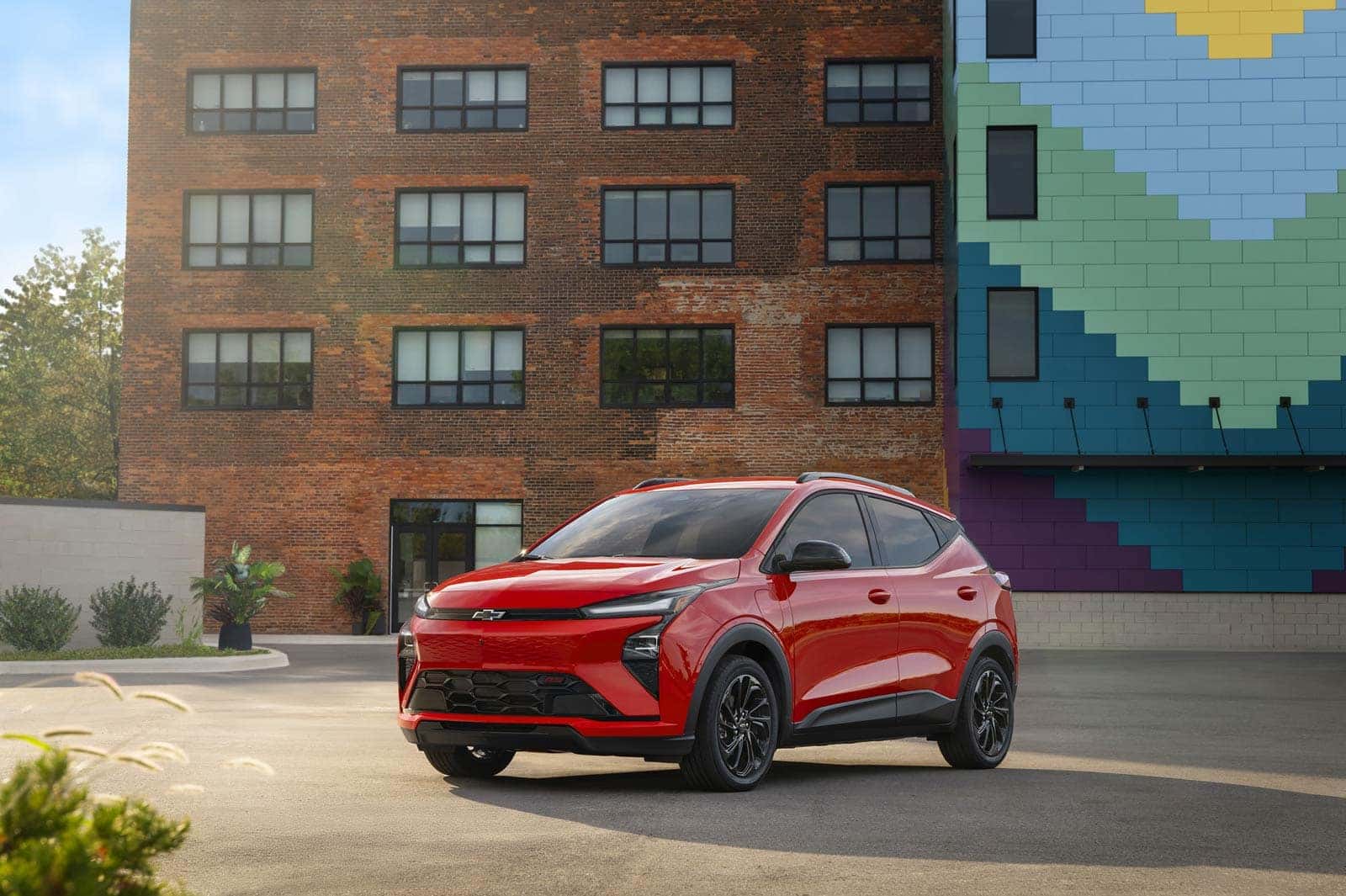
The 2027 Chevy Bolt EV starts at $28,995, making it America’s most affordable new EV — roughly $8,000 less than the 2026 Tesla Model 3. The Bolt features 210 hp, a 65-kWh LFP battery, 255 miles of range, 150-kW DC fast charging, an 11.3-inch touchscreen with Google built-in, and a practical hatchback cargo design with 56.3 cu ft of max cargo. The Model 3 counters with 286 hp, 321 miles of range, and Tesla’s Supercharger network. For Denver and Lakewood drivers who want an affordable, well-equipped EV with hatchback versatility and dealer-backed service, the Bolt is the value leader.
See the Chevy Bolt EV at Emich Chevrolet
Top-rated Chevrolet dealer in Denver. Best selection, best pricing, and the area’s most trusted Chevy sales and service team.
Chevy Bolt EV vs Tesla Model 3 at a Glance
The Bolt and Model 3 target overlapping but distinct buyers. The 2027 Chevy Bolt EV is a compact electric hatchback built for value and practicality — it delivers a full EV experience under $30,000 with a cargo-friendly body style. The 2026 Tesla Model 3 is a midsize electric sedan designed around range, acceleration, and Tesla’s software ecosystem. For Denver shoppers, the core question is whether the Model 3’s extra range and brand cachet justify an $8,000 premium over the Bolt’s lower price and hatchback versatility.
| Specification | 2027 Chevy Bolt EV | 2026 Tesla Model 3 |
|---|---|---|
| Starting MSRP | $28,995 (LT) | $36,990 (Standard RWD) |
| Body Style | Compact hatchback | Midsize sedan |
| Drivetrain | Single motor, FWD | Single motor, RWD (AWD available) |
| Horsepower | 210 hp | 286 hp (Standard RWD) |
| Torque | 169 lb-ft | ~332 lb-ft |
| Battery Capacity | 65 kWh (LFP) | ~60 kWh (LFP, Standard) |
| EPA-Estimated Range | 255 miles (GM-estimated) | 321 miles (Standard RWD) |
| EPA Combined MPGe | 120 MPGe | ~130 MPGe (estimated) |
| DC Fast Charging | 150 kW; 10–80% in ~26 min | 250 kW (Supercharger); 15 min for ~175 mi |
| Charge Port | Native NACS | Native NACS |
| 0–60 mph | ~6.5 seconds (estimated) | 5.8 seconds (Standard RWD) |
| Max Cargo Space | 56.3 cu ft (seats folded) | ~24 cu ft (trunk + frunk) |
| Cargo Behind Rear Seats | 16.2 cu ft | ~23 cu ft (trunk) |
| Seating | 5 passengers | 5 passengers |
| Basic Warranty | 3 years / 36,000 miles | 4 years / 50,000 miles |
| Battery Warranty | 8 years / 100,000 miles | 8 years / 100,000 miles |
Performance and Powertrain
The 2027 Chevy Bolt EV uses a single front-mounted electric motor producing 210 horsepower and 169 lb-ft of torque, paired with a 65-kWh lithium-iron-phosphate (LFP) battery. The Bolt is front-wheel drive and tuned for everyday efficiency rather than outright acceleration. For Denver commuters on I-25, US-36, and surface streets, the Bolt feels responsive and composed — the instant torque of an electric motor makes city driving effortless, and the LFP battery chemistry is known for durability and thermal stability in Colorado’s temperature extremes.
The 2026 Tesla Model 3 Standard RWD uses a single rear-mounted motor producing 286 horsepower and approximately 332 lb-ft of torque, delivering a 5.8-second 0–60 time. The Model 3 is noticeably quicker and carries more highway passing power. AWD versions push the power further — the Premium AWD hits 0–60 in 4.2 seconds. If acceleration performance is a priority, the Model 3 has a clear edge. But for the typical Denver commute, the Bolt’s 210 hp provides more than enough power for daily driving and highway merging.
Range and charging along the Front Range
The Model 3 Standard RWD delivers 321 EPA-estimated miles on a full charge versus the Bolt’s 255 GM-estimated miles — a 66-mile gap that matters for longer trips. For daily Denver-area driving (the average Coloradan drives about 35 miles per day), both vehicles will last multiple days on a single charge. Where the range gap shows up is on longer drives — a Denver-to-Glenwood-Springs round trip at roughly 320 miles is tight for the Bolt but comfortable for the Model 3.
Both vehicles feature native NACS ports. Tesla’s Supercharger network supports up to 250 kW, which can add roughly 175 miles of range in 15 minutes under ideal conditions. The Bolt charges at up to 150 kW, reaching 10–80% in about 26 minutes. Tesla’s charging speed advantage is real, but the Bolt’s 150-kW capability is a major improvement over the previous generation and is fast enough for road-trip stops.
Interior, Tech, and Cargo
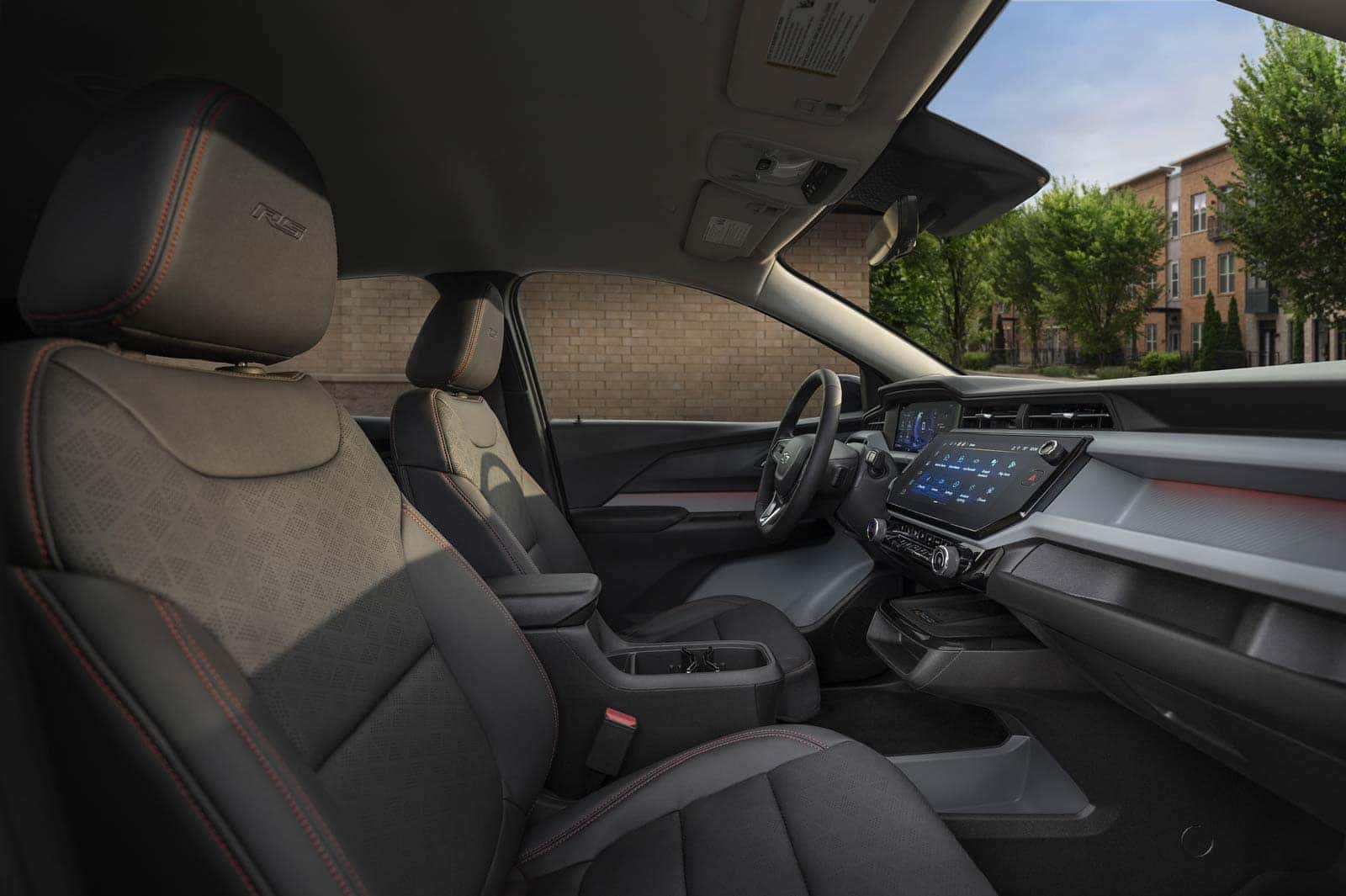
The 2027 Bolt EV features a redesigned interior with an 11.3-inch diagonal infotainment touchscreen with Google built-in — including Google Maps, Google Assistant, and access to the Google Play Store — plus an 11-inch diagonal driver information center. Wireless Apple CarPlay and wireless Android Auto are standard. Physical controls and a conventional instrument layout make the Bolt’s cabin intuitive for drivers coming from traditional vehicles.
The 2026 Tesla Model 3 uses a minimalist interior centered around a 15.4-inch touchscreen that controls nearly everything, including speed display, climate, and vehicle settings. Tesla’s software is responsive and receives over-the-air updates, but the screen-dependent interface has a learning curve — features like adjusting mirrors, wiper speed, or opening the glovebox all route through the touchscreen or voice commands. Some Denver drivers love this approach; others find it distracting.
Cargo is where the Bolt’s hatchback body style delivers a decisive advantage. With rear seats folded, the Bolt opens up to 56.3 cubic feet of flat cargo space — more than double the Model 3’s approximately 24 cubic feet of combined trunk and frunk storage. For Costco runs, ski gear, bikes, or moving day, the Bolt’s hatchback is simply more versatile than the Model 3’s traditional sedan trunk.
Safety and Driver Assistance
The 2027 Chevy Bolt EV includes Chevy Safety Assist as standard: Automatic Emergency Braking, Front Pedestrian Braking, Lane Keep Assist with Lane Departure Warning, Forward Collision Alert, Following Distance Indicator, and IntelliBeam auto high beams. Adaptive cruise control is available on higher trims.
The 2026 Tesla Model 3 includes Tesla’s standard Autopilot with traffic-aware cruise control and autosteer within a lane. Tesla also offers Enhanced Autopilot and Full Self-Driving (Supervised) as paid upgrades. Both vehicles provide solid standard driver-assistance features for Denver-area highway commuting. Tesla’s over-the-air software updates can add features over time, while Chevrolet’s system uses conventional dealer-serviced updates.
Pricing, Value, and Ownership
The 2027 Chevy Bolt EV LT starts at $28,995. The Bolt RS starts at $32,995. The 2026 Tesla Model 3 Standard RWD starts at $36,990. That is a $7,995 gap at the base trim — and the gap widens as you move up. Tesla’s Premium RWD jumps to $42,490, while the Bolt RS tops out at $32,995 with a sportier exterior and additional features.
Service is another factor. The Bolt is backed by Emich Chevrolet’s local service department with Chevrolet-certified EV technicians, a physical parts inventory, and a personal relationship with the service team. Tesla service routes through mobile technicians and regional service centers — there is no traditional dealership experience. For Denver buyers who value face-to-face service and local expertise, the Chevrolet dealer model has a practical advantage.
Battery warranties are identical: both the Bolt and Model 3 carry 8-year / 100,000-mile battery coverage. Tesla’s basic vehicle warranty is slightly longer at 4 years / 50,000 miles versus Chevrolet’s 3 years / 36,000 miles. Chevrolet includes 5 years / 60,000 miles of roadside assistance.
Common mistakes Denver EV shoppers make
- Comparing MSRP without factoring in federal and Colorado state EV tax credits — both vehicles may qualify, but eligibility requirements differ. Verify credit status before purchasing.
- Assuming the Model 3’s range advantage matters for daily driving — at 255 miles, the Bolt covers a typical Denver commuter’s weekly driving on a single charge. Range matters most for road trips.
- Overlooking cargo practicality — the Bolt’s 56.3 cu ft hatchback cargo space is over double the Model 3’s ~24 cu ft. If you regularly haul gear, groceries, or sports equipment, this difference is significant.
- Forgetting about the service experience — Tesla handles service remotely and through regional centers. Chevrolet offers local dealer service at Emich in Denver with certified EV technicians on-site.
Top Reasons to Choose the Chevy Bolt EV
The Bolt is not trying to beat the Model 3 at Tesla’s game — it is delivering a complete, practical, well-equipped EV at a price that makes going electric accessible for more Denver buyers. Here is why the Bolt earns serious consideration.
1. Nearly $8,000 less at the base trim
$28,995 vs $36,990. The Bolt’s lower starting price means lower monthly payments, a smaller down payment, and more room in your budget — whether that means choosing a higher Bolt trim or putting money toward a home charger installation.
2. Hatchback cargo versatility
The Bolt’s 56.3 cu ft of max cargo space with seats folded is more than double the Model 3’s ~24 cu ft. The hatchback liftgate and flat cargo floor make loading skis, bikes, furniture, and Costco hauls dramatically easier than the Model 3’s sedan trunk.
3. Intuitive dual-screen interior with physical controls
The Bolt’s 11.3-inch touchscreen with Google built-in plus 11-inch driver display gives you critical information at a glance — no hunting through menus on a single center screen. Physical buttons for common functions mean less distraction on the road.
4. 150-kW fast charging — a 2.5x improvement over the old Bolt
The 2027 Bolt’s 150-kW DC fast-charging capability reaches 10–80% in approximately 26 minutes. Combined with its native NACS port, the Bolt has access to the same Supercharger network and public fast chargers as the Model 3.
5. Local dealer service and support
The Bolt is serviced at Emich Chevrolet’s Denver location by certified EV technicians who know the vehicle inside and out. You get face-to-face service appointments, local parts availability, and a team that is invested in the community — a different model from Tesla’s remote-first service approach.
6. LFP battery chemistry for long-term durability
The Bolt’s lithium-iron-phosphate battery is designed for thermal stability and extended lifespan. LFP batteries handle repeated fast charging and temperature extremes well — a practical advantage in Colorado, where summer heat and winter cold both stress EV batteries.
Why Shop the Chevy Bolt EV in Denver With Emich Chevrolet
Switching to an EV in Denver should feel exciting, not overwhelming. As a top-rated Chevrolet dealer in the Denver metro, Emich Chevrolet built our EV process around transparency, hands-on experience, and local expertise. You get honest pricing, a thorough test drive, and a team that can walk you through home charging setup, range planning, and every question about EV ownership. No pressure, no confusion.
Our service department is staffed by Chevrolet-certified EV technicians who understand the Bolt’s electric drivetrain, battery management, and software systems. That matters in Colorado, where altitude, temperature swings, and mountain driving all affect EV behavior. We are confident Emich offers the best selection, best pricing, and best EV sales and service in Denver and Lakewood — and we work to prove it on every visit.
Frequently Asked Questions
Is the 2027 Chevy Bolt EV better than the 2026 Tesla Model 3?
It depends on what matters most. The 2027 Bolt EV is roughly $8,000 less expensive, offers over double the cargo space (56.3 vs ~24 cu ft), and provides local dealer service at Emich Chevrolet. The 2026 Tesla Model 3 offers 66 more miles of range (321 vs 255 miles), faster acceleration, and higher peak charging speeds. For Denver buyers prioritizing value, practicality, and service convenience, the Bolt is the stronger choice.
How does the Bolt’s range compare to the Tesla Model 3?
The 2027 Bolt delivers 255 miles of GM-estimated range. The 2026 Model 3 Standard RWD delivers 321 EPA-estimated miles. The 66-mile difference is most relevant on road trips — for typical Denver daily driving, both vehicles last multiple days between charges.
Can the Bolt EV use Tesla Superchargers?
Yes. The 2027 Bolt EV includes a native NACS charging port, giving it direct access to Tesla’s Supercharger network as well as all other NACS-compatible public fast chargers. No adapter is needed.
How much cargo space does the Bolt EV have vs the Model 3?
The Bolt’s hatchback design provides 56.3 cu ft of max cargo space with rear seats folded and 16.2 cu ft behind the rear seats. The Model 3’s sedan trunk holds approximately 23 cu ft, plus a small frunk, for a total of roughly 24 cu ft. The Bolt’s hatchback is significantly more versatile for hauling large or bulky items.
What warranty does the 2027 Bolt EV have?
The 2027 Chevy Bolt EV includes a 3-year / 36,000-mile bumper-to-bumper warranty, 5 years / 60,000 miles of roadside assistance, and an 8-year / 100,000-mile battery and electric drivetrain warranty. The battery warranty matches the Tesla Model 3’s 8-year / 100,000-mile coverage.
Does the Bolt EV come with all-wheel drive?
No. The 2027 Bolt EV is front-wheel drive only. If you want an electric Chevy with AWD, the Chevy Equinox EV and Chevy Blazer EV both offer available AWD configurations. The Tesla Model 3 offers an AWD variant starting at $47,490 (Premium AWD).
Key Takeaways
- The 2027 Chevy Bolt EV starts at $28,995; the 2026 Tesla Model 3 starts at $36,990 — nearly $8,000 less for the Bolt.
- The Bolt produces 210 hp (FWD); the Model 3 Standard produces 286 hp (RWD) with a 5.8-second 0–60.
- Range: 255 miles (Bolt) vs. 321 miles (Model 3 Standard) — the Model 3 adds 66 miles but at a significant price premium.
- Cargo: the Bolt’s hatchback offers 56.3 cu ft with seats folded — over double the Model 3’s ~24 cu ft total.
- Both feature native NACS ports and access to Tesla Superchargers and public fast chargers.
- The Bolt features an 11.3-inch touchscreen with Google built-in and an 11-inch driver display — intuitive dual-screen layout with physical controls.
- Battery warranties match at 8 years / 100,000 miles. Tesla’s basic warranty is slightly longer (4yr/50k vs 3yr/36k).
- If value, cargo versatility, and local dealer service are priorities, the Bolt is the smarter pick. If range and acceleration matter most, the Model 3 makes a strong case.
Cost, Timing, and What to Expect
Most Denver-area Bolt shoppers complete a test drive, trade-in appraisal, and financing review in about 90 minutes at Emich Chevrolet. Delivery the same day is common for units on the lot. Trade-in values are based on transparent market data — we walk you through every number. Financing and leasing options are both available, and GM Financial regularly runs Denver-area incentives we can apply at checkout. If you are cross-shopping the Model 3, bring both quotes — we are happy to walk through the numbers side by side.
See the Chevy Bolt EV at Emich Chevrolet
Top-rated Chevrolet dealer in Denver. Best selection, best pricing, and the area’s most trusted Chevy sales and service team.
Last updated: June 16, 2026 | Service area: Denver, Lakewood, Aurora, and the Front Range