

2027 Chevy Bolt EV vs 2026 Toyota C-HR EV | Price, Range & Specs Compared
Last updated: June 16, 2026 | Service area: Denver, Lakewood, and the Front Range
Two brand-new electric vehicles are landing in Colorado at the same time, and Denver shoppers are already asking which one makes more sense. The 2027 Chevrolet Bolt EV starts at $28,995 and delivers 255 miles of GM-estimated range from a 65-kWh battery. The 2026 Toyota C-HR EV starts at $37,000 and counters with 287 miles of EPA-estimated range, 338 combined-system horsepower, and standard all-wheel drive. That is an $8,005 price gap at the base trim — a meaningful number for anyone financing an EV in the Denver metro. Here is how these two stack up across every spec that matters for daily driving along the Front Range.
Quick Answer
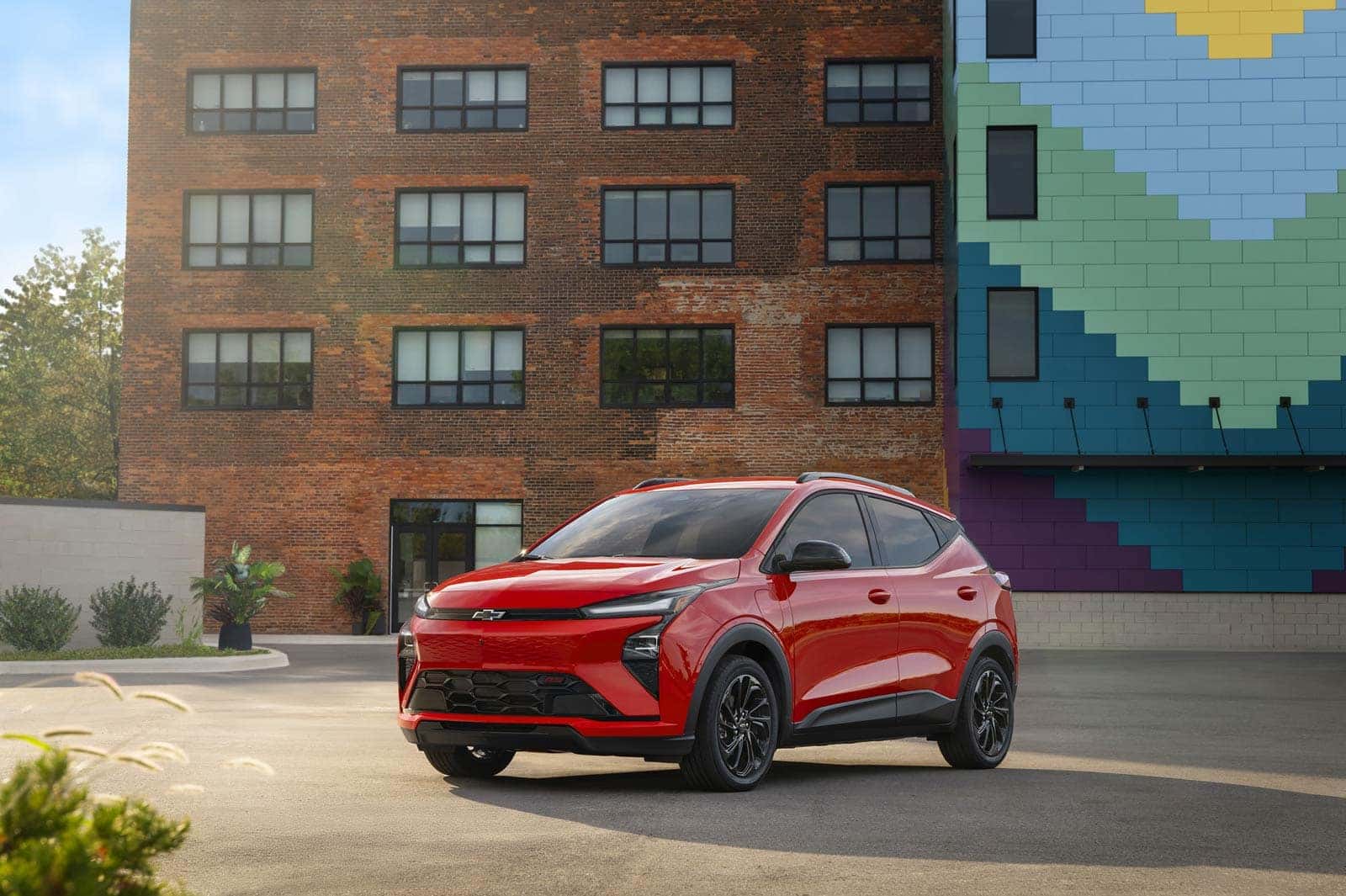
The 2027 Chevy Bolt EV starts at $28,995 with 210 hp, 255 miles of range, 150-kW DC fast charging, and a native NACS port — making it America’s most affordable new EV. The 2026 Toyota C-HR EV starts at $37,000 with 338 hp, standard AWD, 287 miles of range, and a sportier crossover body. For Denver and Lakewood drivers who want to go electric without stretching the budget, the Bolt delivers serious value at roughly $8,000 less. If outright performance and AWD grip matter more than cost, the C-HR makes a strong case at its higher price point.
See the Chevy Bolt EV at Emich Chevrolet
Top-rated Chevrolet dealer in Denver. Best selection, best pricing, and the area’s most trusted Chevy sales and service team.
Chevy Bolt EV vs Toyota C-HR EV at a Glance
The Bolt and C-HR occupy different positions in the EV market despite both being compact electric vehicles. The 2027 Chevy Bolt EV is a value-focused electric hatchback — small, efficient, and priced under $30,000. The 2026 Toyota C-HR EV is a performance-oriented compact electric crossover with a wider stance, dual motors, and a significantly higher starting price. For Denver shoppers comparing the two, the question is straightforward: do you want the most affordable way into a new EV, or are you willing to pay more for AWD, extra power, and a crossover body style?
| Specification | 2027 Chevy Bolt EV | 2026 Toyota C-HR EV |
|---|---|---|
| Starting MSRP | $28,995 (LT) | $37,000 (SE) |
| Drivetrain | Single motor, FWD | Dual motor, AWD standard |
| Horsepower | 210 hp | 338 hp (combined system) |
| Torque | 169 lb-ft | 198 lb-ft front / 125 lb-ft rear |
| Battery Capacity | 65 kWh (LFP) | 74.7 kWh (lithium-ion) |
| EPA-Estimated Range | 255 miles (GM-estimated) | 287 miles (SE) / 273 miles (XSE) |
| EPA Combined MPGe | 120 MPGe | 117 MPGe (SE) / 112 MPGe (XSE) |
| DC Fast Charging | 150 kW; 10–80% in ~26 min | DC fast; 10–80% in ~30 min |
| Charge Port | Native NACS | Native NACS |
| 0–60 mph | ~6.5 seconds (estimated) | 4.9 seconds |
| Cargo (behind rear seats) | 16.2 cu ft | 25.3 cu ft |
| Cargo (seats folded) | 56.3 cu ft | 59.5 cu ft |
| Seating | 5 passengers | 5 passengers |
| Basic Warranty | 3 years / 36,000 miles | 3 years / 36,000 miles |
| Battery Warranty | 8 years / 100,000 miles | 8 years / 100,000 miles |
Performance and Powertrain
The 2027 Chevy Bolt EV uses a single electric motor driving the front wheels, producing 210 horsepower and 169 lb-ft of torque. That is a significant step up from the previous-generation Bolt’s 200 hp, and the new 65-kWh lithium-iron-phosphate (LFP) battery is paired with 150-kW DC fast-charging capability — over 2.5 times faster than the old model. For Denver commuters driving I-25, US-36, or C-470 daily, the Bolt’s powertrain is more than adequate for city driving and highway merging. The front-wheel-drive layout keeps things simple and efficient, and LFP chemistry is known for longevity and thermal stability.
The 2026 Toyota C-HR EV is a different animal entirely. Its dual-motor AWD system produces 338 combined-system horsepower with 198 lb-ft of torque on the front motor and 125 lb-ft on the rear, delivering a manufacturer-estimated 4.9-second 0–60 time. The 74.7-kWh lithium-ion battery provides up to 287 miles of EPA-estimated range on the SE grade. The C-HR is faster, grippier in winter conditions, and feels more planted on mountain roads — but it costs over $8,000 more to get there.
Charging and range in Colorado
Both vehicles feature native NACS charging ports, giving them access to Tesla’s Supercharger network and thousands of public DC fast chargers along the Front Range, I-70 corridor, and beyond. The Bolt charges from 10% to 80% in roughly 26 minutes at 150 kW. The C-HR manages 10% to 80% in approximately 30 minutes. In daily use, both will handle a full day of Denver-area driving on a single charge and top up quickly at a fast-charging station when needed. The Bolt’s 255-mile range comfortably covers a Denver-to-Colorado-Springs round trip. The C-HR’s 287-mile range provides extra margin for longer drives toward Vail or Glenwood Springs.
Interior, Tech, and Daily Comfort
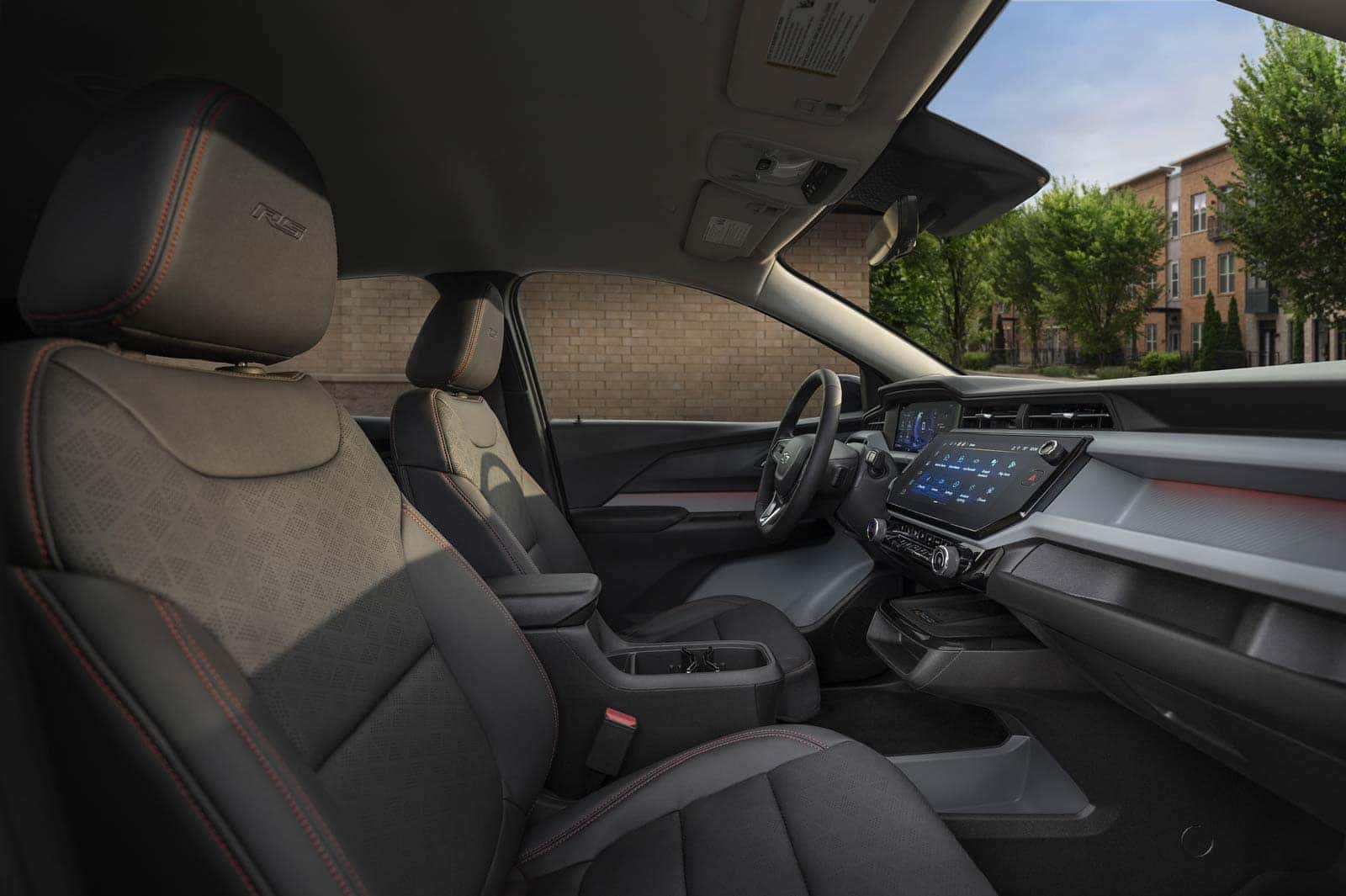
The 2027 Bolt EV returns with a redesigned interior featuring an 11.3-inch diagonal infotainment touchscreen with Google built-in and an 11-inch diagonal driver information center. That is a substantial upgrade from the previous Bolt’s smaller screens. Wireless Apple CarPlay, wireless Android Auto, and Google Maps navigation are all included. The cabin is modern, functional, and designed to make the most of the Bolt’s compact footprint.
The 2026 Toyota C-HR EV counters with its own modern cabin, a sleek coupe-like roofline, and Toyota’s latest multimedia system. The C-HR’s wider body gives it more interior room, particularly in cargo space behind the rear seats — 25.3 cubic feet versus the Bolt’s 16.2 cubic feet. With seats folded, the C-HR expands to 59.5 cubic feet versus the Bolt’s 56.3. For Denver families who need to load gear regularly, the C-HR’s crossover proportions provide a practical edge.
Safety and Driver Assistance
The 2027 Chevy Bolt EV comes standard with Chevy Safety Assist, including Automatic Emergency Braking, Front Pedestrian Braking, Lane Keep Assist with Lane Departure Warning, Forward Collision Alert, Following Distance Indicator, and IntelliBeam auto high beams. Higher trims add additional safety and convenience features.
The 2026 Toyota C-HR EV includes the Toyota Safety Sense suite as standard, featuring Pre-Collision System with Pedestrian Detection, Full-Speed Range Dynamic Radar Cruise Control, Lane Departure Alert with Steering Assist, Lane Tracing Assist, and Automatic High Beams. Both vehicles deliver comprehensive standard safety packages that meet the expectations of Denver-area commuters. Neither asks you to pay extra for the basics.
Pricing, Value, and Warranty
The 2027 Chevy Bolt EV LT starts at $28,995. The Bolt RS starts at $32,995. The 2026 Toyota C-HR EV SE starts at $37,000. That means even the top-trim Bolt RS is roughly $4,000 less than the base C-HR. For Denver shoppers comparing these two EVs, the Bolt delivers a complete electric vehicle experience — 255 miles of range, fast charging, modern tech — at an entry price that undercuts most competitors in the segment.
Both vehicles carry an 8-year / 100,000-mile battery warranty and a 3-year / 36,000-mile basic warranty. Chevrolet also includes 5 years / 60,000 miles of roadside assistance on the Bolt, while Toyota includes ToyotaCare complimentary maintenance for 2 years / 25,000 miles on the C-HR. The warranty math is a wash — neither brand asks you to trade ownership protection for price.
Common mistakes Denver EV shoppers make
- Assuming the Bolt is the same vehicle that was discontinued in 2023 — the 2027 Bolt is a fully redesigned model with a new battery, new interior, and much faster charging.
- Comparing base MSRP without factoring in the federal EV tax credit — eligibility rules differ by vehicle, assembly location, and battery sourcing. Check current credit status before buying either vehicle.
- Overlooking the Bolt’s LFP battery chemistry — lithium-iron-phosphate batteries are known for better longevity and thermal stability, which can matter in Colorado’s temperature extremes.
- Discounting the C-HR’s AWD as unnecessary in Denver — standard electronic AWD with dual motors provides real traction advantages in winter snow and on mountain roads, particularly west of the metro on I-70.
Top Reasons to Choose the Chevy Bolt EV
The Bolt’s advantage over the C-HR is not about matching it spec for spec — it is about delivering an excellent electric daily driver at a price that is roughly $8,000 lower. For Denver and Lakewood buyers, that difference reshapes the ownership equation.
1. Starting MSRP under $29,000
At $28,995, the 2027 Bolt EV LT is the most affordable new EV in America. That is $8,005 less than the 2026 Toyota C-HR EV SE — a gap that translates directly to lower monthly payments, less money down, or room to add options.
2. 150-kW DC fast charging with native NACS
The Bolt’s 150-kW fast-charging speed gets you from 10% to 80% in about 26 minutes — faster than the C-HR’s roughly 30-minute time. Both vehicles use a native NACS port for access to the broadest public charging network in the U.S.
3. Redesigned interior with dual large screens
The 2027 Bolt features an 11.3-inch infotainment touchscreen with Google built-in and an 11-inch driver information center. This is a genuine two-screen cockpit at a sub-$30,000 price — a tech setup that competes with EVs costing $10,000 or more.
4. Higher combined MPGe efficiency
The Bolt’s 120 MPGe combined rating edges the C-HR SE’s 117 MPGe and the XSE’s 112 MPGe. For daily Denver commuters, that efficiency advantage means lower electricity costs per mile over the life of the vehicle.
5. LFP battery chemistry for longevity
The Bolt’s 65-kWh lithium-iron-phosphate battery is designed for thermal stability and long-term durability. LFP chemistry handles repeated fast charging and Colorado’s hot summers and cold winters better than some conventional lithium-ion chemistries, which can mean less battery degradation over time.
6. Same battery warranty at a lower price
Both the Bolt and C-HR carry an 8-year / 100,000-mile battery warranty and a 3-year / 36,000-mile basic warranty. You are not trading peace of mind for the price savings — Chevrolet matches Toyota’s EV coverage.
Why Shop the Chevy Bolt EV in Denver With Emich Chevrolet
Going electric in Denver should feel like the smart, easy choice — not a stressful one. As a top-rated Chevrolet dealer in the Denver metro, Emich Chevrolet built our EV process around transparency and hands-on expertise. You get clear pricing, a thorough test drive, and a team that can walk you through charging setup, range planning, and every EV-specific question. No pressure, no jargon, no surprises.
Our service department includes Chevrolet-certified EV technicians who understand the Bolt’s electric drivetrain and battery system inside and out. That matters in Colorado, where altitude, temperature swings, and mountain driving all affect EV performance. Every Bolt we sell gets a multi-point EV inspection. We are confident Emich offers the best selection, best pricing, and best EV sales and service in Denver and Lakewood — and we work to prove it on every visit.
Frequently Asked Questions
Is the 2027 Chevy Bolt EV better than the 2026 Toyota C-HR EV?
For Denver buyers shopping on value, the Bolt is the stronger pick. At $28,995, it costs roughly $8,000 less than the C-HR’s $37,000 starting price while delivering 255 miles of range, 150-kW fast charging, and a modern dual-screen interior. The C-HR counters with 338 hp, standard AWD, and 287 miles of range — if outright performance and all-weather traction are priorities, the C-HR justifies its premium. For budget-conscious EV shoppers, the Bolt delivers more value per dollar.
How far can the 2027 Chevy Bolt EV go on a single charge?
The 2027 Bolt EV has a GM-estimated range of 255 miles on a full charge from its 65-kWh lithium-iron-phosphate battery. That comfortably covers a daily Denver commute, a round trip to Colorado Springs, or a weekend errand run without needing to charge mid-trip.
Does the 2027 Chevy Bolt EV come with all-wheel drive?
No. The 2027 Bolt EV is a front-wheel-drive vehicle across both the LT and RS trims. If AWD is essential for your driving needs in Colorado, the Chevy Equinox EV and Chevy Blazer EV both offer available AWD configurations. Many Denver-area EV owners drive FWD vehicles year-round with winter tires.
How fast does the 2027 Bolt EV charge?
The 2027 Bolt EV supports 150-kW DC fast charging, getting from 10% to 80% battery in approximately 26 minutes. This is over 2.5 times faster than the previous-generation Bolt. The vehicle also includes a native NACS port for access to the broadest public charging network in the United States.
What is the price difference between the Bolt EV and C-HR EV?
The 2027 Chevy Bolt EV LT starts at $28,995. The 2026 Toyota C-HR EV SE starts at $37,000. That is an $8,005 starting-price gap in the Bolt’s favor. Even the top Bolt RS at $32,995 is roughly $4,000 less than the base C-HR. At Emich Chevrolet, we post live Denver pricing on our inventory pages so Bolt shoppers can compare specific units.
What warranty does the 2027 Bolt EV have?
The 2027 Chevrolet Bolt EV includes a 3-year / 36,000-mile bumper-to-bumper warranty, 5 years / 60,000 miles of roadside assistance, and an 8-year / 100,000-mile battery and electric drivetrain warranty. That battery warranty matches the 2026 Toyota C-HR EV’s coverage.
Key Takeaways
- The 2027 Chevy Bolt EV starts at $28,995; the 2026 Toyota C-HR EV starts at $37,000 — about an $8,000 gap in the Bolt’s favor.
- The Bolt produces 210 hp from a single FWD motor; the C-HR produces 338 hp from a dual-motor AWD system.
- Range: 255 miles (Bolt) vs. 287 miles on the C-HR SE — the C-HR adds about 32 miles of range for $8,000 more.
- The Bolt charges faster at 150 kW (10–80% in ~26 min) vs. the C-HR’s ~30-minute 10–80% time.
- Both feature native NACS ports and access to the same public charging networks.
- Cargo is closer than expected with seats folded — 56.3 cu ft (Bolt) vs. 59.5 cu ft (C-HR).
- Both carry an 8-year / 100,000-mile battery warranty and 3-year / 36,000-mile basic warranty.
- If affordability and efficiency are the priority, the Bolt is the smarter pick. If AWD and performance matter more, the C-HR earns its premium.
Cost, Timing, and What to Expect
Most Denver-area Bolt shoppers complete a test drive, trade-in appraisal, and financing review in about 90 minutes at Emich Chevrolet. Delivery the same day is common for units already on our lot. Trade-in values are based on transparent market data — we walk you through every number. Financing and leasing options are both available, and GM Financial regularly runs Denver-area incentives we can apply at checkout. If you are comparing the Bolt to the C-HR or any other EV, bring both quotes — we are happy to walk through the numbers side by side.
See the Chevy Bolt EV at Emich Chevrolet
Top-rated Chevrolet dealer in Denver. Best selection, best pricing, and the area’s most trusted Chevy sales and service team.
Last updated: June 16, 2026 | Service area: Denver, Lakewood, Aurora, and the Front Range