

2027 Chevy Bolt vs 2026 Volvo EX30 | Denver EV Comparison
Last updated: June 15, 2026 | Service area: Denver, Lakewood, and the Front Range
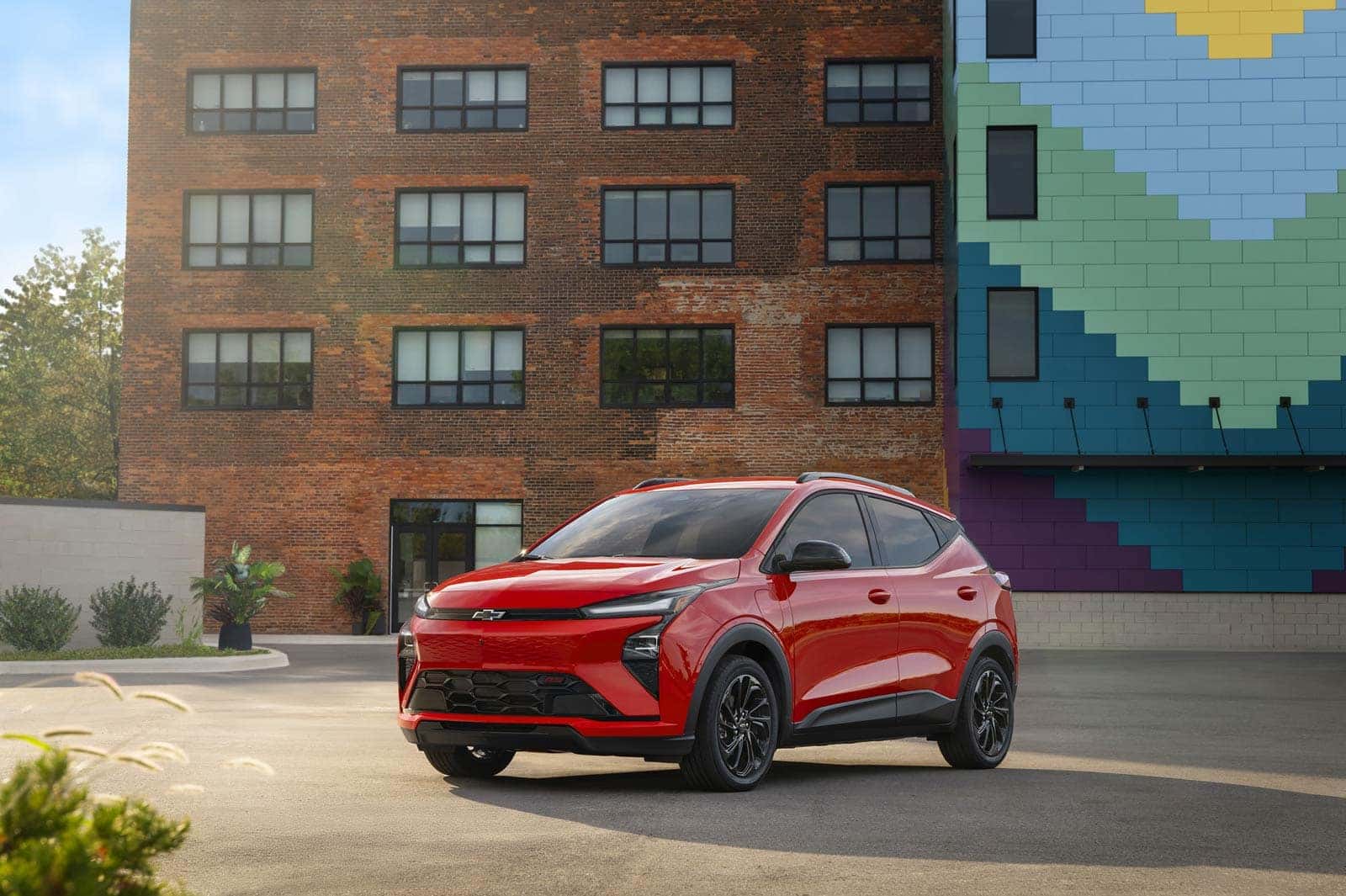
The affordable EV segment is heating up in Denver, and two of the most cross-shopped small electric vehicles on our lot right now are the 2027 Chevy Bolt EV and the 2026 Volvo EX30. Both seat five, both deliver roughly 260 miles of range, and both make sense for Front Range commuters looking to ditch the pump. But when you park a Bolt ($27,600 starting MSRP) next to an EX30 ($38,950 starting MSRP) and compare what you actually get for the money, the value gap is hard to ignore — roughly $11,350 in the Bolt’s favor before you even talk incentives.
Quick Answer
The 2027 Chevy Bolt EV starts at $27,600 with 262 miles of EPA-estimated range, a 65 kWh LFP battery, 150 kW DC fast charging with a Tesla Supercharger-compatible NACS port, and a dual-screen cockpit (11.3″ infotainment + 11″ driver display). The 2026 Volvo EX30 starts at $38,950 with 261 miles of range, 268 hp, and a minimalist 12.3″ vertical touchscreen. For Denver and Lakewood drivers who want an all-electric daily driver without paying a premium-brand markup, the Chevy Bolt EV delivers comparable range at about $11,350 less — plus significantly more cargo space (56.3 vs 31.9 cu ft).
See the Chevy Bolt EV in Person at Emich Chevrolet
Top-rated Chevrolet dealer in Denver. Best selection, best pricing, and the area’s most trusted Chevy sales and service team.
Chevy Bolt EV vs Volvo EX30 at a Glance
The Bolt and EX30 sit in the same compact EV space, but they target different buyers. The 2027 Chevy Bolt EV leans into value, a practical hatchback design, and a generous standard feature set at a sub-$28,000 starting price. The 2026 Volvo EX30 leans into premium Scandinavian design, more horsepower, and an available AWD twin-motor option — but it asks nearly $39,000 to start. For Denver shoppers who want to go electric without a luxury-tier payment, the Bolt makes the stronger case dollar for dollar.
| Specification | 2027 Chevy Bolt EV | 2026 Volvo EX30 |
|---|---|---|
| Starting MSRP | $27,600 (LT) | $38,950 (Single Motor ER Plus) |
| Motor / Power | Single electric, 210 hp / 169 lb-ft | Single Motor ER: 268 hp / 253 lb-ft; Twin Motor: 422 hp / 400 lb-ft |
| Drivetrain | FWD | RWD (Single Motor) or AWD (Twin Motor) |
| EPA-Estimated Range | 262 miles | 261 miles (SM ER) / 253 miles (TM) / 227 miles (CC) |
| Battery | 65 kWh LFP | 69 kWh |
| DC Fast Charging (10–80%) | 150 kW, ~25 min; NACS port | ~26.5 min |
| Display | 11.3″ infotainment + 11″ driver info center | 12.3″ vertical center touchscreen (no instrument cluster; HUD-style display) |
| Cargo (behind seats / max) | 16.2 cu ft / 56.3 cu ft | 12.4 cu ft / ~31.9 cu ft |
| Seating | 5 passengers | 5 passengers |
| Bumper-to-Bumper Warranty | 3 years / 36,000 miles | 4 years / 50,000 miles |
| Battery Warranty | 8 years / 100,000 miles | 8 years / 100,000 miles |
| Assembly | Fairfax, Kansas (USA) | China (Geely-Volvo joint venture) |
Performance and Powertrain
The 2027 Chevy Bolt EV uses a single electric motor producing 210 horsepower and 169 lb-ft of torque, driving the front wheels. It is a straightforward, refined powertrain tuned for daily commuting — quick off the line, smooth on the highway, and perfectly adequate for merging onto I-25 or climbing the grade from Lakewood toward C-470. The Bolt’s front-wheel-drive layout keeps weight and complexity down, which is part of how Chevrolet hits that $27,600 price point.
The 2026 Volvo EX30 brings noticeably more power. The Single Motor Extended Range model makes 268 horsepower and 253 lb-ft of torque with a rear-wheel-drive layout. Step up to the Twin Motor Performance and you get 422 hp and 400 lb-ft with AWD — genuinely quick for a subcompact crossover. If outright acceleration or all-wheel-drive traction for mountain passes is high on your list, the EX30 has the edge. That said, the Bolt’s 210 hp is more than enough for the vast majority of Denver commuting scenarios, and the price difference buys a lot of charging at home.
Range and Charging
Range is remarkably close. The 2027 Bolt EV delivers 262 miles on a full charge (EPA-estimated). The 2026 Volvo EX30 Single Motor Extended Range offers 261 miles — essentially a tie. The EX30 Twin Motor drops to 253 miles, and the Cross Country trim falls to 227 miles. For Denver and Front Range drivers, either base model comfortably handles a round trip to Colorado Springs or a day of errands across the metro without range anxiety.
Charging infrastructure matters in Colorado, and the Bolt has a practical advantage here. The 2027 Bolt EV features a 150 kW DC fast-charging capability with a native NACS port, meaning it plugs directly into the Tesla Supercharger network — the largest fast-charging network in the state — without an adapter. That is a significant real-world convenience for road trips to Vail, Grand Junction, or the ski resorts. The 10-to-80% charge takes roughly 25 minutes on the Bolt. The EX30 charges from 10 to 80% in about 26.5 minutes, so speed is comparable, but Supercharger access may require an adapter depending on the charging station.
Interior and Technology
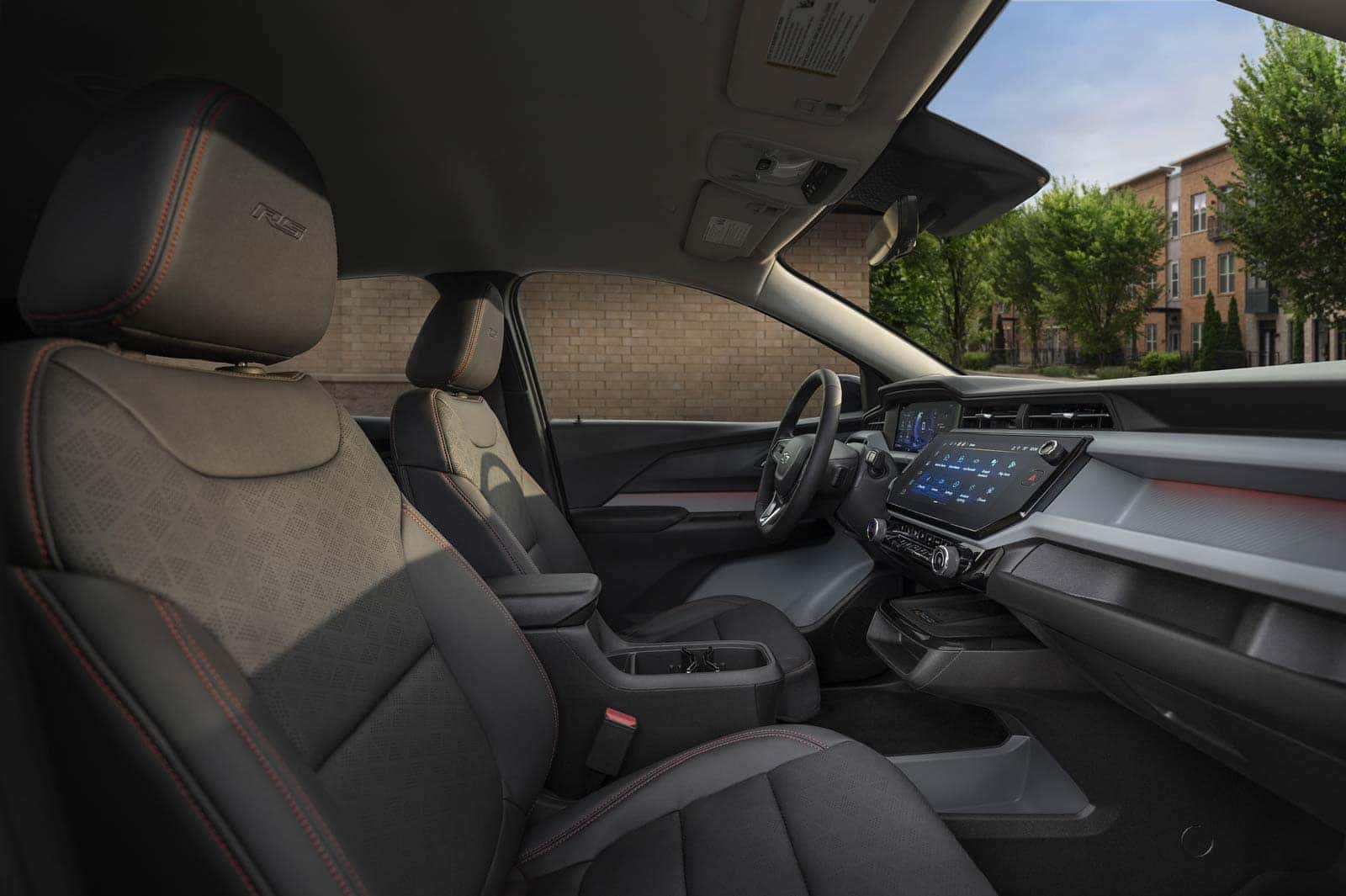
The 2027 Chevy Bolt EV delivers a genuinely modern cockpit. An 11.3-inch diagonal infotainment touchscreen sits front and center, paired with an 11-inch diagonal driver information center — a true dual-screen setup that you would expect on vehicles priced $10,000 or more above the Bolt. Google built-in powers the infotainment with native Google Maps, Google Assistant voice control, and access to the Google Play Store for apps. Wireless Apple CarPlay and Android Auto are standard. Available Super Cruise adds hands-free highway driving assistance on compatible roads — a feature no Volvo in this price range can match.
The 2026 Volvo EX30 takes a different approach. A single 12.3-inch vertical center touchscreen handles nearly every function, and Volvo eliminates the traditional instrument cluster entirely in favor of a minimalist HUD-style display. The interior design is undeniably premium — Scandinavian materials, clean lines, and a boutique-luxury feel. For buyers who prioritize aesthetic minimalism and a premium badge, the EX30 cabin delivers. But some drivers find the single-screen-does-everything approach less intuitive, and the lack of a dedicated driver display takes adjustment.
Cargo Space and Everyday Practicality
This is one of the clearest differences in the entire comparison. The 2027 Chevy Bolt EV offers 16.2 cubic feet of cargo behind the rear seats and up to 56.3 cubic feet with the seats folded — numbers that rival some compact SUVs a segment above. The 2026 Volvo EX30 offers just 12.4 cubic feet behind the rear seats and roughly 31.9 cubic feet with seats folded. That is a 24.4-cubic-foot gap in max cargo, which is the difference between fitting a full Costco haul and having to leave bags behind.
For Denver and Lakewood families hauling ski gear, strollers, camping equipment, or bulk groceries, the Bolt’s hatchback design is a genuine utility advantage. The EX30 is a stylish subcompact crossover, but it makes real trade-offs in cargo volume to achieve that compact footprint. If you regularly use your cargo area, this one spec alone could be decisive.
Safety and Driver Assistance
The 2027 Chevy Bolt EV comes standard with over 20 safety and driver-assistance features, including Automatic Emergency Braking, Lane Keep Assist with Lane Departure Warning, Forward Collision Alert, Following Distance Indicator, and IntelliBeam automatic high beams. Available Super Cruise adds true hands-free driving on more than 400,000 miles of compatible highways — a technology advantage that makes long drives from Denver to the mountains or across the plains genuinely less fatiguing.
The 2026 Volvo EX30 brings Volvo’s well-earned safety reputation with standard Pilot Assist (semi-autonomous driving), collision avoidance systems, and a full suite of camera and radar sensors. Volvo’s safety engineering is a genuine brand strength, and the EX30 benefits from that heritage. Both vehicles are well-equipped for daily Denver commuting, but the Bolt’s available Super Cruise represents a more advanced hands-free highway system than anything in the EX30’s price range.
Pricing, Value, and Warranty
The 2027 Chevy Bolt EV starts at $27,600 for the LT trim and $31,600 for the sportier RS trim. The 2026 Volvo EX30 starts at $38,950 for the Single Motor Extended Range Plus, and the Twin Motor Performance starts around $47,895. At the base trim, the Bolt is roughly $11,350 less expensive — a gap that reshapes monthly payments, total cost of ownership, and how quickly you recoup the savings from not buying gas.
Warranty coverage is competitive on both sides. The Bolt carries a 3-year/36,000-mile bumper-to-bumper warranty, a 5-year/60,000-mile powertrain warranty, and an 8-year/100,000-mile battery warranty. The EX30 offers a slightly longer 4-year/50,000-mile new vehicle warranty and the same 8-year/100,000-mile battery warranty, plus two years of complimentary scheduled maintenance — a real perk that partially offsets the price gap. Even factoring in Volvo’s maintenance benefit, the Bolt’s lower purchase price still delivers stronger overall value for budget-conscious Denver EV shoppers.
It is also worth noting that the 2027 Bolt EV is assembled at the Fairfax plant in Kansas, which may make it eligible for certain federal EV tax credits depending on current IRS guidance. Check with our finance team at Emich Chevrolet for the latest incentive information — the landscape changes frequently, and we stay on top of what applies to your specific purchase.
Common mistakes Denver shoppers make
- Comparing the base Bolt to the Twin Motor EX30 and concluding the Volvo is “better” — that’s a $20,000 price gap and an apples-to-oranges comparison.
- Overlooking the Bolt’s NACS port, which gives you native access to the Tesla Supercharger network across Colorado — the largest fast-charging network in the state.
- Assuming the EX30’s premium badge means significantly more range — the Bolt actually matches or beats the EX30 on EPA-rated miles (262 vs 261).
- Ignoring the cargo difference — 56.3 cu ft vs 31.9 cu ft is a 76% advantage for the Bolt with seats folded, which matters for Colorado weekend adventures.
- Forgetting to factor in available Super Cruise on the Bolt — hands-free highway driving is a feature the EX30 simply does not offer at any price.
Top Reasons to Choose the Chevy Bolt EV
The case for the Bolt over the EX30 is not about beating the Volvo in every category — it is about delivering more practical, everyday value at a dramatically lower price. For Denver and Lakewood EV buyers, that math adds up fast.
1. About $11,350 less at the base trim
$27,600 vs $38,950. That is the headline number, and it transforms your monthly payment, your financing timeline, and the cost-per-mile savings of going electric. With the Bolt, those savings start showing up in your budget from month one.
2. Comparable range at a fraction of the price
262 miles of EPA-estimated range on the Bolt vs 261 miles on the EX30 base model. You are getting virtually the same range for $11,350 less. For most Denver commuters, range is range — and both models handle a full day without recharging.
3. Native NACS port for Tesla Supercharger access
The 2027 Bolt EV comes with a NACS charging port, plugging directly into Tesla Superchargers without an adapter. Across Colorado’s mountain corridors and I-70/I-25 routes, that means access to the densest fast-charging network in the state — a real-world advantage for road trips and peace of mind.
4. Massively more cargo space
56.3 cubic feet with seats folded on the Bolt vs 31.9 on the EX30. That is 76% more usable cargo. Whether it is ski gear for a Breckenridge weekend, a Costco run, or a family road trip, the Bolt’s hatchback design swallows what the EX30 simply cannot.
5. Dual-screen cockpit with Google built-in
The Bolt’s 11.3-inch infotainment screen plus 11-inch driver display gives you more screen real estate and a dedicated driver information center. Google built-in means native Google Maps, voice assistant, and app access — no phone pairing required.
6. Available Super Cruise hands-free driving
Super Cruise allows true hands-free driving on over 400,000 miles of compatible highways. For long drives from Denver to the mountains, to Colorado Springs, or across the plains, it is a fatigue-reducing feature the EX30 cannot match.
Why Shop the Chevy Bolt EV in Denver With Emich Chevrolet
Going electric should feel simple, not stressful. As a top-rated Chevrolet dealer in the Denver metro, Emich Chevrolet built our EV process around transparency and expertise. You get clear pricing up front, a no-pressure test drive, and a finance team that walks you through every incentive, rebate, and tax credit that may apply to your Bolt purchase — no guesswork, no rushed signatures.
Our service department is staffed by Chevrolet-certified EV technicians who know the Bolt platform and its battery, charging, and software systems inside and out. That matters in Colorado, where altitude, temperature swings, and mountain driving all affect EV range and charging behavior. Every Bolt we sell gets a thorough multi-point inspection. We are confident Emich offers the best Bolt EV selection, best pricing, and best EV sales and service experience in Denver, Lakewood, and across the Front Range — and we work to prove it on every visit.
Frequently Asked Questions
Is the 2027 Chevy Bolt EV better than the 2026 Volvo EX30?
For Denver-area drivers shopping on value and practicality, the Bolt makes a very strong case. It matches the EX30’s range (262 vs 261 miles), costs about $11,350 less at the base trim, offers 76% more cargo space, and includes a dual-screen cockpit with Google built-in. The EX30 counters with more horsepower, an AWD option, premium interior materials, and complimentary maintenance — advantages that matter if premium aesthetics and performance are your top priorities.
How far can the 2027 Chevy Bolt EV go on a single charge?
The 2027 Chevy Bolt EV delivers 262 miles of EPA-estimated range from its 65 kWh LFP battery. That comfortably covers a round trip from Denver to Colorado Springs or a full day of metro-area driving without recharging. Real-world range varies with temperature, elevation, and driving style, but 262 miles is strong for a vehicle in this price range.
Can the 2027 Bolt EV use Tesla Superchargers?
Yes. The 2027 Chevy Bolt EV comes standard with a NACS (North American Charging Standard) port, which means it plugs directly into Tesla Superchargers without needing an adapter. This is a significant real-world benefit in Colorado, where the Tesla Supercharger network is the largest and most reliable fast-charging network along I-70, I-25, and mountain corridors.
How fast does the 2027 Bolt EV charge?
The 2027 Bolt EV supports DC fast charging at up to 150 kW and can charge from 10% to 80% in approximately 25 minutes. Level 2 home charging on a 240V outlet restores a full charge overnight. The Volvo EX30 charges from 10 to 80% in about 26.5 minutes, so fast-charging speeds are comparable between the two.
How much cargo space does the 2027 Bolt EV have compared to the EX30?
The Bolt EV offers 16.2 cubic feet behind the rear seats and 56.3 cubic feet with seats folded. The Volvo EX30 offers 12.4 cubic feet behind the seats and roughly 31.9 cubic feet with seats folded. That is a 24.4-cubic-foot advantage for the Bolt in max cargo — enough to make a meaningful difference for Costco runs, family road trips, and hauling ski equipment.
Does the 2027 Bolt EV come with all-wheel drive?
No. The 2027 Chevy Bolt EV is a front-wheel-drive vehicle. The Volvo EX30 offers available AWD through its Twin Motor Performance variant (starting around $47,895). For Denver shoppers who need all-wheel drive in a Chevy EV, the Equinox EV is the right cross-shop — it offers AWD capability on a larger platform. Many Front Range commuters drive FWD EVs year-round with winter tires.
What is the price difference between the 2027 Bolt EV and the 2026 Volvo EX30?
The 2027 Chevy Bolt EV LT starts at $27,600. The 2026 Volvo EX30 Single Motor Extended Range Plus starts at $38,950. That is approximately $11,350 in the Bolt’s favor at the base trim — before any federal tax credits, state incentives, or dealer pricing adjustments. At Emich Chevrolet we post live Denver pricing on our inventory pages so Bolt shoppers can compare specific units and current incentives.
Can I test drive a Chevy Bolt EV in Denver today?
Yes. You can test drive any Bolt EV on the Emich Chevrolet lot the same day you visit — convenient for shoppers driving in from Lakewood, Aurora, Englewood, or anywhere along the Front Range. Our team can have a Bolt staged and ready when you arrive. Most shoppers tell us the difference between the Bolt and competitors becomes obvious after five minutes behind the wheel.
Key Takeaways
- The 2027 Chevy Bolt EV starts at $27,600; the 2026 Volvo EX30 starts at $38,950 — about $11,350 in the Bolt’s favor.
- Range is nearly identical: 262 miles (Bolt) vs 261 miles (EX30 Single Motor ER).
- The Bolt’s native NACS port gives direct access to the Tesla Supercharger network across Colorado — a major real-world charging advantage.
- Cargo space is dramatically different: 56.3 cu ft on the Bolt vs 31.9 cu ft on the EX30 with seats folded.
- The Bolt includes a dual-screen cockpit (11.3″ + 11″), Google built-in, and available Super Cruise hands-free driving.
- The EX30’s advantages include more horsepower (268 hp base vs 210 hp), available AWD, premium Scandinavian interior design, and two years of complimentary maintenance.
- Both carry 8-year/100,000-mile battery warranties.
- If EV value and practicality are the priority, the Chevy Bolt EV is the smarter pick. If premium design and more power are worth the premium, the EX30 is the right cross-shop.
See the Chevy Bolt EV in Person at Emich Chevrolet
Top-rated Chevrolet dealer in Denver. Best selection, best pricing, and the area’s most trusted Chevy sales and service team.
Last updated: June 15, 2026 | Service area: Denver, Lakewood, Aurora, and the Front Range