

Chevy EV Maintenance Guide | Emich Chevrolet Denver
Last updated: June 11, 2026 | Service area: Denver, Lakewood, Aurora, and the Front Range
Owning a Chevy EV means saying goodbye to oil changes, spark plugs, and transmission flushes. Electric vehicles have fewer moving parts, fewer fluids, and dramatically lower maintenance costs than their gas-powered counterparts. But “lower maintenance” doesn’t mean “no maintenance.” Here’s everything you need to know about keeping your Chevy EV running strong on Colorado’s Front Range roads.
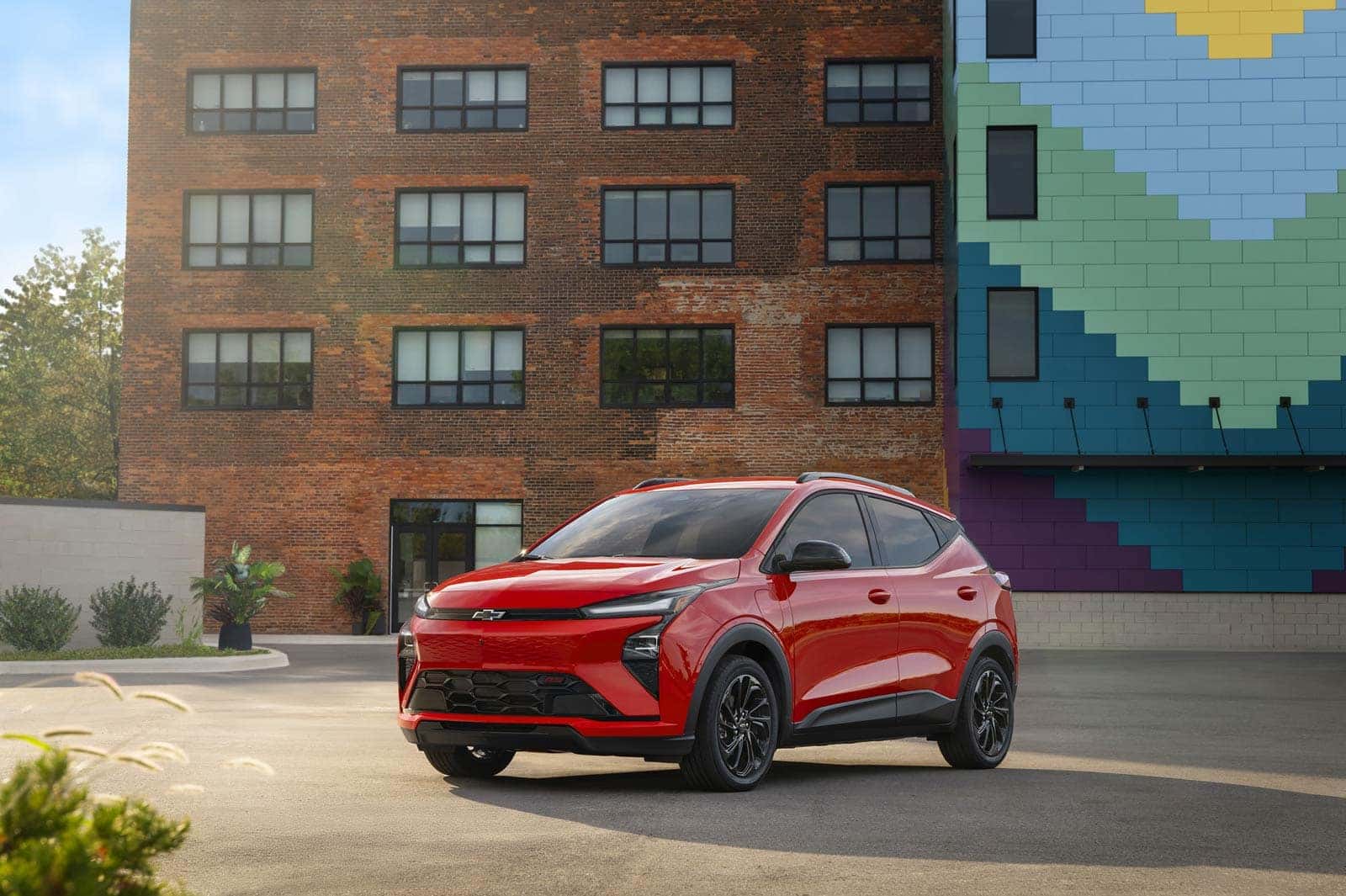
Quick Answer: What Does a Chevy EV Need for Maintenance?
What EVs still need: Tire rotations every 7,500 miles, cabin air filter replacement every 22,500 miles, brake fluid every 2-3 years, multi-point inspections, wiper blade replacement, and battery coolant at 150,000 miles.
What EVs skip entirely: Oil changes, spark plugs, transmission fluid, timing belts, exhaust system repairs, and traditional fuel system service. That adds up to 40-60% savings on annual maintenance costs.
Ready to Service Your Chevy EV?
Emich Chevrolet’s EV-certified technicians are trained on every Chevy electric model.
What Chevy EVs Don’t Need
One of the biggest advantages of driving a Chevy Bolt, Equinox EV, or Blazer EV is the long list of traditional maintenance items you never have to worry about. Here’s what gets eliminated and why:
No oil changes — ever. Electric motors don’t use engine oil. There’s no internal combustion, no pistons, and no crankcase. This alone saves most EV owners $200-400 per year.
No spark plugs or ignition system. EVs generate power through electromagnetic fields in the motor, not from combustion. There’s nothing to ignite and no spark plugs to replace.
No transmission fluid. Chevy EVs use a single-speed direct-drive unit instead of a multi-gear transmission. No gears to shift means no transmission fluid to change.
No timing belt or chain. Without a combustion engine, there’s no need to synchronize valve timing. That eliminates one of the most expensive scheduled maintenance items on a gas vehicle.
No exhaust system. Zero tailpipe emissions means no muffler, catalytic converter, or exhaust manifold to rust, rattle, or fail. That’s one less system to inspect and repair.
Chevy EV Maintenance Schedule
This schedule covers the Bolt EV, Bolt EUV, Equinox EV, Blazer EV, and Silverado EV. Always confirm intervals in your owner’s manual, as specific recommendations can vary by model year.
| Service | Interval | Cost Estimate | Notes |
|---|---|---|---|
| Tire Rotation | Every 7,500 miles | $30-$60 | EV tires wear faster due to instant torque; check tread depth at every rotation |
| Multi-Point Inspection | Every 7,500 miles | $50-$100 | Includes suspension, steering, high-voltage cable check, thermal management |
| Cabin Air Filter | Every 22,500 miles | $40-$80 | Replace sooner if driving on dusty roads or during wildfire season |
| Wiper Blades | Annually | $20-$50 | Colorado sun and snow degrade rubber quickly; inspect every fall |
| Brake Fluid | Every 2-3 years | $80-$150 | Brake fluid absorbs moisture over time regardless of driving style |
| Brake Pads | 100,000+ miles | $150-$350 per axle | Regenerative braking handles most stopping; pads last 2-3x longer than gas vehicles |
| Battery Coolant | Every 150,000 miles | $150-$300 | Uses Dex-Cool long-life coolant; critical for battery thermal management |
EV Maintenance vs Gas Vehicle Maintenance
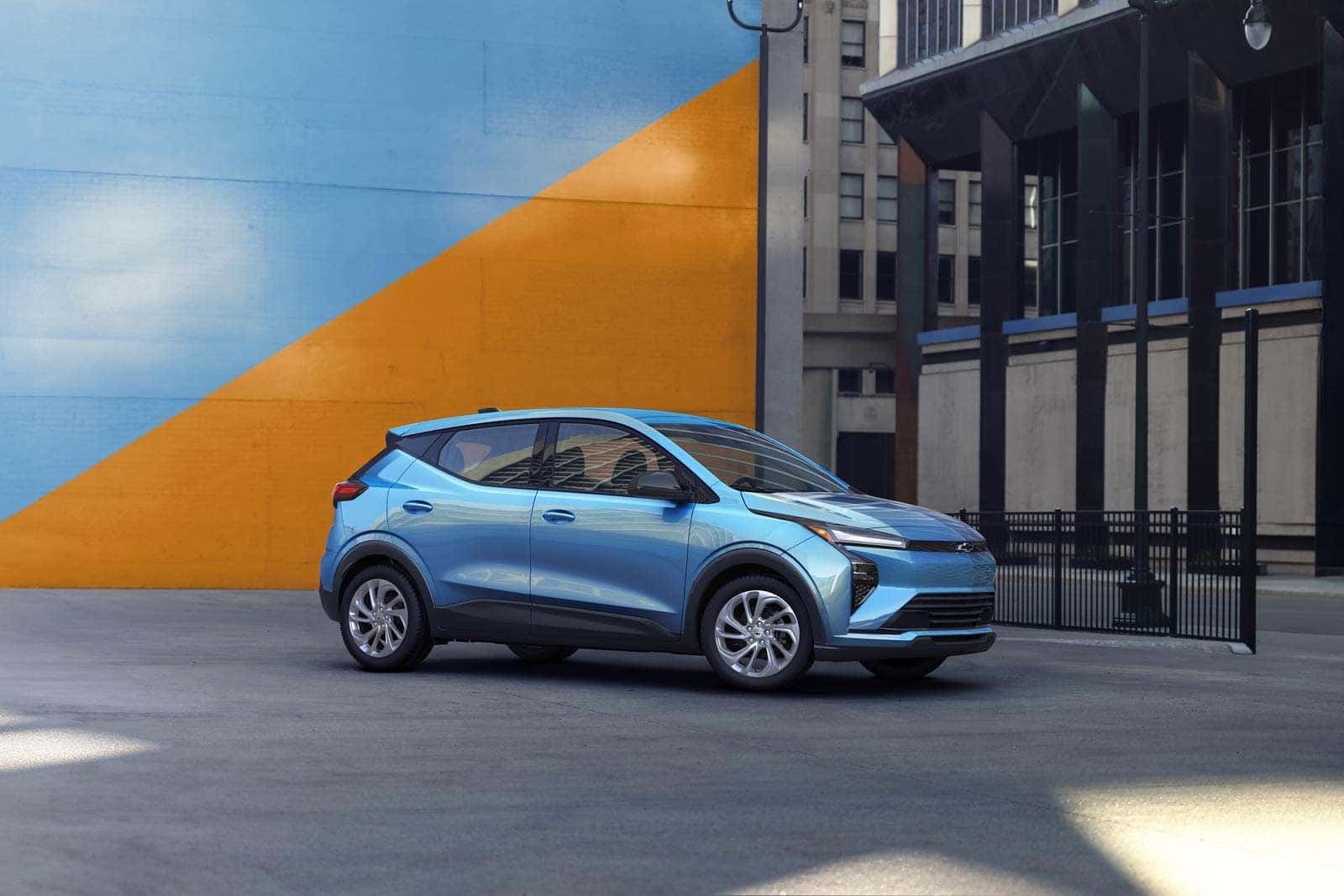
The cost difference between maintaining an EV and a gas vehicle is significant. According to data from Consumer Reports and the U.S. Department of Energy, EV owners spend 40-60% less on maintenance over the life of the vehicle.
Here’s how the annual numbers break down:
| Category | Chevy EV (Annual) | Gas Vehicle (Annual) |
|---|---|---|
| Oil Changes | $0 | $200-$400 |
| Brake Service | $20-$50 | $150-$300 |
| Tire Rotation | $60-$120 | $60-$120 |
| Transmission Service | $0 | $100-$250 |
| Filters, Fluids, Misc. | $50-$100 | $150-$300 |
| Total Annual Estimate | $600-$900 | $1,200-$1,800 |
Over a typical 10-year ownership period, that 40-60% savings translates to $4,000-$8,000 in reduced maintenance costs. When you combine that with lower fuel costs (electricity vs. gasoline), the total cost of ownership for a Chevy EV is significantly lower than a comparable gas vehicle.
Battery Care and Longevity in Colorado
Colorado’s climate presents some unique considerations for EV battery health, but nothing that should worry a well-informed owner. Here’s what to know:
Altitude effects. Colorado’s high elevation (5,280+ feet in Denver) doesn’t significantly affect EV battery range or performance. Unlike combustion engines that lose power at altitude due to thinner air, electric motors deliver full torque regardless of elevation. Regenerative braking recovery is slightly less efficient on long downhill grades at altitude, but the difference is marginal.
Cold weather management. Winter temperatures on the Front Range can reduce EV range by 10-20%. This is primarily because the battery requires energy to heat itself to optimal operating temperature, and cabin heating draws directly from the battery pack. Chevy’s active thermal management system helps mitigate this by keeping the battery within its ideal temperature window. Pre-conditioning your vehicle while it’s still plugged in is the single best habit for maximizing winter range.
Charging best practices. For daily driving, keep your battery between 20% and 80% state of charge. DC fast charging is convenient for road trips but generates more heat than Level 2 charging. For maximum battery longevity, use Level 2 home charging as your primary method. Avoid leaving the battery at 100% for extended periods, and don’t let it sit below 10% regularly.
Chevy’s battery warranty. Every Chevy EV battery pack is covered by an 8-year, 100,000-mile warranty. This covers defects in materials and workmanship, as well as capacity degradation below a specified threshold. The battery coolant system (using Dex-Cool long-life coolant) keeps the pack at optimal temperature and only needs service at 150,000 miles.
Common EV Maintenance Myths
Myth: EVs need zero maintenance.
Reality: EVs need significantly less maintenance, but they still require tire rotations, brake fluid changes, cabin air filters, multi-point inspections, and periodic coolant service. Skipping these items can lead to premature wear and safety issues.
Myth: Brake pads never wear out on an EV.
Reality: Regenerative braking reduces brake pad wear dramatically, but the friction brakes are still used during hard stops, emergency braking, and at low speeds. Pads typically last 100,000-150,000 miles rather than the 30,000-50,000 miles common on gas vehicles.
Myth: EV batteries die after 5 years.
Reality: Modern EV batteries are designed to last the life of the vehicle. Chevy backs them with an 8-year, 100,000-mile warranty. Real-world data shows most EV batteries retain 85-90% of their original capacity after 10 years of normal use.
Myth: Any mechanic can work on an EV.
Reality: EV drivetrains operate at 400-800 volts. High-voltage service requires specialized training, safety equipment, and diagnostic tools. Always have your Chevy EV serviced by certified EV technicians — like the team at Emich Chevrolet.
Chevy EV Models We Service
Emich Chevrolet’s service department is equipped to handle every Chevy EV on the road today:
- Chevrolet Bolt EV — The compact EV that started Chevy’s electric lineup. Quick, efficient, and ideal for Denver-area commuters.
- Chevrolet Bolt EUV — A slightly larger version of the Bolt with more rear-seat legroom and available Super Cruise hands-free driving.
- Chevrolet Equinox EV — A midsize SUV built on GM’s Ultium platform with up to 319 m le of range, all-wheel drive options, and a spacious interior.
- Chevrolet Blazer EV — A sporty, performance-oriented midsize SUV with available SS trim delivering 557 horsepower.
- Chevrolet Silverado EV — A full-size electric pickup with up to 400+ miles of range, 10,000+ lbs towing capacity, and CrabWalk four-wheel steering.
Whether you drive a compact Bolt or a full-size Silverado EV, our technicians follow Chevy’s model-specific maintenance protocols and use genuine GM parts for every service.

Why Service Your Chevy EV at Emich Chevrolet
Not every shop is equipped to work on electric vehicles. EV drivetrains operate at dangerously high voltages, and improper service can damage components or create safety risks. Here’s what sets Emich Chevrolet’s service department apart:
Certified EV technicians. Our service team has completed GM’s Electric Vehicle certification program, including specialized training on high-voltage safety, battery diagnostics, and Ultium platform service procedures.
Proper high-voltage training and equipment. Working on an EV battery pack requires insulated tools rated for 1,000+ volts, specialized PPE, and strict lockout/tagout procedures. Our technicians are trained on every protocol.
Genuine OEM parts. We use only genuine GM parts and fluids, including the correct Dex-Cool coolant for battery thermal management systems. Aftermarket parts may void warranty coverage or cause compatibility issues.
Advanced battery diagnostics. We have GM’s proprietary diagnostic tools to read battery health data, identify cell imbalances, and check thermal management system performance — the kind of deep analysis that independent shops simply can’t do.
Frequently Asked Questions About Chevy EV Maintenance
Do Chevy EVs need oil changes?
No. Electric vehicles don’t have an internal combustion engine, so there is no engine oil to change. This eliminates one of the most frequent and costly maintenance items on gas vehicles, saving owners $200-400 per year.
How often should I rotate the tires on my Chevy EV?
Every 7,500 miles, the same interval as gas vehicles. EVs deliver instant torque, which can cause slightly faster tire wear. Using EV-rated tires and maintaining proper inflation pressure helps maximize tire life.
How long do brake pads last on an electric vehicle?
Brake pads on a Chevy EV typically last 100,000-150,000 miles. Regenerative braking handles most of the deceleration, so the friction brakes are used far less than on a gas vehicle, where pads usually last 30,000-50,000 miles.
Does Colorado’s altitude affect EV battery life?
No, altitude does not significantly affect EV battery life or range. Unlike combustion engines, electric motors perform identically at any elevation. Cold temperatures are a bigger factor in Colorado — winter driving can reduce range by 10-20%, but pre-conditioning while plugged in helps minimize that impact.
What does Chevy’s EV battery warranty cover?
Chevrolet provides an 8-year, 100,000-mile warranty on EV battery packs. This covers defects in materials and workmanship, as well as significant capacity loss below a specified threshold. It’s one of the most comprehensive EV battery warranties in the industry.
How much does annual EV maintenance cost?
Annual maintenance for a Chevy EV typically costs $600-900, compared to $1,200-1,800 for a comparable gas vehicle. That’s a savings of 40-60%, primarily from eliminating oil changes, spark plug replacements, and transmission service.
Can any mechanic work on a Chevy EV?
While basic items like tire rotations and wiper blades can be done anywhere, any work involving the high-voltage system, battery pack, or EV-specific components should be performed by GM-certified EV technicians. Working on high-voltage systems without proper training and equipment is dangerous and can void your warranty.
Key Takeaways
- Chevy EVs eliminate oil changes, spark plugs, transmission fluid, timing belts, and exhaust repairs.
- Annual EV maintenance costs $600-900 vs. $1,200-1,800 for gas vehicles — a 40-60% savings.
- Brake pads last 100,000+ miles thanks to regenerative braking.
- Battery coolant service is needed at 150,000 miles using Dex-Cool long-life coolant.
- Chevy’s battery warranty covers 8 years and 100,000 miles.
- Colorado altitude doesn’t affect EV range, but cold weather can reduce it 10-20%.
- Always service your Chevy EV with certified technicians who have high-voltage training.
Ready to Service Your Chevy EV?
Emich Chevrolet’s EV-certified technicians are trained on every Chevy electric model.
Last updated: June 11, 2026 | Service area: Denver, Lakewood, Aurora, and the Front Range