

Chevy Silverado Engine Guide
Silverado Drivetrain Choices and Performance
If you’re comparing Silverado drivetrain choices in Denver or Lakewood, the engine decision is the fastest way to dial in towing confidence, daily drivability, and long-term ownership feel. This page breaks down the 2026 Silverado 1500 and Silverado 2500HD engine options with clear specs, practical examples, and quick “best fit” guidance.
For most Denver and Lakewood drivers who want strong everyday torque and easier towing confidence, the Silverado 1500 TurboMax and 3.0L Duramax are the sweet spots. If you routinely tow heavy or run commercial payloads, the 2500HD’s 6.6L gas V8 is the simplest workhorse, while the 6.6L Duramax diesel is the torque-first pick for frequent, heavy trailering.
How to read Silverado drivetrain specs (so they’re actually useful)
Engine output is simple on paper—horsepower and torque—but the “best” choice depends on how you use your truck in Denver and Lakewood. Torque is what you feel at low RPM when you’re pulling away from a stop, climbing grades, or towing in the foothills. Horsepower matters more as speed increases and when you want sustained pull at highway pace with a load. A Chevy Engine choice also ties into transmission, axle ratio, cab/bed configuration, tire size, and trailering equipment.
When you see max towing numbers, treat them as “best-case configuration.” Your exact rating depends on trim, bed, cab, 2WD/4WD, and equipment. Use the charts below to narrow the right Silverado drivetrain family first, then confirm your build’s trailering and payload label before you sign.
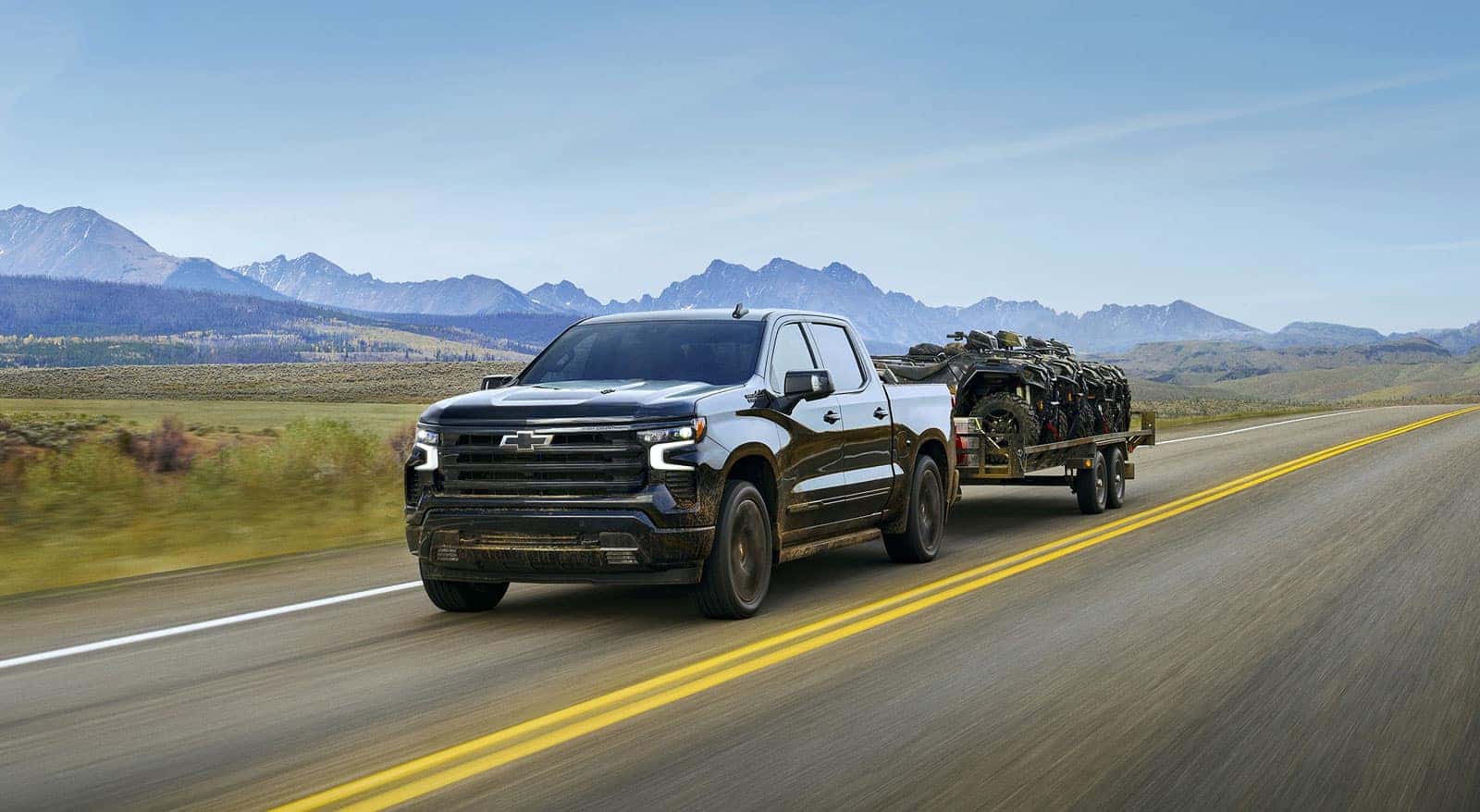
2026 Silverado 1500 engines: performance breakdown
The 2026 Silverado 1500 lineup offers four primary engine choices. Each Silverado drivetrain option has a distinct “feel,” and your best match is usually determined by whether you value low-end pull, highway efficiency, or maximum gas V8 power. If you’re comparing a Chevy Engine for commuting between Denver and Lakewood plus weekend towing, prioritize torque curve and transmission pairing—not just peak numbers.
Silverado 1500 engine specs (headline numbers)
| Engine (1500) | Horsepower | Torque | Transmission | Best-use snapshot |
|---|---|---|---|---|
| TurboMax™ (2.7L turbo I4) | 310 hp | 430 lb-ft | 8-speed automatic | Punchy low-end torque for city + light-to-moderate towing |
| 5.3L EcoTec3 V8 | 355 hp | 383 lb-ft | 10-speed automatic | Traditional V8 feel; balanced daily driving + towing |
| 6.2L EcoTec3 V8 | 420 hp | 460 lb-ft | 10-speed automatic | Highest gas output; strong passing power with loads |
| Duramax® 3.0L Turbo-Diesel (I6) | 305 hp | 495 lb-ft | 10-speed automatic | Torque + efficiency; long highway drives and steady towing |
Note: exact tow ratings vary by configuration (cab/bed/axle/2WD vs 4WD and equipment). The numbers above are engine outputs and transmission pairings used to compare Silverado drivetrain families.
“What it feels like” in Denver and Lakewood
| 1500 Engine | Best for | Trailering & grades | Commute & daily use | Ownership expectations |
|---|---|---|---|---|
| TurboMax | Low-RPM response, value-focused performance | Strong initial pull; great for utility trailers, small campers, and mixed urban towing | Quick around town; well-suited to stop-and-go in Denver | Turbo torque makes it feel bigger than “4-cylinder” sounds |
| 5.3L V8 | All-around truck duties | Predictable power delivery; good for frequent moderate towing | Smooth, familiar V8 character on I-70 corridors | Simple “do it all” feel without chasing extremes |
| 6.2L V8 | Maximum gas power and passing strength | Great highway pull with heavier trailers; strong acceleration at speed | Effortless merging; confident when fully loaded | Best when you want power on demand (and accept higher fuel use) |
| 3.0L Duramax | Torque + longer-range efficiency | Steady, relaxed towing; excellent for long grades and frequent trips | Ideal for long commutes between Denver and Lakewood and highway miles | Diesel ownership includes DEF and diesel-specific service intervals |
2026 Silverado 2500HD engines: performance breakdown
Silverado 2500HD engines are built for heavier work cycles—bigger loads, higher sustained temps, and frequent trailering. If your use case includes jobsite payloads around Denver, equipment towing out of Lakewood, or weekend hauling in the mountains, the 2500HD Silverado drivetrain options simplify the question to two powertrains: the 6.6L gas V8 and the available 6.6L Duramax turbo-diesel V8.
Silverado 2500HD engine specs (headline numbers)
| Engine (2500HD) | Horsepower | Torque | Transmission | Trailering context |
|---|---|---|---|---|
| 6.6L V8 gas | 401 hp | 464 lb-ft | 10-speed Allison® automatic | Max available trailering shown up to 19,080 lbs (varies by config) |
| Duramax® 6.6L Turbo-Diesel V8 | 470 hp | 975 lb-ft | 10-speed Allison® automatic | Max available trailering shown up to 36,000 lbs (varies by config) |
If you’re engine-shopping first, here’s the simplest way to decide: the gas 6.6 is the straightforward, lower-complexity work setup; the diesel 6.6 is the torque-first setup for frequent heavy towing. Either choice is a Chevy Engine built for sustained duty cycles, especially helpful when you’re pulling into headwinds or climbing long grades outside Denver.
1500 vs 2500HD: which Silverado drivetrain matches your job?
Many shoppers in Denver and Lakewood start with tow rating, but real-world satisfaction comes from matching truck class to load frequency. Towing a heavy trailer once or twice a year can fit a well-configured 1500; towing heavy every week, hauling equipment, or carrying significant payload pushes you toward the 2500HD frame, cooling, brakes, and axles.
Quick-fit engine and truck-class selector
| Your primary use | Best starting point | Why it fits | What to verify before purchase |
|---|---|---|---|
| Daily commuting + occasional towing (utility trailer, small camper) | 1500 TurboMax | Best-in-class standard torque feel and easy drivability in Denver traffic | Your exact tow rating, hitch equipment, and payload label |
| Mixed truck use: family + projects + moderate towing | 1500 5.3L V8 | Balanced, traditional V8 response and broad trim availability | Configuration limits (4WD, wheel/tire) that may reduce towing |
| Frequent highway miles + steady towing + efficiency priority | 1500 3.0L Duramax | High torque plus excellent highway economy for Colorado distances | Diesel ownership needs (DEF, diesel service schedule, fuel availability) |
| You want the strongest gas acceleration while towing or loaded | 1500 6.2L V8 | Most horsepower in 1500 lineup for passing and highway pull | Fuel expectations and tire/trim impacts on towing rating |
| Commercial work, heavy equipment, frequent high-load towing | 2500HD 6.6L gas or 6.6L Duramax | HD cooling/brakes/frame built for repeated load cycles | Gross combined weight and your trailer’s real loaded weight |
| Maximum trailering priority and you tow heavy often | 2500HD 6.6L Duramax diesel | 975 lb-ft torque supports confident launches and grade pulling | Hitch type, trailer brakes, and integrated trailering tech needs |
How to choose your Chevy Engine in 5 practical steps
If you want a decision you won’t regret after the first tow up a grade, use this process. It works especially well for Denver and Lakewood shoppers who split time between city traffic, highway miles, and weekend trailering.
- Write down your “real loaded trailer weight.” Use your trailer’s GVWR as a ceiling and be honest about water, gear, bikes, and tools. Don’t shop by dry weight.
- Decide how often you tow. Occasionally towing often fits a 1500 Silverado drivetrain; frequent heavy towing points to 2500HD hardware.
- Pick your torque strategy. If you want low-RPM pull (easy launches, relaxed towing), lean TurboMax, 3.0 Duramax, or 6.6 Duramax. If you want gas simplicity, focus on the 5.3, 6.2, or 6.6 gas.
- Match the engine to your typical route. For long highway runs between Denver and Lakewood plus mountain trips, diesel torque and cruising efficiency can be a big win. For mostly city duty, TurboMax’s response is hard to ignore.
- Verify the exact label on the truck you’re buying. The final tow rating and payload are configuration-specific. This is where the “right” Chevy Engine becomes the “right truck.”
- Shopping by peak horsepower only: for towing around Denver, torque and gearing matter more than a big hp headline.
- Ignoring payload: a heavy trailer tongue weight plus passengers and gear can max payload before you reach tow rating.
- Assuming “same engine = same towing”: a Silverado drivetrain with different cab/bed/4WD can change the rating significantly.
- Choosing 2500HD when you don’t need it: HD capability is awesome, but ride/parking and operating costs can be higher for purely light-duty needs.
Cost, timing, and ownership expectations
Engine choice influences more than performance. A Chevy Engine selection affects fuel type, service cadence, and the “total effort” of towing. For many Denver and Lakewood owners, the right decision comes down to how much you tow and how far you drive.
What to expect: gas vs diesel ownership
| Category | Gas engines (TurboMax / 5.3 / 6.2 / 6.6 gas) | Diesel engines (3.0 Duramax / 6.6 Duramax) |
|---|---|---|
| Daily driving | Simple fueling; strong response (especially TurboMax and 6.2) | Relaxed torque feel at low RPM; excellent for long highway miles |
| Towing behavior | Great for occasional to frequent towing depending on engine size | Torque-first confidence on grades; steady pull with heavy trailers |
| Service needs | Traditional gas service schedule; easy day-to-day ownership | Diesel-specific maintenance plus DEF; great if you drive/tow enough to justify |
| Best fit | Owners prioritizing simplicity with strong capability | Owners prioritizing torque and long-distance efficiency |
Timing-wise, most buyers can narrow to one or two Silverado drivetrain options in minutes using the charts above. The final step is confirming the exact tow and payload label on the truck you’re buying—especially important if you’re towing in Colorado elevation changes around Denver and Lakewood.
Why choose Chevrolet with Emich in Denver and Lakewood
Choosing the right Chevy Engine is easier when your team can explain the configuration details that actually change capability—like cab/bed combinations, 4WD differences, and trailering packages. At Emich Chevrolet, the goal is straightforward: help you compare Silverado drivetrain options with clarity, confirm the numbers on the exact truck you’re considering, and support ownership with a service team that understands trucks.
- Transparent comparisons: We’ll walk you through outputs, tow labels, payload, and what changes when you move from 1500 to 2500HD.
- Real use-case guidance: Whether you tow a camper into the foothills or haul equipment across Denver and Lakewood, we’ll help you match the truck to the job.
- Service support that matters: From routine maintenance to truck-specific inspections, you’ll have a team that’s used to Colorado driving and trailering.
- Selection and pricing focus: More inventory makes it easier to find the right engine and trim combination without settling for “close enough.”
FAQ: 2026 Silverado engine and towing questions
What is the best Chevy Engine for towing in a 2026 Silverado 1500?
If you want the most torque-forward towing feel in a 1500, the 3.0L Duramax’s 495 lb-ft delivers relaxed pulling and strong highway efficiency. If you prefer gasoline power, the 6.2L V8 offers the strongest passing strength, while TurboMax is a great value pick for light-to-moderate towing around Denver and Lakewood.
Is TurboMax enough for a travel trailer near Denver?
TurboMax delivers 430 lb-ft of torque, which is why it feels strong in real driving and can handle many common utility and lighter travel trailers. The key is matching trailer weight to your specific configuration’s tow rating and payload. For frequent mountain towing or heavier campers, many drivers step up to the 3.0 Duramax or a V8.
Which Silverado drivetrain is best for long highway commutes between Lakewood and Denver?
For frequent highway miles, the 3.0L Duramax stands out because it blends strong torque with excellent highway efficiency. If you want gas simplicity, the 5.3L V8 is a balanced daily driver, and TurboMax feels lively in traffic. The best choice depends on how often you tow and whether efficiency is a top priority.
What’s the difference between Silverado 1500 and 2500HD engines?
The 1500 engines are optimized for mixed daily driving and towing, with four options including TurboMax, two gas V8s, and a 3.0 diesel. The 2500HD focuses on heavier-duty cycles with two powertrains: a 6.6L gas V8 (401 hp, 464 lb-ft) and a 6.6L Duramax diesel (470 hp, 975 lb-ft) for frequent heavy trailering.
Does the Chevy Engine choice change towing ratings on the same trim?
Yes. On the 2026 Silverado, towing ratings are configuration-specific and can change with engine, drivetrain (2WD/4WD), cab/bed, axle ratio, and trailering packages. Start by selecting the engine family that matches your use case, then confirm the exact truck’s tow and payload label to avoid surprises—especially important for towing around Denver.
Is the 6.2L V8 worth it over the 5.3L V8 for towing?
The 6.2L V8’s higher output (420 hp, 460 lb-ft) can feel stronger for passing and maintaining speed with heavier loads, which many Colorado drivers appreciate on long grades. The 5.3L V8 is a balanced workhorse with a traditional V8 feel. If you tow often and want extra margin at highway speeds, the 6.2 can be a smart upgrade.
When should I choose the 2500HD 6.6 Duramax diesel?
Choose the 6.6 Duramax if you tow heavy frequently, want torque-first launches, and need sustained pulling confidence for demanding loads. With 975 lb-ft of torque, it’s built for consistent trailering and commercial-style use. If your towing is occasional or moderate, the 2500HD gas 6.6—or even a properly configured 1500—may be the better fit.
What Silverado specs matter most besides hp and torque?
For towing and hauling, prioritize payload, axle ratio, transmission pairing, cooling capacity, and the trailering equipment installed on the truck. The “Silverado specs” that show up on the door jamb label—payload and tire/loading info—are especially important. If you’re comparing Silverado towing setups around Denver and Lakewood, confirm your exact configuration before buying.
Key Takeaways
- TurboMax (310 hp / 430 lb-ft) is the torque-forward value pick for daily Denver driving plus light-to-moderate towing.
- The 3.0L Duramax (305 hp / 495 lb-ft) is the 1500’s torque + highway-efficiency standout for Colorado miles.
- The 6.2L V8 (420 hp / 460 lb-ft) is the strongest gas option in the 1500 lineup for passing power with loads.
- 2500HD simplifies choices: 6.6 gas (401 hp / 464 lb-ft) for straightforward work; 6.6 Duramax (470 hp / 975 lb-ft) for heavy towing priority.
- Your exact tow rating depends on configuration—confirm the truck’s label, not just the engine family.
- For Lakewood and Denver shoppers, match engine torque behavior to your typical route and towing frequency.
- Use the quick-fit selector table to narrow your Silverado drivetrain options before choosing trim.
Compare Silverado engines with confidence
Whether you’re narrowing down a Chevy Engine for commuting, towing, or jobsite duty, the “right” pick is the one that matches your real load and how often you haul it. If you want a quick engine short-list for Denver and Lakewood driving, start with TurboMax vs 3.0 Duramax on the 1500—then step up to 2500HD only when your towing and payload demands justify HD hardware.