

Denver to Mountain EV Road Trip Guide: I-70 Charging, Range, and Timing
Last updated: August 5, 2026 | Service area: Denver, Lakewood, and the I-70 Mountain Corridor
Driving I-70 from Denver into the high country in an electric vehicle is one of the most misunderstood trips in Colorado. Shoppers walk into our Lakewood showroom convinced an EV can’t handle the climb to Vail. The reality is far less dramatic: the climb does consume more energy than flat-ground driving, and the descent gives a surprising amount of it back through regenerative braking. This guide covers the actual numbers — what the grade costs you, where the DC fast chargers are, and how much range each Chevy EV brings to the trip.
Quick Answer
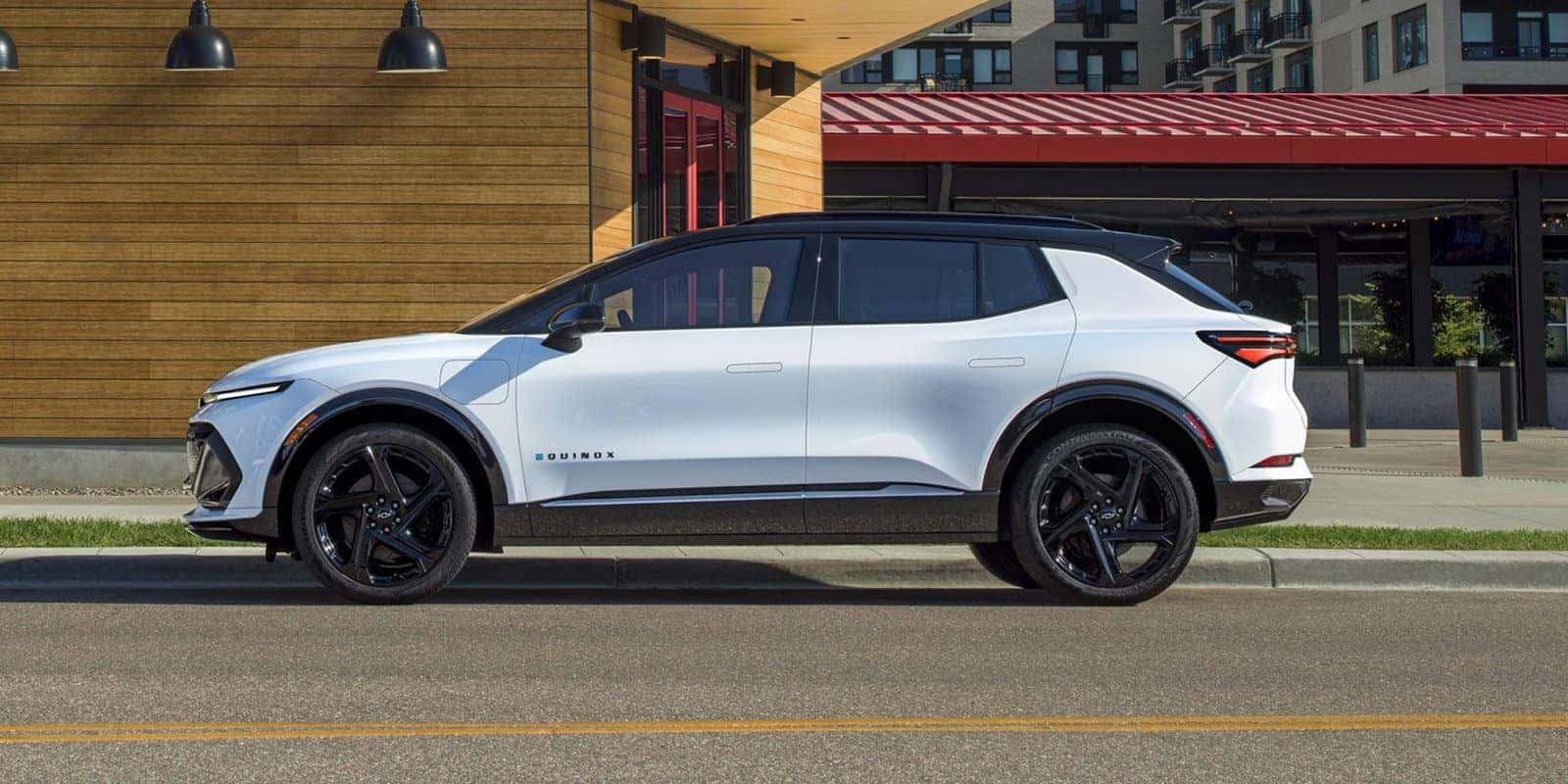
Denver to Vail is roughly 100 miles on I-70, climbing from 5,280 feet to the Eisenhower–Johnson Memorial Tunnel at 11,158 feet before dropping back down. Every current Chevy EV has enough rated range for that round trip on a single charge in mild conditions — the 2026 Equinox EV is EPA-rated at 319 miles with FWD, the 2026 Blazer EV at 312 miles with FWD, the 2027 Bolt at a GM-estimated 262 miles, and the 2026 Silverado EV at a GM-estimated 478 miles. DC fast charging is available in Idaho Springs, Georgetown, Silverthorne, Frisco, Vail, Avon, Eagle, Glenwood Springs, and Grand Junction. The real planning questions are winter conditions and charger availability on peak weekends — not whether the trip is possible.
Shop Chevy Electric at Emich Chevrolet
Top-rated Chevrolet dealer in Denver. Best selection, best pricing, and the area’s most trusted Chevy sales and service team.
The I-70 Mountain Corridor, Mile by Mile
I-70 west of Denver is not a normal interstate. It gains roughly 5,900 feet in about 60 miles, crosses the Continental Divide through the highest point on the entire Interstate Highway System, then climbs again over Vail Pass before dropping into the Colorado River valley. The Eisenhower–Johnson Memorial Tunnel sits at 11,158 feet and runs about 1.69 miles — the longest mountain tunnel on the interstate system, according to the Colorado Department of Transportation.
Here is the corridor as an EV driver should read it. Mileages and elevations are approximate, measured westbound from downtown Denver.
| Stop | Miles from Denver | Elevation | Battery impact |
|---|---|---|---|
| Denver | 0 | 5,280 ft | Leave at 100% for mountain trips. |
| Idaho Springs | 33 | 7,500 ft | First sustained grade. |
| Georgetown | 45 | 8,500 ft | Last easy exit before the steep section. |
| Eisenhower–Johnson Tunnel | 60 | 11,158 ft | Peak energy draw of the trip. |
| Silverthorne / Dillon | 68 | 9,000 ft | Long descent returns energy via regen. |
| Frisco | 70 | 9,100 ft | Natural charging stop with food on site. |
| Vail Pass summit | 88 | Above 10,600 ft | Second major climb; winter chokepoint. |
| Vail | 100 | 8,150 ft | Typical day-trip turnaround. |
| Eagle | 130 | 6,600 ft | Downhill running; consumption drops. |
| Glenwood Springs | 157 | 5,760 ft | Back near Denver’s elevation. |
| Grand Junction | 245 | 4,600 ft | Plan one charge stop each direction. |
How Elevation Actually Affects EV Range
Climbing from Denver to the Eisenhower Tunnel means lifting your vehicle roughly 5,900 vertical feet, and that work comes out of the battery. On the sustained grades between Idaho Springs and the tunnel, consumption runs noticeably higher than the flat-ground average your EPA range figure is based on. Your range estimate will drop faster than the odometer climbs. That is normal.
The part gas drivers never get is the return trip. Coming down from the tunnel toward Silverthorne, or from Vail Pass toward Vail, regenerative braking converts that potential energy back into stored charge. A gas truck descending Vail Pass burns fuel and dumps energy into the brake rotors as heat; an EV puts a meaningful portion of it back in the pack. It is common to finish a Denver-to-Vail round trip having used less total energy than the outbound leg suggested.
Every Chevy EV supports Regen on Demand and One Pedal Driving. Both are worth using on I-70, where One Pedal Driving lets you modulate speed on the descent almost entirely with the accelerator — recapturing energy and sparing the brakes on grades that eat pads on conventional vehicles.
Chevy EV Range and Charging Specs
Range is the headline, but charging speed determines how long you sit in Frisco. Here is the current Chevrolet electric lineup on the numbers that matter for an I-70 run, as published by Chevrolet.
| Model | Rated range | Battery / DC peak | 10 min of DC charging | Starting MSRP |
|---|---|---|---|---|
| 2027 Bolt | 262 mi (GM-est.) | See model page | See model page | $27,600 |
| 2026 Equinox EV FWD | 319 mi (EPA-est.) | 85 kWh / 150 kW | Up to 84 miles | $34,995 |
| 2026 Equinox EV AWD | 307 mi (EPA-est.) | 85 kWh / 150 kW | Up to 81 miles | See dealer |
| 2026 Blazer EV LT / RS FWD | 312 mi (EPA-est.) | 85 kWh / 150 kW | Up to 83 miles | $44,700 |
| 2026 Blazer EV SS | 302 mi (EPA-est.) | 102 kWh / 190 kW | See model page | $60,700 |
| 2026 Silverado EV | Up to 478 mi (GM-est.) | See model page | See model page | $55,895 |
Two numbers matter most for mountain travel. The 2026 Equinox EV charges from 10% to 80% in approximately 42 minutes on a DC fast charger, and the 2026 Blazer EV does the same run in approximately 39 minutes. That is the realistic window for a Frisco or Silverthorne stop — long enough to eat, short enough that nobody is annoyed. You almost never need to charge to 100% on a road trip, because DC charging slows substantially above 80% by design to protect the battery.
Where to Charge on the I-70 Mountain Corridor
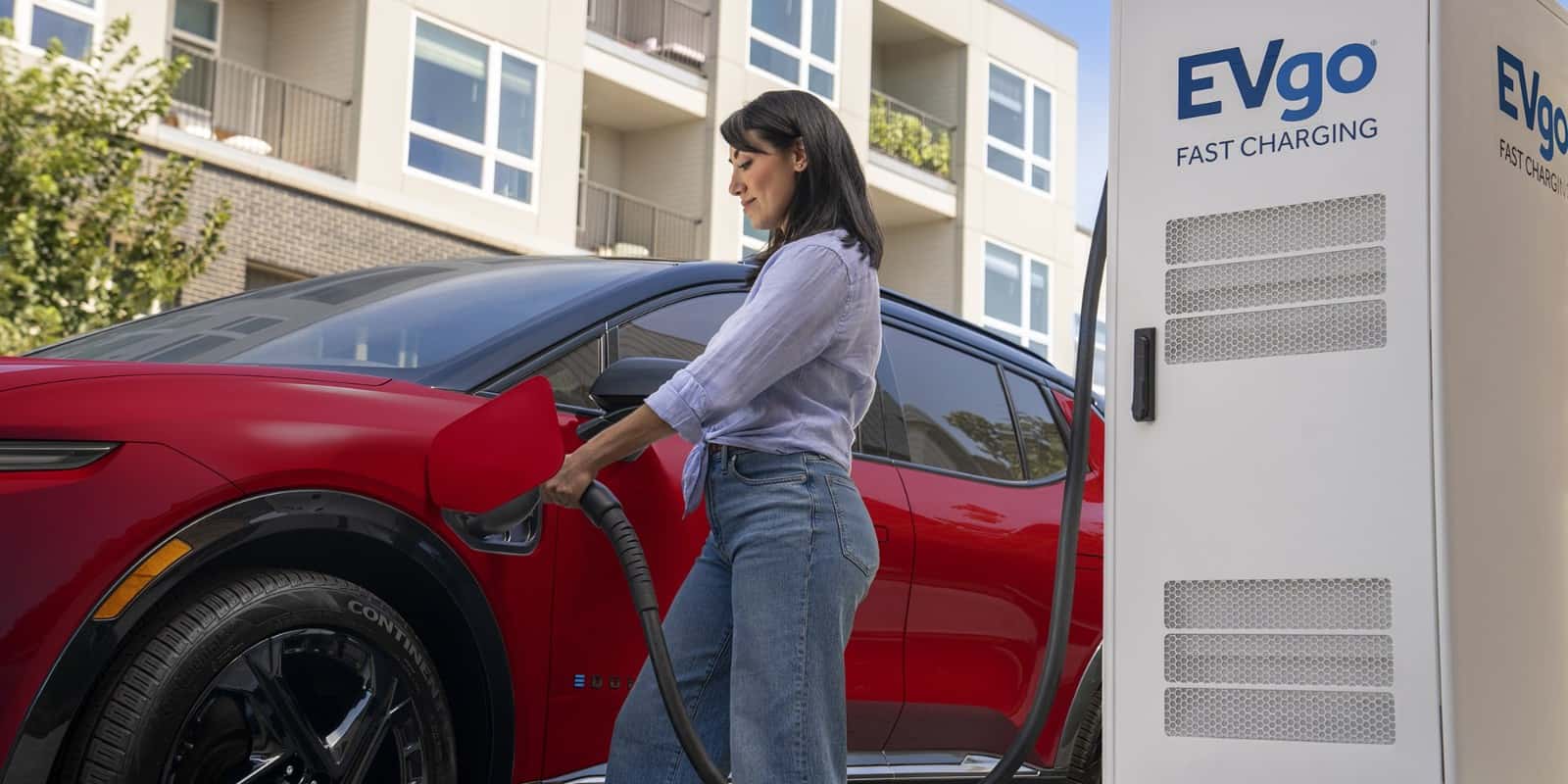
The corridor has filled in considerably. DC fast charging is now available in the towns Denver drivers actually stop in — Idaho Springs, Georgetown, Silverthorne, Frisco, Vail, Avon, Eagle, Glenwood Springs, and Grand Junction — across networks including Tesla Superchargers (accessible to Chevy EVs with a GM-approved NACS DC adapter), Electrify America, EVgo, and ChargePoint.
Colorado has also been building state and federally funded fast-charging plazas. The state’s first National Electric Vehicle Infrastructure (NEVI) site opened in Frisco in January 2025 at the AC Hotel, with 12 ports serving the corridor about 70 miles west of Denver. At that announcement the Colorado Energy Office said it was the first of at least 60 NEVI-funded sites planned statewide, that Colorado had awarded more than $48 million to add 580 new fast-charging ports through its DCFC Plazas grant program, and that the state had more than 1,100 fast-charging ports in service.
Every Chevy EV reaches this network through the myChevrolet mobile app, which Chevrolet says covers more than 250,000 available public chargers including over 20,000 Tesla Superchargers, with route planning and payment in one place. Plan your route in the app before you leave Denver rather than improvising at Georgetown.
Common mistakes Denver EV drivers make on I-70
- Leaving Denver at 70% because “it’s only 100 miles.” Start mountain trips at or near a full charge.
- Panicking at the range drop before the tunnel. That is the climb, and much of it comes back on the descent.
- Charging to 100% at a DC fast charger. Charging slows above 80% by design — stop at 80% and keep moving.
- Not preconditioning the cabin and battery while still plugged in at home on cold mornings.
- Assuming a charger will be free on a powder Saturday. Identify a backup stop before you need it.
Winter: Cold Weather, Traction Law, and Range
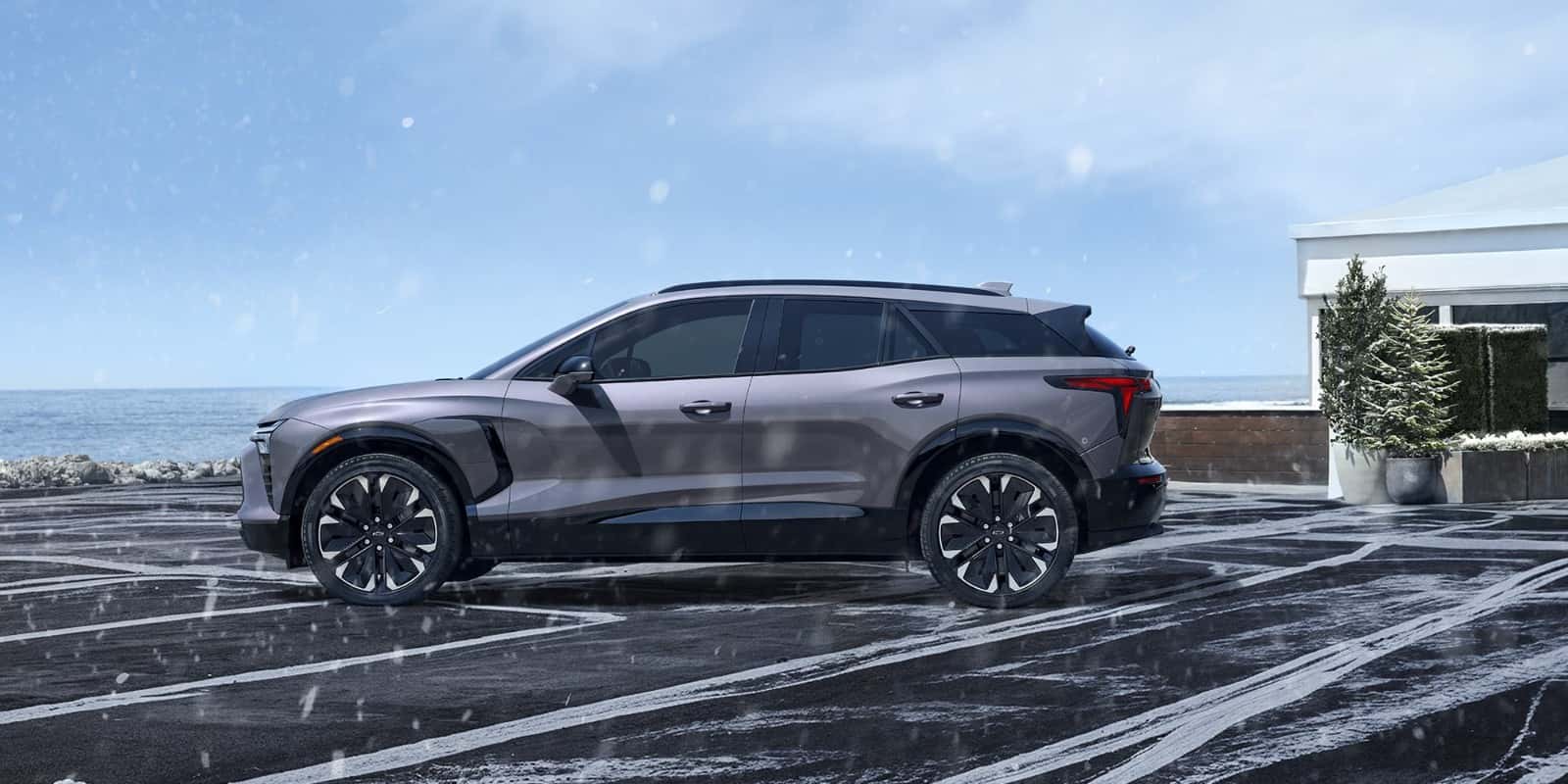
Cold reduces EV range in every EV on the market. Battery chemistry is less efficient at low temperature, and cabin heating draws real power. What matters is how much you can offset. The 2026 Equinox EV and 2026 Blazer EV both come with a heat pump, which Chevrolet describes as capturing heat from sources including regenerative braking and even passengers’ exhaled breath and redirecting it to warm the cabin or battery. A heat pump is dramatically more efficient than resistive heating.
The second lever is preconditioning. Warming the cabin and battery while still plugged in at home pulls that energy from the wall instead of the pack. On a 15-degree January morning in Lakewood, preconditioning before you unplug is worth real miles on the drive to Copper.
Colorado’s Traction Law applies to your EV
From September 1 through May 31 each year, Colorado’s Traction Law is in effect on the I-70 Mountain Corridor between Dotsero and Morrison. Under the updated requirements, non-commercial drivers need tires with at least 3/16-inch of tread depth that are winter-rated (mountain-snowflake), all-weather rated, or mud-and-snow (M+S) rated. If your tires don’t meet that standard, chains or an approved alternative traction device such as an AutoSock are required. Noncompliance carries a $50 fine plus a $17 surcharge.
This applies to AWD and 4WD vehicles too — all-wheel drive alone does not satisfy the tread requirement. For any EV that drives I-70 in winter, a proper set of winter tires is the single highest-value upgrade: better stopping distance, better traction on the Vail Pass climb, and legal compliance.
Three Sample I-70 Trip Plans
Denver to Vail and back (about 200 miles round trip). Leave at a full charge. In mild conditions a 2026 Equinox EV or Blazer EV completes this without stopping to charge and arrives home with reserve. In deep winter with the heater running, plan a 20 to 30 minute top-up in Frisco or Silverthorne on the return leg — you won’t need to go past 80%.
Denver to Glenwood Springs (about 314 miles round trip). Outbound is 157 miles with the tunnel and Vail Pass in the middle, and the back half from Vail down to Glenwood is largely descending, which helps. Charge overnight at your lodging if a Level 2 outlet is available — that removes the return-leg question entirely. Otherwise plan a DC fast charge in Glenwood Springs or Eagle before heading east, because the return is the climbing direction.
Denver to Grand Junction (about 245 miles each way). One charging stop each direction is the realistic plan for most Chevy EVs, with Glenwood Springs as the logical midpoint. Westbound is net downhill after the tunnel. Eastbound is the harder leg — you’re climbing from 4,600 feet back over the Continental Divide — so arrive in Glenwood with margin and charge to 80% before continuing.
Why Buy Your Chevy EV in Denver From Emich Chevrolet
As a top-rated Chevrolet dealer in the Denver metro, Emich Chevrolet built our process around transparency and speed — clear pricing up front, a no-pressure test drive, and a finance team that walks you through every line. We’ll also plan a real I-70 route in the myChevrolet app with you before delivery. Our Chevrolet-certified technicians handle the EV-specific work the Front Range demands: battery health checks, thermal system service, alignment after a hard winter of Vail Pass runs, and Level 2 home charging guidance. Every Chevy EV carries an 8-year or 100,000-mile battery limited warranty, and we handle that coverage in-house. We’re confident Emich offers the best selection, best pricing, and best sales and service in Denver and Lakewood.
Frequently Asked Questions
Can an electric vehicle make it from Denver to Vail on one charge?
Yes. Denver to Vail is roughly 100 miles on I-70, and every current Chevy EV is rated well above that — the 2026 Equinox EV at an EPA-estimated 319 miles with FWD, the 2026 Blazer EV at 312 miles with FWD, and the 2027 Bolt at a GM-estimated 262 miles. The climb consumes energy faster than flat driving, so indicated range drops quicker than the miles tick by, but regen on the descent returns a meaningful share. In mild conditions the round trip is comfortable on a single charge; in deep winter, plan a short top-up in Frisco or Silverthorne on the way home.
How much range does an EV lose driving up I-70?
There is no single number — it depends on speed, temperature, load, tires, and driving style. The consistent pattern is that consumption rises sharply on the sustained climbs between Idaho Springs and the Eisenhower–Johnson Memorial Tunnel, where you gain roughly 5,900 feet from Denver, then drops well below your EPA average on the descents.
Where are the DC fast chargers on I-70 between Denver and Glenwood Springs?
DC fast charging is available in Idaho Springs, Georgetown, Silverthorne, Frisco, Vail, Avon, Eagle, and Glenwood Springs across networks including Tesla Superchargers, Electrify America, EVgo, and ChargePoint. Colorado’s first NEVI-funded fast-charging site opened in Frisco in January 2025 with 12 ports. Because networks add and relocate stations regularly, use the myChevrolet app for live availability.
How long does it take to charge a Chevy EV on a road trip?
The 2026 Chevy Equinox EV charges from 10% to 80% in approximately 42 minutes on DC fast charging and can add up to 84 miles of range in 10 minutes with FWD. The 2026 Chevy Blazer EV charges 10% to 80% in approximately 39 minutes and adds up to 83 miles in 10 minutes with FWD. On an I-70 trip a 15 to 25 minute stop in Frisco or Silverthorne covers most day trips.
Do I need snow tires on an EV for I-70 in winter?
Colorado’s Traction Law is in effect on I-70 between Dotsero and Morrison from September 1 through May 31 and requires non-commercial vehicles to have tires with at least 3/16-inch tread depth that are winter-rated (mountain-snowflake), all-weather rated, or M+S rated — or to carry chains or an approved alternative traction device. It applies to AWD and 4WD vehicles as well.
Does cold weather hurt EV range in Colorado?
Yes — battery chemistry is less efficient at low temperature and cabin heating draws power. The 2026 Equinox EV and 2026 Blazer EV both include a heat pump, which Chevrolet says captures heat from sources such as regenerative braking and redirects it to the cabin or battery, making it far more efficient than resistive heating. Preconditioning while still plugged in at home draws that energy from the wall rather than the pack.
Can a Chevy EV use Tesla Superchargers on the way to the mountains?
Yes, with a GM-approved NACS DC adapter available through Chevrolet Accessories. Chevrolet says the myChevrolet app provides access to more than 250,000 available public chargers including over 20,000 Tesla Superchargers, with in-app payment. That matters on I-70 specifically, because Supercharger sites cover corridor towns including Silverthorne and Glenwood Springs.
Which Chevy EV is best for Denver-to-mountain road trips?
For most Front Range families the 2026 Equinox EV is the sweet spot — an EPA-estimated 319 miles with FWD or 307 miles with AWD, 57.2 cubic feet of maximum cargo space for ski and camping gear, a standard heat pump, and a $34,995 starting MSRP. The 2026 Blazer EV offers 312 EPA-estimated miles with FWD and available Super Cruise. If you tow, the 2026 Silverado EV brings a GM-estimated 478 miles of range and up to 12,500 pounds of maximum towing.
Key Takeaways
- Denver to Vail is about 100 miles, climbing from 5,280 feet to 11,158 feet at the Eisenhower–Johnson Memorial Tunnel — the highest point on the U.S. Interstate Highway System.
- The climb consumes energy faster than your EPA rating implies; regen on the descent returns a meaningful share.
- 2026 Equinox EV: 319 mi EPA-est. FWD / 307 AWD, 85 kWh, 150 kW DC, 10–80% in about 42 minutes.
- 2026 Blazer EV: 312 mi EPA-est. FWD (302 on SS), 10–80% in about 39 minutes, available Super Cruise.
- DC fast charging is available in Idaho Springs, Georgetown, Silverthorne, Frisco, Vail, Avon, Eagle, Glenwood Springs, and Grand Junction.
- Colorado’s Traction Law runs September 1 to May 31 on I-70 between Dotsero and Morrison, and applies to AWD vehicles too.
- Both the Equinox EV and Blazer EV include a heat pump, and every Chevy EV carries an 8-year / 100,000-mile battery limited warranty.
Cost, Timing, and What to Expect
Most Denver-area EV shoppers finish a test drive, trade-in appraisal, and financing review in about 90 minutes at Emich Chevrolet, and same-day delivery is common for units on our lot. If you want Level 2 home charging installed before delivery, plan a couple of weeks for an electrician quote and permitting in most Front Range municipalities. Chevrolet EVs include a Dual Level Charge Cord for Level 1 (120-volt) and Level 2 (240-volt) charging, so you have a working home solution from day one. Financing and leasing are both available, and GM Financial regularly runs Denver-area incentives we can apply at checkout.
Shop Chevy Electric at Emich Chevrolet
Top-rated Chevrolet dealer in Denver. Best selection, best pricing, and the area’s most trusted Chevy sales and service team.
Last updated: August 5, 2026 | Service area: Denver, Lakewood, Golden, Idaho Springs, Silverthorne, Frisco, Vail, and the I-70 Mountain Corridor