

Section 179 Deduction on Chevy Trucks, Vans and SUVs (2026 Guide)
Buying a Work Truck or Van for Your Business?
Emich Chevrolet’s fleet team in Lakewood can help you match the right Silverado, Express or SUV to how you work.
If your business is shopping for a truck, van or SUV before the end of the year, Section 179 may let you deduct a large share of the purchase price in the year you put the vehicle to work, instead of spreading it over several years. For Denver contractors, landscapers, HVAC and plumbing crews, and small fleets, that can change which vehicle makes sense and when to buy.
This guide explains how the 2026 rules work for the Chevrolet vehicles Emich stocks: which ones fall under the $32,000 SUV cap, which pickups and vans can be expensed more fully, and how the numbers look in three worked examples.
Section 179 in Plain English
Normally a business recovers the cost of a vehicle through depreciation over several years. Section 179 lets you elect to treat qualifying equipment as an expense in the year it is placed in service. A separate tool, bonus depreciation, is now 100% for qualifying property under the One Big Beautiful Bill Act, and the two often work together on vehicles.
| 2026 Rule | Figure | Source |
|---|---|---|
| Section 179 dollar limit | $2,560,000 | IRS Rev. Proc. 2025-32 |
| Phase-out begins at | $4,090,000 of qualifying purchases | IRS Rev. Proc. 2025-32 |
| Cap for SUVs over 6,000 lb GVWR | $32,000 | IRS Rev. Proc. 2025-32 |
| Bonus depreciation | 100% for qualifying property | One Big Beautiful Bill Act |
| Passenger-auto first-year cap (6,000 lb GVWR or less) | $20,300 with bonus / $12,300 without | IRS Rev. Proc. 2026-15 |
| Required business use | More than 50% | IRS Pub. 946 |
The Core Requirements
To qualify, the vehicle generally must meet each of these tests. Your tax advisor can confirm how they apply to your business.
Business use over 50%. Only the business-use percentage of the cost is deductible. A Tahoe used 80% for the business supports an 80% deduction. If business use later drops to 50% or less, part of the deduction can be recaptured.
Placed in service by December 31. The vehicle has to be delivered and in use for the business by the end of the tax year, not just ordered.
Limited by business income. The Section 179 deduction cannot exceed your business taxable income for the year, though any excess generally carries forward. Bonus depreciation is not subject to that income limit.
Financing is fine. You can finance the vehicle and still claim the deduction in the year you place it in service.
The Key Question: Weight and Body Style
The rules change with the vehicle’s gross vehicle weight rating (GVWR) and body type. SUVs over 6,000 lb are capped at $32,000 under Section 179. Pickups with a qualifying bed, cargo vans and many chassis cabs can generally be expensed more fully. Vehicles at or under 6,000 lb GVWR face the Section 280F luxury-auto caps.
How the Chevy Lineup Sorts Out
The table below groups the Chevrolet models Emich stocks by how the rules generally treat them. GVWR varies by trim, drivetrain and equipment, so always check the label on the driver’s door jamb of the exact vehicle and confirm the treatment with your tax advisor before you buy.
| Model | General treatment | What to check |
|---|---|---|
| Silverado 1500 Standard Bed (6 ft 7 in) and Long Bed (8 ft 2 in) | Bed is at least 6 ft, so the SUV cap does not apply to the pickup body | GVWR label, cab and bed configuration |
| Silverado 1500 Short Bed (5 ft 10 in) | Bed is under 6 ft, so the $32,000 cap generally applies if GVWR is over 6,000 lb | GVWR label |
| Silverado HD (2500HD / 3500HD) | Heavy-duty pickups with 6 ft 9 in and longer beds generally qualify for fuller expensing | Bed length on the specific truck |
| Colorado (5 ft 2 in bed) | Short bed; also check whether GVWR is over 6,000 lb. Light trims may fall under the Section 280F caps | GVWR label |
| Tahoe and Suburban | SUVs over 6,000 lb GVWR: $32,000 Section 179 cap, with bonus depreciation on the remainder | GVWR label and business-use percentage |
| Traverse | Three-row crossover; GVWR is near the 6,000 lb line, so the rules that apply depend on the exact vehicle | GVWR label |
| Express cargo van and chassis cab | Cargo vans with no seating behind the driver and heavy chassis cabs generally qualify for fuller expensing | Seating configuration and GVWR |
Pickups and the 6-Foot Bed Rule
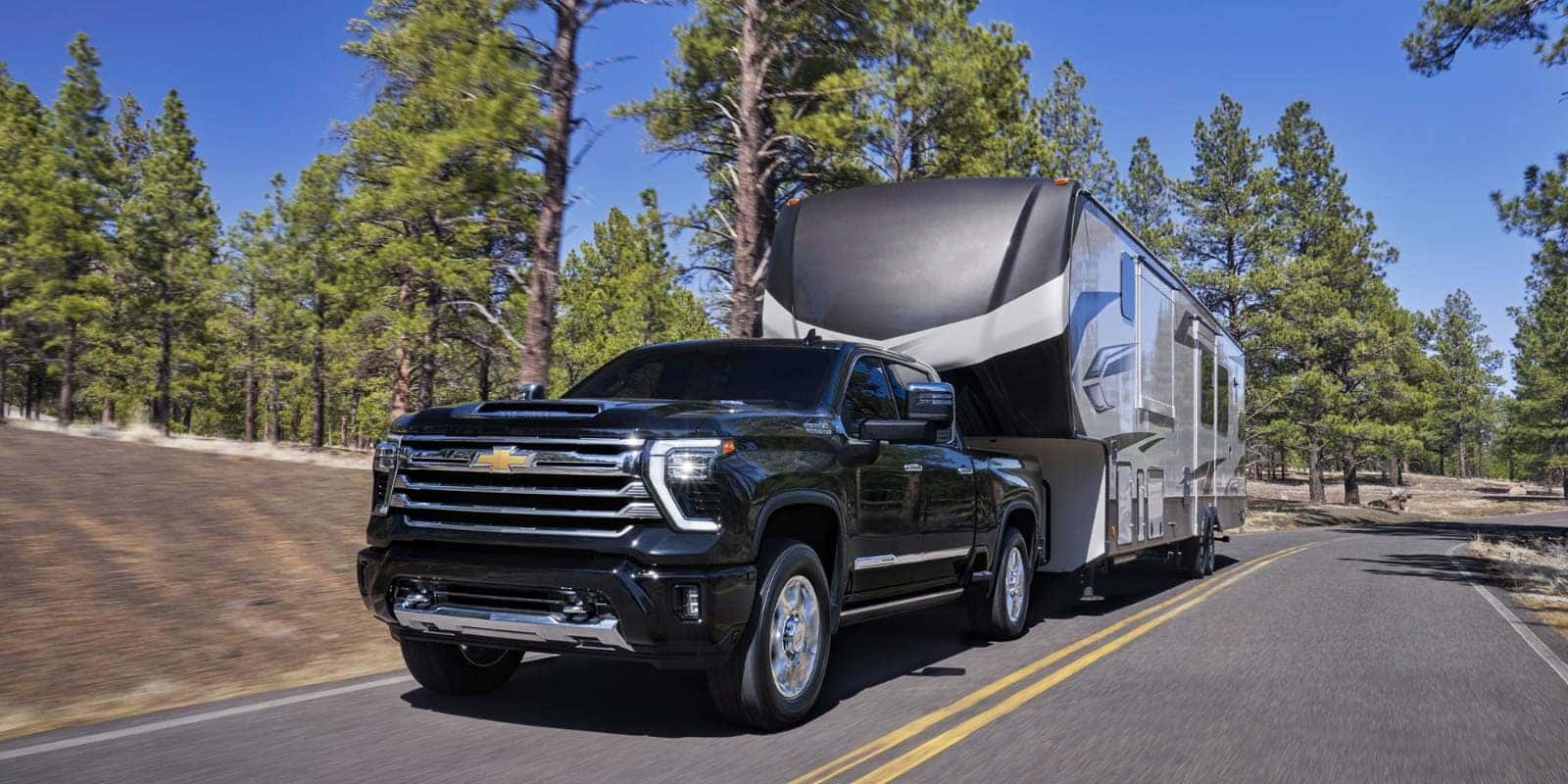
The $32,000 SUV cap is aimed at sport utility vehicles. A pickup is generally outside the cap if it has an open cargo area of at least six feet in interior length that is not readily accessible from the passenger compartment. That is why bed length matters when you configure a Silverado: the Standard Bed (6 ft 7 in) and Long Bed (8 ft 2 in) clear six feet, while the Short Bed (5 ft 10 in) does not. The Colorado’s 5 ft 2 in bed also falls below six feet.
For a business that needs a work truck anyway, that bed length can be worth more than any trim feature. It is one of the first questions Emich’s fleet team will ask.
Three Worked Examples
These examples use assumed purchase prices and a 100% business-use or stated business-use figure to show the mechanics. They are illustrations, not quotes or tax projections.
| Scenario | Assumptions | Possible first-year deduction |
|---|---|---|
| Heavy-duty pickup | $70,000 Silverado HD with a bed of at least 6 ft, 100% business use, enough business income | Up to $70,000 under Section 179 and/or bonus depreciation. At an assumed 24% federal bracket, that is about $16,800 of federal tax reduction |
| Tahoe at 80% business use | $75,000 purchase, 80% business use, so $60,000 is the business basis | $32,000 under Section 179 plus up to $28,000 of bonus depreciation, for $60,000 in total |
| Light SUV at or under 6,000 lb GVWR | $40,000 purchase, 100% business use | Capped by Section 280F at $20,300 in the first year with bonus depreciation, with the rest recovered over later years |
Why the Vehicle Matters More Than the Price
On a $75,000 Tahoe, the SUV cap does not stop a large first-year deduction, because bonus depreciation can pick up the rest. A smaller vehicle under 6,000 lb can be the most limited of the three. Weight and body style often matter more than the sticker price.
The Year-End Deadline
For a 2026 deduction, the vehicle has to be purchased, delivered and in business use by December 31, 2026. Dealer inventory moves quickly in the final weeks of the year, and special-order trucks can take longer than a calendar allows. If you want a specific configuration, such as a Long Bed Silverado or an Express cargo van, start early.
Emich Chevrolet is at 2001 W Colfax Ave in Lakewood, serving Denver and the Front Range. Our fleet team can show you what is in stock, what can be ordered, and how bed length and configuration line up with the rules above.
Related Guides
See our Chevrolet commercial and fleet trucks guide, the Silverado HD inventory, and our guide to the car loan interest deduction for personal-use buyers.
Frequently Asked Questions
What is the 2026 Section 179 limit?
For tax years beginning in 2026, a business can expense up to $2,560,000 of qualifying equipment under Section 179. The limit begins to phase out dollar for dollar once total qualifying purchases exceed $4,090,000 (IRS Rev. Proc. 2025-32).
How much of a Tahoe or Suburban can I deduct under Section 179?
SUVs rated over 6,000 lb GVWR are capped at $32,000 of Section 179 expensing for 2026. Bonus depreciation, which is 100% for qualifying property under the One Big Beautiful Bill Act, can generally recover the remaining business-use cost in year one. Confirm the treatment with your tax advisor.
Does a Silverado pickup avoid the $32,000 cap?
It can, depending on the bed. A pickup with a cargo bed of at least 6 feet that is not readily accessible from the cab is not subject to the SUV cap. A Silverado Standard Bed (6 ft 7 in) or Long Bed (8 ft 2 in) fits that description; a Short Bed (5 ft 10 in) does not.
Does the vehicle have to be used only for business?
No, but business use must be more than 50%. Only the business-use percentage of the cost is deductible, and falling to 50% or less in a later year can trigger recapture.
Can I use Section 179 on a financed or leased vehicle?
Financed vehicles can qualify, and you can deduct the full eligible amount even though you are making payments. A lease is different: the lessor owns the vehicle, so lease payments are generally treated as a business expense rather than a Section 179 deduction.
What is the deadline to claim Section 179 for 2026?
The vehicle must be bought and placed in service by December 31, 2026. Being ordered or signed for is not enough; it has to be delivered and in business use by year-end.
Are vehicles under 6,000 lb treated differently?
Yes. Vehicles at or under 6,000 lb GVWR are subject to the Section 280F passenger-automobile caps. For vehicles placed in service in 2026 the first-year limit is $20,300 with bonus depreciation or $12,300 without it (IRS Rev. Proc. 2026-15).
This guide is general information, not tax or legal advice, and Emich Chevrolet is not a tax advisor. Figures reflect IRS guidance published as of October 2026. Talk with your CPA or tax professional about your own situation before you buy.
Buying a Work Truck or Van for Your Business?
Emich Chevrolet’s fleet team in Lakewood can help you match the right Silverado, Express or SUV to how you work.