

2026 Silverado 1500 vs Ford F-150
Best Towing Truck
If you’re shopping in Denver or Lakewood and your shortlist is Silverado vs F-150, towing numbers are only the start. This Truck Comparison breaks down real trailering charts, torque, hitch types, and “strength” features that matter when you’re pulling up I-70, backing into a tight campsite, or hauling jobsite weight daily.
For most Denver and Lakewood buyers, the “best” Best Towing Truck comes down to your trailer type and engine choice. The 2026 Ford F-150 posts a higher max conventional tow rating (up to 13,500 lbs when properly equipped), but the 2026 Chevrolet Silverado 1500 wins key matchups: higher max towing on its base-engine class, best-in-class standard torque, a diesel option the F-150 doesn’t offer, and a stronger towing rating in the off-road flagship head-to-head (ZR2 vs Raptor).
What “towing strength” really means in Denver and Lakewood
A clean Denver Truck Comparison should separate marketing from physics. “Strength” for towing is a mix of: (1) engine torque delivery, (2) GCWR and axle ratios that support sustained pulling, (3) payload headroom (tongue weight counts as payload), and (4) stability/visibility systems that reduce driver workload. In the Denver region, altitude and long grades amplify heat and gearing demands, so the best choice is the one that matches your trailer type and real load—not just the biggest headline number.
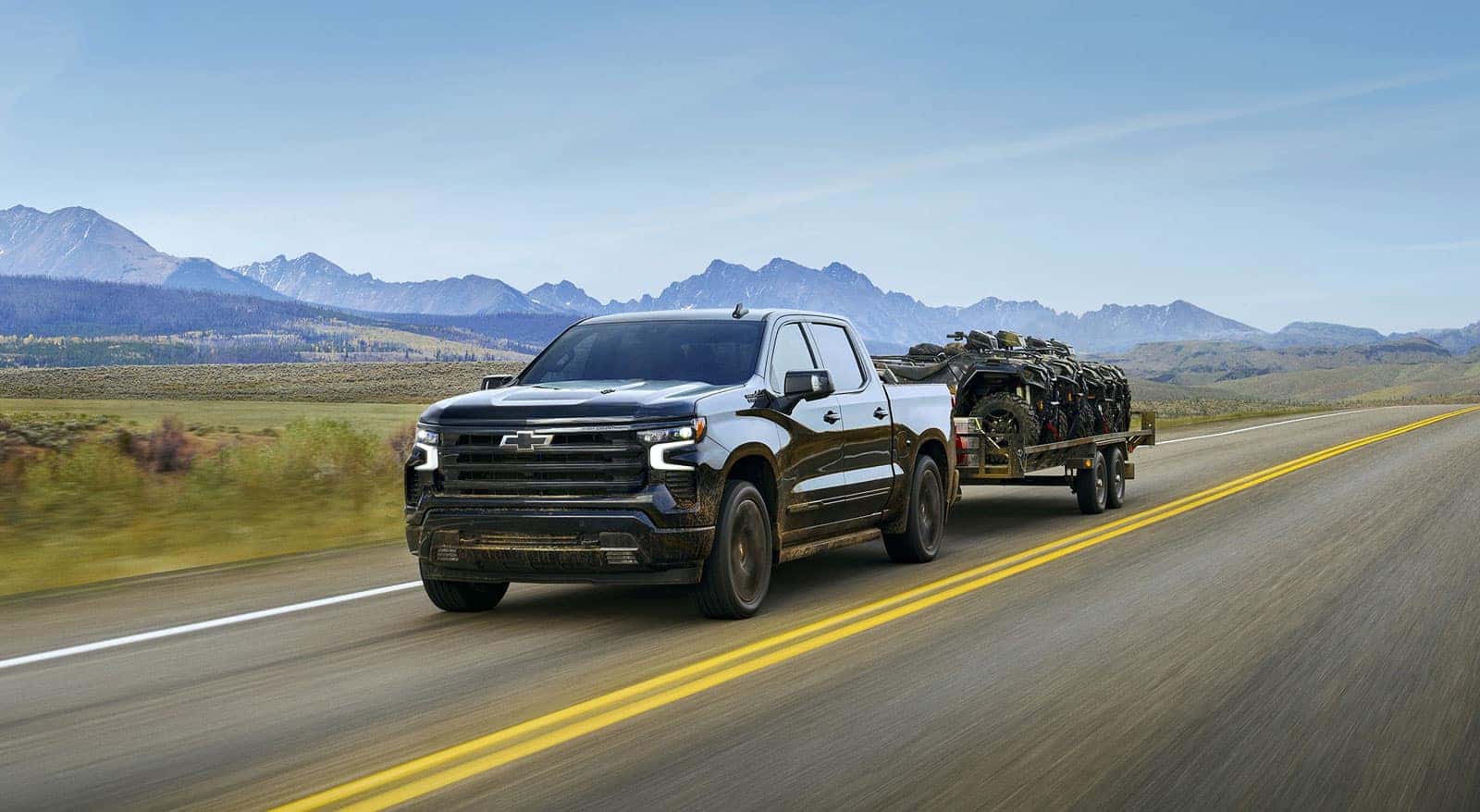
Silverado vs F-150: where the Silverado clearly wins (fast charts)
If you’re hunting for a Best Towing Truck and want the quickest signal, these are the areas where the 2026 Silverado 1500 posts measurable advantages in towing and “strength,” based on published specs and trailering guides.
| Advantage area (Silverado) | Silverado 1500 (2026) | F-150 (2026) | Why it matters for Denver/Lakewood |
|---|---|---|---|
| Base-engine towing ceiling (best config) | TurboMax® up to 9,500 lbs (example: Regular Cab Long Bed 2WD) | 2.7L EcoBoost up to 8,400 lbs | If you want strong towing without stepping up to the top engines, this is a meaningful gap for utility trailers, small campers, and work loads. |
| Standard torque “strength” | 430 lb-ft best-in-class standard torque (TurboMax) | 400 lb-ft (2.7L EcoBoost listed torque) | Torque is what helps you get moving from a stop and hold speed on grades around Denver and Lakewood. |
| Diesel availability in the half-ton class | Available Duramax® 3.0L Turbo-Diesel | 3.0L Power Stroke Turbo Diesel V6 | Diesel torque characteristics and highway efficiency can be a practical edge for long-distance towing through Colorado. |
| Off-road flagship towing head-to-head | Silverado ZR2 listed up to 8,800 lbs (6.2L V8) | F-150 Raptor (high-output 3.5) listed at 8,200 lbs | If you want Baja-ready suspension but still need to tow toys, this is a clean win for the Silverado. |
| Trailer visibility & confidence (towing workflow) | Up to 14 camera views available + trailering app features commonly highlighted on 2026 Silverado pages | Ford trailering tech varies by trim/package; towing guide focuses on ratings rather than camera-view counts | Backing and lane changes are where most towing stress happens—especially in busy Denver traffic and tight mountain campgrounds. |
Note: All towing is “when properly equipped” and varies by cab/bed, 2WD/4×4, axle ratio, payload, passengers, and packages. Always confirm your door-jamb payload label and the OEM trailering guide for the exact build.
Engine-by-engine towing comparison (the real decision table)
Most “Chevy vs Ford” debates miss the key point: you don’t tow with a brand—you tow with a specific engine, axle ratio, cab/bed, and hitch setup. Use this Truck Comparison table to match your trailer to the most relevant powertrain.
| Category | 2026 Silverado 1500 (example max conventional) | 2026 F-150 (example max conventional) | Who it fits best |
|---|---|---|---|
| Base-engine tow (best case) | TurboMax® up to 9,500 lbs (Regular Cab Long Bed 2WD example) | 2.7L EcoBoost up to 8,400 lbs | Small-to-mid campers, enclosed trailers, equipment trailers where you want capability without jumping to the biggest engines. |
| Top conventional tow headline | Max available towing listed at 13,300 lbs | Max available towing listed at 13,500 lbs | Boat/RV buyers who are genuinely near max ratings should also plan payload and tongue weight carefully. |
| Diesel towing option | Duramax® 3.0L I-6 appears on Silverado 1500 trailering charts and supports high max ratings (including 13,200–13,300 lbs in specific configurations) | 12,000 to 12,100 pounds | Denver drivers who tow long distances and want efficiency plus confident pull characteristics. |
| Off-road flagship tow | Silverado ZR2 listed up to 8,800 lbs | F-150 Raptor listed at 8,200 lbs | Toy-hauler buyers who want real off-road suspension but still tow regularly. |
The trailering charts that matter most (3 “spreadsheet” views)
Below are three high-signal “spreadsheet” views pulled from the OEM-style trailering tables concept: (1) base-engine capability, (2) how Max Trailering changes the ceiling, and (3) gooseneck/5th-wheel reality. These are the views that prevent expensive mistakes in a Denver Truck Comparison.
1) Base-engine capability: TurboMax vs 2.7 EcoBoost
| Build theme | Silverado 1500 TurboMax® | F-150 2.7L EcoBoost | Practical takeaway |
|---|---|---|---|
| Max conventional tow (example best-case) | 9,500 lbs (Regular Cab Long Bed 2WD example) | 8,400 lbs (requires Tow/Haul + Max Tow axle in guide context) | If you’re choosing a “work-ready” spec for Lakewood jobs or weekend towing outside Denver, Silverado’s base-engine ceiling is higher. |
| Torque “strength” reference | 430 lb-ft best-in-class standard torque claim | 400 lb-ft commonly listed torque for 2.7 EcoBoost | Torque matters more than horsepower when your trailer is heavy and the road tilts upward. |
2) Max Trailering effect: why packages change the whole game
Two trucks with the same engine can tow radically different amounts depending on axle ratio, cooling, hitch hardware, and factory trailering package content. This is why “Silverado vs F-150” arguments fail without build sheets.
| Powertrain | Silverado: example “with Max Trailering” result | What that means | Cross-shop guidance |
|---|---|---|---|
| 5.3L V8 (Silverado) | Up to 11,300 lbs shown in a Crew Cab Short Bed 2WD example with Max Trailering Package | This is the “sweet spot” setup for many owners: V8 simplicity with a real tow package build. | If you’re comparing to an F-150 V8 or mid-range EcoBoost, verify the axle ratio and tow package on both. |
| Duramax 3.0L I-6 (Silverado) | Up to 12,000 lbs shown in an example Crew Cab Short Bed 2WD with Max Trailering Package (18″ wheels context in the chart) | A strong option for Colorado: consistent pull and efficient highway behavior for long trips out of Denver. | If you tow frequently, don’t ignore fuel range and grade behavior—especially west of Lakewood. |
3) Gooseneck/5th-wheel reality: payload is the limiter
Many shoppers ask for the Best Towing Truck and then discover the hitch style changes everything. Gooseneck and 5th-wheel setups place higher kingpin weight in the bed (often 15%–25% of trailer weight). That kingpin weight counts directly against payload, which is why “strength” is just as much about payload planning as engine pull.
| Example Silverado 1500 gooseneck/5th-wheel entries | GCWR (example) | Max gooseneck/5th-wheel (example) | What to check before you buy |
|---|---|---|---|
| Regular Cab Long Bed 2WD (TurboMax® example line) | 14,500 | 9,500 lbs | Door-jamb payload, tire load rating, and kingpin weight estimate at 20% of trailer weight. |
| Regular Cab Standard Bed 2WD (5.3L V8 example line) | 15,000 | 9,800 lbs | Bed hitch placement (near axle), rear axle rating (RGAWR), and the actual hitch hardware weight. |
Trim-level guide: matching capability to how you actually tow
Trim choice affects towing in two ways: what powertrains and packages you can spec, and how the truck behaves on towing days (visibility, mirrors, braking support, and convenience). The 2026 Silverado 1500 lineup spans nine models on the Chevrolet site, from work-focused builds to premium and off-road flagships.
| Silverado 1500 trim | Best for towing… | Strength focus | Denver/Lakewood shopper tip |
|---|---|---|---|
| WT / Custom | Budget-smart towing and work loads | Leverage TurboMax® torque and simpler specs | Great for contractors in Lakewood who want real capability without luxury weight. |
| LT / RST | Frequent towing with more comfort and tech | Package flexibility (trailering + convenience) | If you commute around Denver, trailering tech and camera visibility reduce stress. |
| Custom Trail Boss / LT Trail Boss | Mixed towing + rough roads | Off-road stance; towing ratings depend on exact configuration | For trailheads outside Denver, confirm your tow rating with the exact tires/wheels and axle. |
| LTZ / High Country | Long-distance towing with premium comfort | Driver assistance + refined ride for hours behind the wheel | Ideal if your “best truck for Denver” definition includes comfort while towing across Colorado. |
| ZR2 | Off-road flagship that still tows seriously | Listed up to 8,800 lbs towing in the Max Trailering chart context | If you cross-shop Raptor, ZR2’s towing rating is the stronger number on paper. |
How to choose the right towing setup (steps you can follow)
Use this process to decide between a Silverado vs F-150 configuration without getting tricked by a single headline. This is the same logic a good truck specialist uses in Denver and Lakewood.
- Start with the trailer’s real loaded weight (not “dry weight”). Add water, propane, gear, and accessories.
- Pick hitch style: conventional (tongue weight ~10–15%) vs gooseneck/5th-wheel (kingpin weight ~15–25%).
- Estimate payload consumption: passengers + cargo + hitch hardware + tongue/kingpin weight. This is the #1 limiter for safe towing.
- Choose the powertrain around your use: base-engine towing, frequent long-distance towing, or “near max” towing with the right axle/package.
- Confirm the exact trailering chart row for your cab/bed/drive/axle. Then double-check door-jamb payload on the truck you’re buying.
- Plan for Colorado grades: braking, cooling, and stability matter more when you’re pulling through mountain corridors outside Denver.
- Buying for max towing while ignoring payload (tongue/kingpin weight is payload).
- Assuming 4×4 always tows “the same” as 2WD (ratings often change by configuration).
- Using dry weight instead of loaded trailer weight.
- Skipping a weight-distribution hitch when the trailer size calls for it.
- Not validating the exact trailering chart row for cab/bed/axle.
Cost, timing, and expectations (what changes your real towing result)
In a real Chevy vs Ford purchase, towing capability isn’t “free”—it’s built through packages and hardware. Expect the final tow rating to depend on which factory tow package, axle ratio, wheels/tires, and cooling configuration the truck has. Also plan time for a correct hitch setup, brake controller calibration, and a first-trip shakedown to verify sway control and braking feel.
- Package selection: Max Trailering-type packages typically deliver the biggest towing jump.
- Hitch hardware: A weight-distribution hitch can change stability dramatically for longer trailers.
- Payload planning: Add passengers and gear and your “paper rating” can shrink quickly.
- Colorado grades: Plan conservative speed and braking strategy when leaving Denver toward mountain corridors.
Why choose Chevrolet for towing confidence (and what to expect)
When you buy a truck for towing, you’re buying a process—specing correctly, setting up correctly, and servicing correctly. The 2026 Chevrolet Silverado 1500 stands out for buyers who want strong base-engine towing, diesel availability, and an OEM trailering ecosystem that’s designed for repeatable setups. For shoppers in Denver and Lakewood, a transparent trailering walkthrough (ratings + payload + hitch selection) is what turns a Best Towing Truck search into a truck that actually tows the way you expect.
| What a good towing purchase process includes | What you get out of it |
|---|---|
| Build validation: confirm cab/bed/drive/axle + trailering chart row | No surprises when you hook up the first time. |
| Payload math: passengers + cargo + tongue/kingpin + hitch | Safer handling and braking, especially around Denver highways. |
| Setup + service plan: brake controller, tire pressure, cooling checks | Consistent towing performance over time for Lakewood work and Colorado travel. |
FAQ: 2026 Silverado 1500 vs 2026 F-150 towing
The best choice depends on how close you tow to the limit and which engine you pick. The F-150 leads the max conventional tow headline (13,500 lbs when properly equipped), but the Silverado can be the smarter Colorado match if you want higher base-engine towing, strong standard torque, or a diesel towing option for long pulls out of Denver and across the state.
Yes, in the best-case published examples. Silverado 1500 TurboMax® shows up to 9,500 lbs in a Regular Cab Long Bed 2WD entry, while the F-150 2.7 EcoBoost table lists up to 8,400 lbs in its towing guide. If you want a capable “value tow” build in Lakewood, this gap is meaningful.
No. Payload usually limits you first because tongue weight (and kingpin weight for 5th-wheel/gooseneck) counts as payload. Two trucks can share a big tow rating but behave very differently when loaded with people and gear. For a clean Denver Truck Comparison, always run payload math before calling any truck the Best Towing Truck.
For conventional towing, Ford lists up to 13,500 lbs on the 2026 F-150 when properly equipped. Chevrolet lists up to 13,300 lbs for the 2026 Silverado 1500 when properly equipped. That said, “headline max” is only one slice of a smart Truck Comparison.
On paper, the Silverado ZR2 has the higher towing figure in the published max trailering chart context (up to 8,800 lbs) versus the F-150 Raptor entry (8,200 lbs) in Ford’s towing guide summary. If your lifestyle around Denver mixes off-road weekends with towing, this is one of the cleanest Silverado wins.
Match your truck’s cab/bed, 2WD/4×4, engine, and axle ratio to the OEM trailering chart row. Then confirm the door-jamb payload label on the exact vehicle (not a brochure). This step is essential for buyers in Denver and Lakewood because payload is often the real limiter.
It’s torque delivery, cooling margins, axle ratio, and stability/visibility tech. Silverado highlights best-in-class standard torque (TurboMax) and offers a diesel option; both can improve real-world towing confidence. If you’re chasing the Best Towing Truck for Denver, prioritize the configuration that keeps your drivetrain relaxed on grades.
- The Best Towing Truck decision is configuration-based: engine + axle + package + payload.
- Silverado wins clear matchups: higher base-engine max towing, higher standard torque, diesel availability, and stronger off-road flagship towing (ZR2 vs Raptor).
- F-150 leads the max conventional tow “headline” (13,500 lbs) and max payload “headline” (2,440 lbs), so payload math is critical either way.
- Max Trailering-type packages change the towing ceiling more than most shoppers expect.
- Gooseneck/5th-wheel towing is usually payload-limited due to higher kingpin weight.
- For Denver and Lakewood, grade behavior and braking confidence matter as much as the raw number.
- Always confirm your exact tow rating and payload on the truck you’re buying (door label + OEM chart row).