

Chevy Blazer EV vs Hyundai Ioniq 5: 2027 Blazer EV vs 2027 Ioniq 5 Compared
Last updated: October 19, 2026 | Emich Chevrolet, Lakewood | Specs from each manufacturer
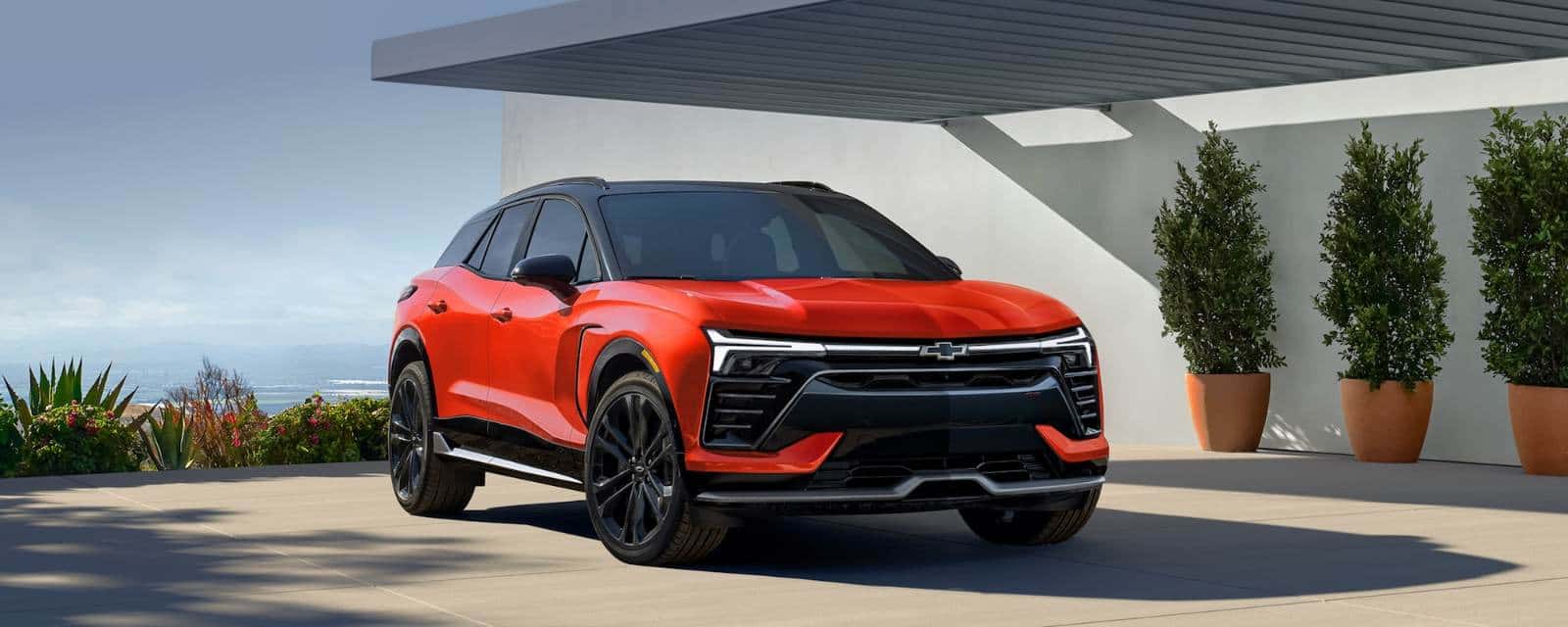
The Chevy Blazer EV and Hyundai Ioniq 5 are two-row electric SUVs with five seats, but the Blazer EV is the larger vehicle, 8.9 inches longer. The Ioniq 5 costs less, goes slightly farther and has a longer warranty; the Blazer EV adds ground clearance, available hands-free Super Cruise and a 615-hp SS. Here is the 2027 Blazer EV against the 2027 Ioniq 5, using each manufacturer’s published specs.
Quick Verdict
The 2027 Ioniq 5 costs less ($37,750 vs $45,000 for a long-range 2WD model, $41,250 vs $48,000 with AWD), goes slightly farther (318 vs 312 miles), makes more power with AWD (320 vs 300 hp) and has a longer warranty. The 2027 Blazer EV is bigger, with more ground clearance (8.0 vs 6.1 in.) and max cargo space, is rated to tow 1,500 lbs on the LT and RS, and offers available hands-free Super Cruise. Hyundai rates only the Ioniq 5 XRT with its factory hitch for towing (2,700 lbs).
Shop the Blazer EV at Emich Chevrolet
See new Blazer EVs on our Lakewood lot, with real-time pricing and current Chevrolet offers.
The Matchup: Size and Super Cruise vs Price and Fast Charging
Both are 2027 models with native NACS ports, so each can use Tesla Superchargers without an adapter, and Hyundai includes a CCS adapter for other networks. The Blazer EV starts at $45,000 plus $1,795 destination and the Ioniq 5 at $35,250 plus $1,650. Emich’s current stock is the 2026 Blazer EV LT, which uses a CCS1 port and needs an adapter for Superchargers.
The Blazer EV LT and RS use an 85 kWh battery with a 220-hp front motor or 300-hp AWD, and the SS has 615 hp with Wide Open Watts. The Ioniq 5 uses a 63.0 kWh battery (SE Standard Range, 168 hp) or an 84.0 kWh battery with a 225-hp rear motor or 320-hp HTRAC AWD, which adds $3,500 ($3,900 on the Limited). Hyundai quotes about 20 minutes from 10% to 80% on a 350-kW charger with the included CCS adapter, or 30 minutes (84.0 kWh battery) on a 150-kW NACS charger. Chevrolet lists up to 150 kW of DC charging for the LT and RS and quoted about 39 minutes from 10% to 80% for the 2026 model.
The Blazer EV is 192.2 inches long on a 121.8-inch wheelbase vs 183.3 and 118.1, with more front legroom (44.2 vs 41.7 in.) and ground clearance (8.0 vs 6.1 in.; XRT 7.0). The Ioniq 5 has slightly more rear legroom (39.4 vs 38.9 in.) and cargo space behind the rear seat (26.3 vs 25.5 cu ft), while the Blazer EV holds more with the seat folded (59.1 vs 58.5).
Blazer EV vs Ioniq 5 Specs
| Spec | 2027 Chevy Blazer EV | 2027 Hyundai Ioniq 5 |
|---|---|---|
| Starting MSRP (excl. destination) | $45,000 (LT FWD); $48,000 (LT AWD); $1,795 destination | $35,250 (SE Standard Range RWD); $37,750 (SE RWD); $41,250 (SE AWD); $1,650 destination |
| Output | 220 hp / 243 lb-ft (FWD); 300 hp / 355 lb-ft (AWD); SS 615 hp / 650 lb-ft (Wide Open Watts) | 225 hp / 258 lb-ft (RWD); 320 hp / 446 lb-ft (AWD) |
| EPA range, 2WD | 312 mi (FWD) | 318 mi (SE, SEL, Limited RWD) |
| EPA range, AWD | 283 mi (LT, RS); 302 mi (SS) | 290 mi (SE, SEL); 269 mi (Limited); 259 mi (XRT) |
| EPA combined efficiency | 104 MPGe (FWD); 94 MPGe (AWD) | 114 MPGe (RWD); 106 MPGe (SE, SEL AWD) |
| DC fast charging | Up to 150 kW (LT, RS); 190 kW (SS) | 10-80% in about 20 min (350 kW, CCS adapter) or 30 min (84.0 kWh; 150-kW NACS charger) |
| Onboard AC charger | 11.5 kW | 10.9 kW |
| Charge port | NACS, native on 2027 (2026 models use CCS1); CCS1 DC adapter $299 | NACS, native; CCS adapter included |
| Max towing | 1,500 lbs (LT, RS; Chevrolet’s 2026 rating); SS not rated | 2,700 lbs (XRT w/ Tow Hitch, $46,975 model); not recommended for others |
| Cargo behind rear seat | 25.5 cu ft | 26.3 cu ft |
| Max cargo | 59.1 cu ft | 58.5 cu ft; 0.85 cu ft front trunk |
| Rear legroom | 38.9 in. | 39.4 in. |
| Ground clearance | 8.0 in. (FWD); 7.9 in. (AWD) | 6.1 in.; 7.0 in. (XRT) |
| Screens and phone | 17.7-in. touchscreen with Google built-in; 11-in. driver display; Chevrolet does not list Apple CarPlay or Android Auto | 12.3-in. touchscreen and cluster; wireless Apple CarPlay and Android Auto |
| Hands-free driving | Super Cruise: available on LT and RS, standard on SS; 3-year plan included | None; Highway Driving Assist 2 (hands-on) on SEL and up |
| Warranty | 3 yr/36,000 mi basic; 8 yr/100,000 mi battery | 5 yr/60,000 mi basic; 10 yr/100,000 mi powertrain and battery |
Sources: chevrolet.com and Build & Price (2027 Blazer EV); Hyundai’s 2027 Ioniq 5 price sheet (Aug. 3, 2026), 2027 Ioniq 5 features and specifications and hyundaiusa.com; fueleconomy.gov. Hyundai lists charge times rather than a peak charging rate, so the DC row is not directly comparable. Hyundai’s battery warranty does not apply to leased vehicles. The Blazer EV towing figure is from Chevrolet’s 2026 Trailering Guide. Bold marks the better figure.
By the Numbers
Starting price, long-range 2WD
MSRP excluding destination. Lower is better.
EPA range
EPA-estimated miles on a full charge. Higher is better.
Ground clearance
Performance: Blazer EV SS vs Ioniq 5 N
The Blazer EV SS ($60,700) has 615 hp and 650 lb-ft with Wide Open Watts mode, and GM estimates 0 to 60 mph in 3.4 seconds (closed course, based on initial vehicle movement). Its 102 kWh battery gives an EPA-rated 302 miles and accepts up to 190 kW of DC fast charging, and Brembo brakes and Super Cruise are standard. The SS is not rated to tow.
Hyundai’s performance model is the 2026 Ioniq 5 N ($59,900), with 601 hp, or 641 hp for 10 seconds with N Grin Boost, and a Hyundai-quoted 0-60 time of 3.25 seconds with N Grin Boost. It has an 84.0 kWh battery, a rear electronic limited-slip differential and an EPA-rated 221 miles of range, 81 fewer than the SS. NHTSA has not rated the Ioniq 5 N.
Off the Pavement: Ioniq 5 XRT vs Blazer EV
The Ioniq 5 XRT ($46,525) adds a 23mm suspension lift with unique tuning, 7.0 inches of ground clearance, 18-inch all-terrain tires, Terrain Mode Select and standard AWD, with an EPA-rated 259 miles. The XRT w/ Tow Hitch ($46,975) is the only Ioniq 5 rated to tow (2,700 lbs). The Blazer EV has no off-road trim, but every LT and RS has 7.9 to 8.0 inches of ground clearance and a 1,500-lb tow rating with factory trailering equipment (Chevrolet’s 2026 rating).
Reasons to Choose Each
Choose the Chevy Blazer EV if you want
- A bigger SUV with more front legroom and max cargo space
- More ground clearance (8.0 vs 6.1 in.)
- Available hands-free Super Cruise (standard on SS)
- 1,500-lb towing on the LT and RS
- A 17.7-inch touchscreen with Google built-in
Choose the Hyundai Ioniq 5 if you want
- A much lower price, with RWD or AWD
- Slightly more range (318 vs 312 miles) and higher efficiency
- Hyundai’s quoted 20-minute 10-80% charge on a 350-kW charger
- Wireless Apple CarPlay and Android Auto
- A longer warranty: 5 yr/60,000 mi basic, 10 yr/100,000 mi battery
Interior and Technology
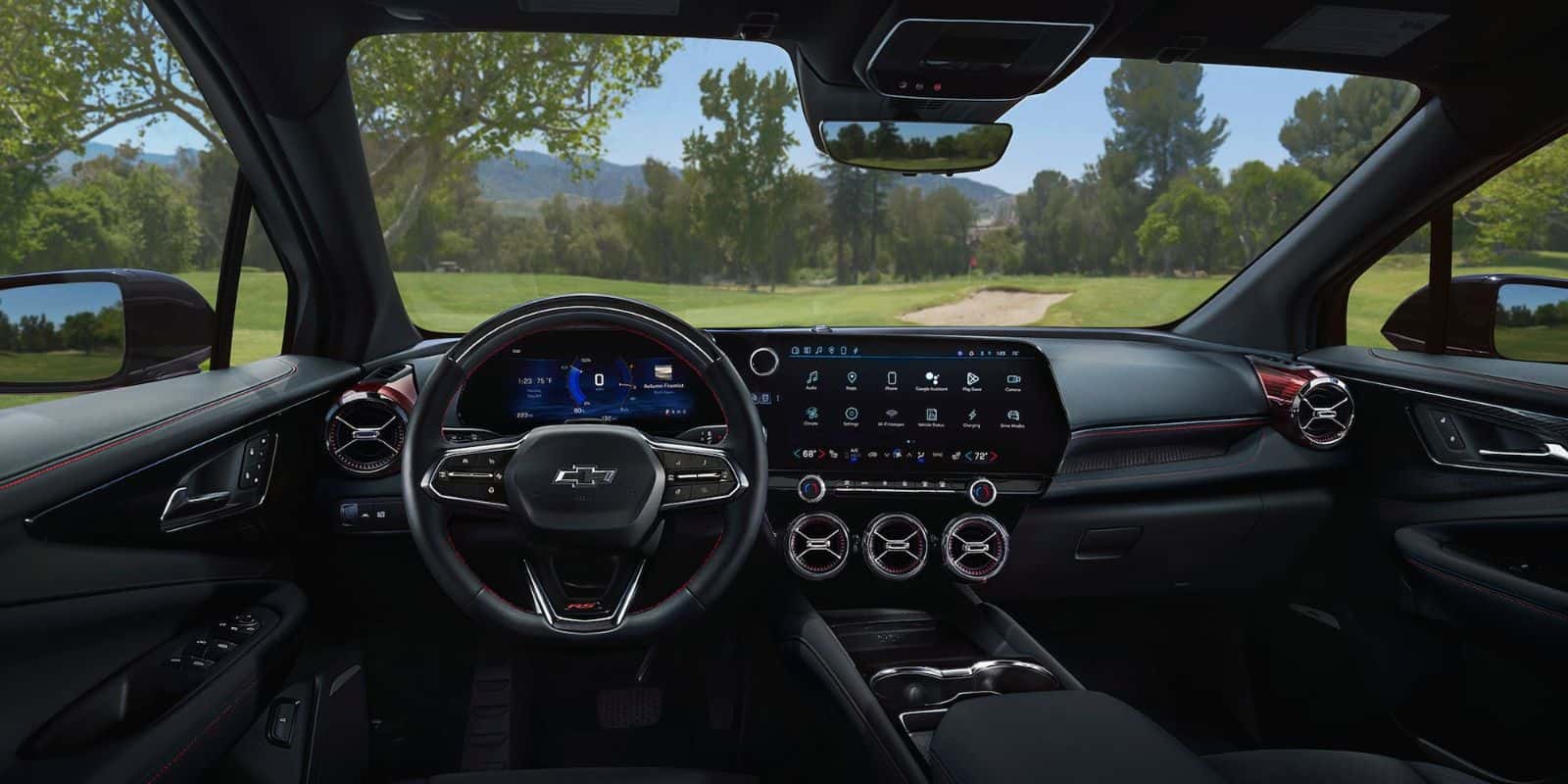
Every Blazer EV has a 17.7-inch touchscreen with Google built-in, which requires a service plan, and an 11-inch driver display. Chevrolet does not list Apple CarPlay or Android Auto for the Blazer EV. The Ioniq 5 has 12.3-inch touchscreen and driver displays with wireless Apple CarPlay and Android Auto, and a head-up display on the Limited; the Blazer EV offers one on the RS and SS. The Ioniq 5 XRT and Limited add vehicle-to-load power, while the Blazer EV supports vehicle-to-home backup with GM Energy’s PowerShift Charger and V2H Enablement Kit.
On the Blazer EV, hands-free Super Cruise is standard on the SS. On the LT it adds $6,290 in total (the $3,795 Super Cruise Package plus the required $2,495 Comfort and Convenience Package), and on the RS $5,190 (with the required $1,395 RS Convenience and Driver Confidence Package); the package also adds Bose audio and Enhanced Automatic Parking Assist. The plan is included for three years, then GM charges for a plan starting at $39.99 a month. Hyundai offers Highway Driving Assist 2 on the SEL and up, which uses hands-on detection. NHTSA rates the 2027 Ioniq 5 five stars overall, and IIHS named the 2026 Ioniq 5 a 2026 TOP SAFETY PICK+. NHTSA gave the 2026 Blazer EV AWD five stars overall and has not rated the 2027 Blazer EV yet.
The Bottom Line
If you want the lower price, a little more range, Hyundai’s quoted 20-minute 10-80% charge on 350-kW stations or a longer warranty, the Ioniq 5 is the better value. If you want a bigger SUV with more ground clearance, 1,500-lb towing on the LT and RS, or available hands-free Super Cruise, the Blazer EV is the stronger pick. See trims and pricing in our Chevy Blazer EV guide, and ask about current Chevrolet offers on 2026 models.
More Comparisons
Find Your Blazer EV at Emich Chevrolet
Browse in-stock Blazer EVs, or value your trade before you visit.
Blazer EV vs Ioniq 5 FAQs
Which costs less, the Blazer EV or the Ioniq 5?
The Ioniq 5. The 2027 Ioniq 5 SE RWD with the 84.0 kWh battery starts at $37,750 and the SE AWD at $41,250, vs $45,000 and $48,000 for the 2027 Blazer EV LT. The Ioniq 5 SE Standard Range starts at $35,250. Destination is $1,650 for Hyundai and $1,795 for Chevrolet.
Which charges faster?
Hyundai quotes about 20 minutes from 10% to 80% on a 350-kW, 800V charger using the included CCS adapter, or 30 minutes with the 84.0 kWh battery on a 150-kW NACS charger. The Blazer EV LT and RS accept up to 150 kW, and Chevrolet quoted about 39 minutes from 10% to 80% for the 2026 model. Both 2027 models have native NACS ports.
Can the Ioniq 5 tow?
Only the Ioniq 5 XRT w/ Tow Hitch ($46,975), rated at 2,700 lbs; Hyundai does not recommend towing with other versions. The Blazer EV LT and RS are rated at 1,500 lbs with factory trailering equipment (Chevrolet’s 2026 rating), and the SS is not rated to tow.
Which is bigger?
The Blazer EV: 192.2 vs 183.3 inches long, with 59.1 vs 58.5 cu ft of max cargo space and 8.0 vs 6.1 inches of ground clearance. The Ioniq 5 has slightly more rear legroom and cargo space behind the rear seat.
Does either qualify for an EV tax credit?
The federal clean vehicle credit is not available for new EVs acquired after Sept. 30, 2025, for any brand. Colorado’s 2026 tax-year credit is $750 for a qualifying new EV with an MSRP up to $80,000.
Sources: chevrolet.com 2027 and 2026 Blazer EV pages, chevrolet.com Build & Price, GM News, fueleconomy.gov and NHTSA for Chevrolet; each competitor’s official website, specifications, price sheets and press materials, fueleconomy.gov, NHTSA and IIHS for the rival, reviewed October 19, 2026. MSRP excludes destination, tax, title, license, dealer fees and options; destination charges differ by brand. EPA-estimated range; actual range varies with temperature, terrain, battery age and condition, loading and how you drive. Charging times vary with charger output, battery temperature and state of charge. Towing ratings depend on configuration and equipment; review the owner’s manual before towing. Super Cruise and other hands-free or assisted driving systems require an active plan or trial where noted and work only on compatible roads; always pay attention to the road. Driver assistance features are no substitute for the driver’s responsibility to operate the vehicle safely; read the owner’s manual for feature limitations. Incentive information is general and not tax advice; eligibility depends on the buyer and the vehicle. All trademarks belong to their respective owners. Emich Chevrolet sells new Chevrolet vehicles.